Categories
Arts & Letters American Artists Features History

Gary Cooper’s Daughter Shares Uplifting Lessons From Her Dad

Gary Cooper is synonymous with the Golden Age of Hollywood. He was one of its most successful box office draws. He was nominated five times for the Best Actor Oscar and won twice for “Sergeant York” and “High Noon.” Handsome, strong, and with an honest stare, Cooper became the country’s model of masculinity, integrity, and courage.

His roles were varied. They ranged from military heroes, like Alvin York, the most decorated U.S. soldier in World War I, and Billy Mitchell, considered the Father of the U.S. Air Force; to a Quaker father in “Friendly Persuasion”; the tragic baseball player Lou Gehrig in “The Pride of the Yankees”; and a tamer of the Old West, none better known than the fictional Marshal Will Kane in “High Noon.”

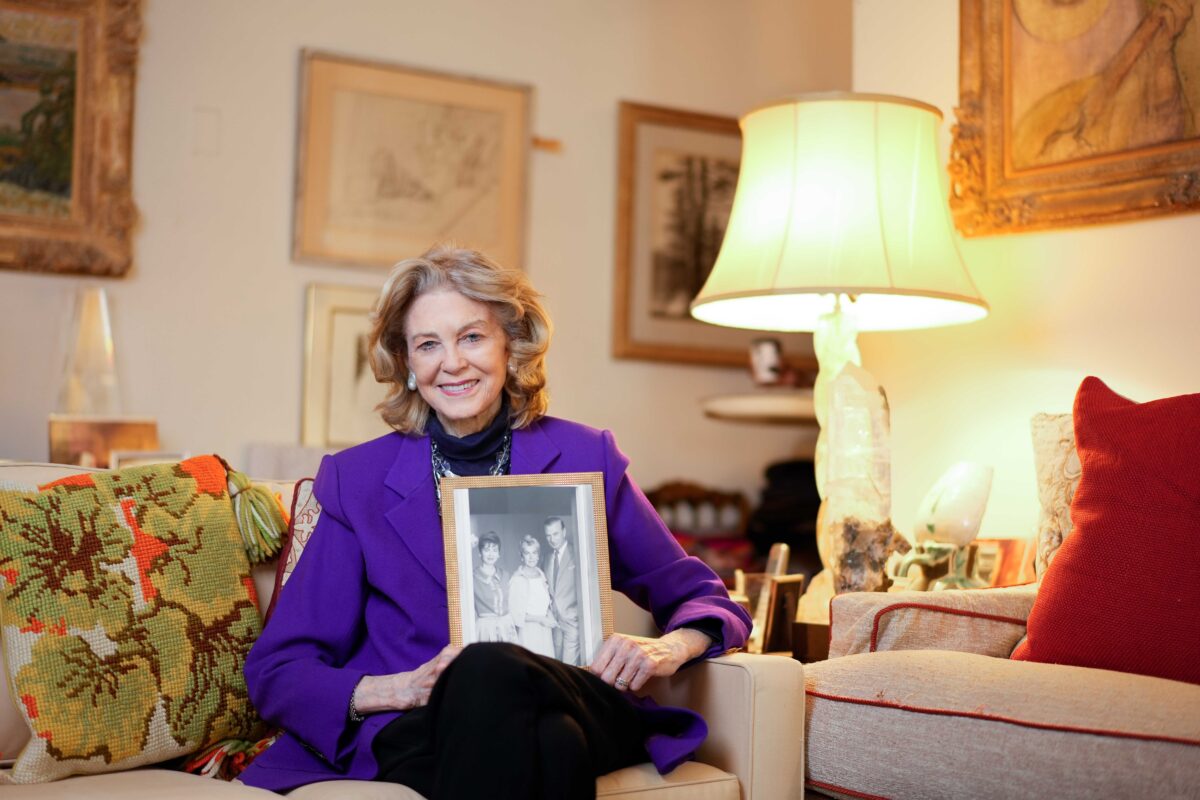
Maria Cooper Janis, the daughter and only child of Cooper and Veronica Balfe, recalled her father saying that he wanted to try to portray the best an American man could be. These dignified and masculine roles surely captured the ideal, but they also captured something else. Janis said the man that millions of moviegoers saw, and still see today, was, in so many ways, playing himself.
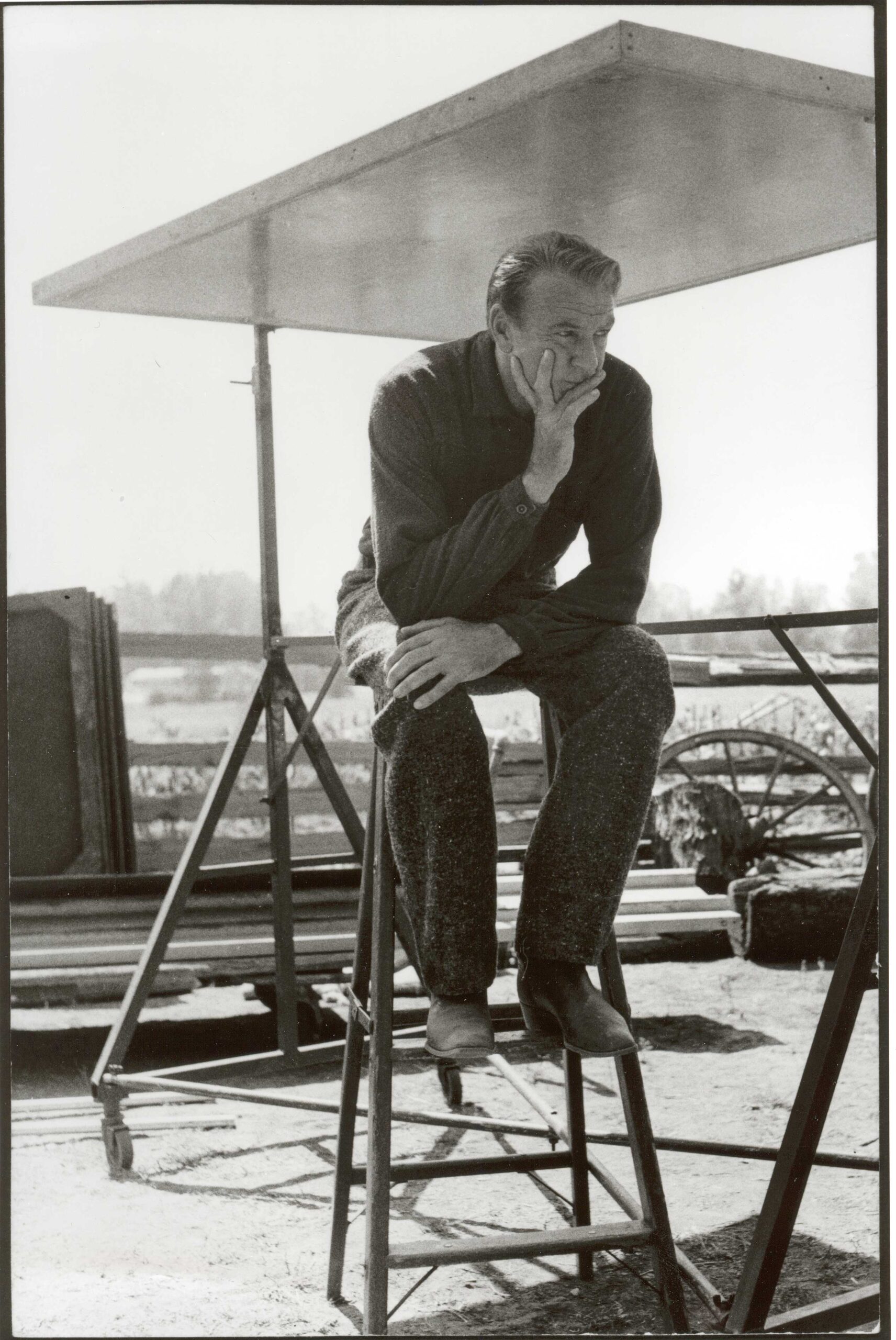
Gary Cooper waits on set. (Courtesy of Maria Cooper Janis)
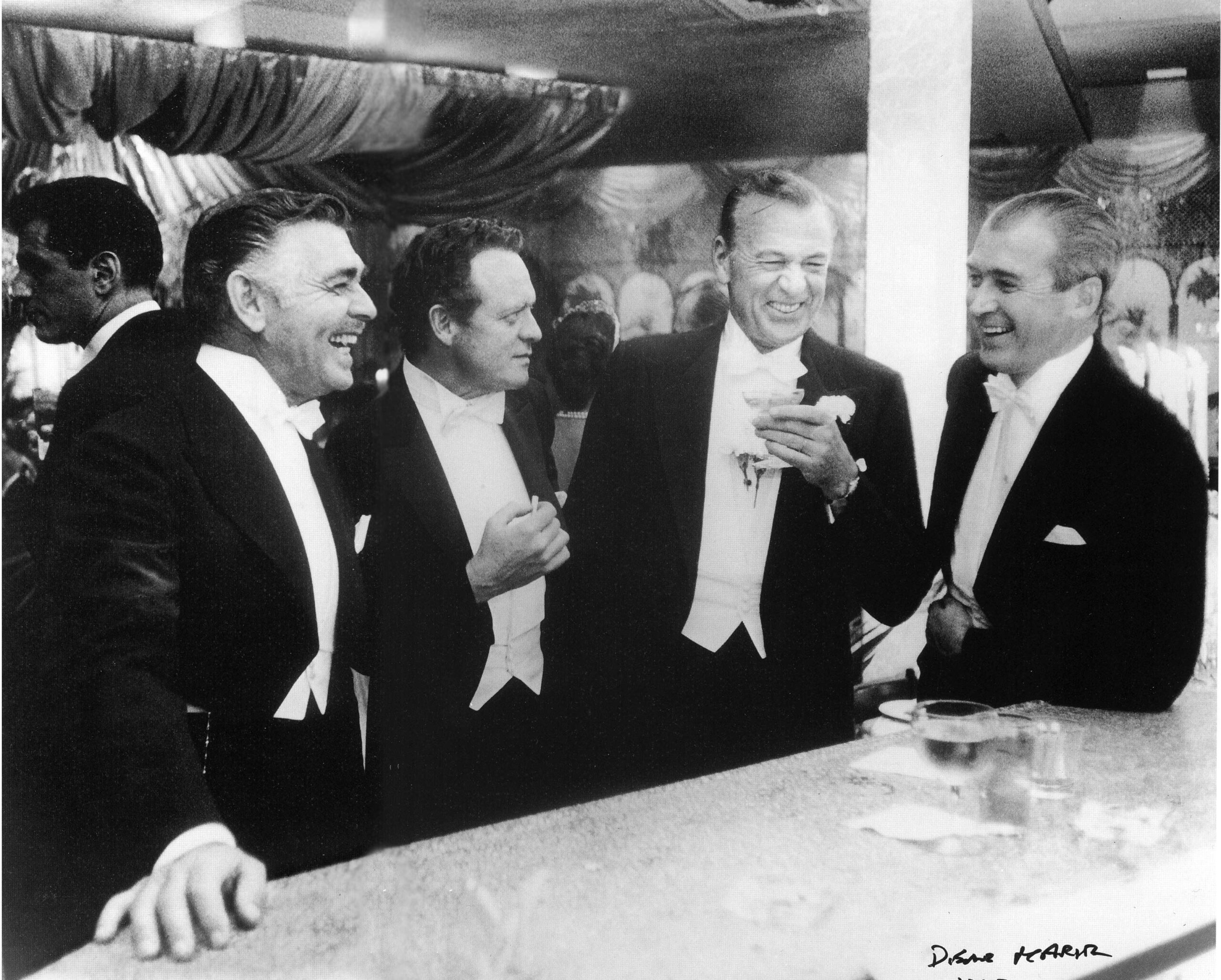
(L to R) Actors Clark Gable, Van Heflin, Gary Cooper, and James Stewart enjoy a laugh during a New Year’s party held at Romanoff’s restaurant in Beverly Hills, Calif. (SSLIM AARONS ESTATE/Getty Images)

Rugged and Sophisticated

From the rough-and-tumble Western stereotypes to the sophisticated man-about-town, he was “as comfortable in blue jeans as he was in white ties and tails,” she said.

There is a famous photo called “The Kings of Hollywood” of Cooper standing alongside Jimmy Stewart, Clark Gable, and Van Heflin in their white ties and tails, cocktails in hand, having a laugh. It is the elegant and sophisticated version of Cooper—the quintessential image of Hollywood’s leading man. Indeed, Cooper was one of the kings for several decades.

But he was also an everyman. Cooper grew up in early 1900s Montana. He was born in Helena just a few years after it was named the state’s capital. It was a rich town despite being part of the recently settled West. It was an environment―both rugged and luxurious―that Cooper would go on to personify.
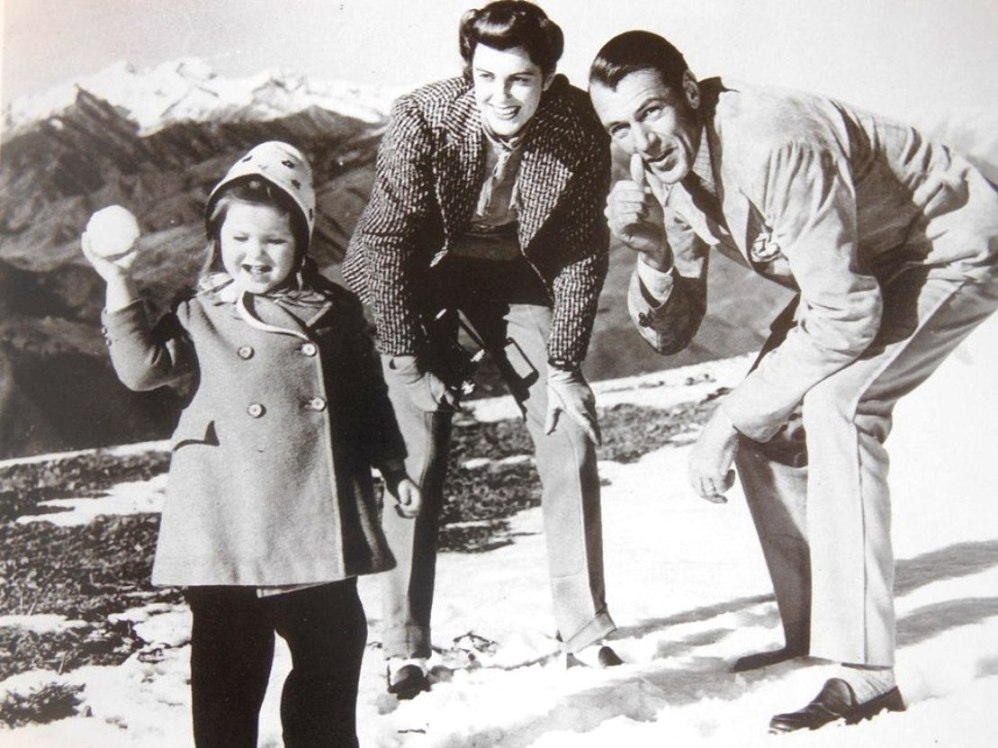
The Cooper family enjoying a romp in the snow. (Courtesy of Maria Cooper Janis)

Janis said her father’s first friends were the local Native Americans. They taught him how to stalk and hunt animals and perform his own taxidermy. His friendships helped him understand the plight of the Indians. His father, Charles Cooper, a justice on the Montana Supreme Court, had long been concerned about the Native Americans.

“My grandfather was always working for the underdog,” she said. “My father must have heard a lot of those stories. [My father] always felt he should defend those who needed defending, especially those who didn’t have the clout or standing to win.”
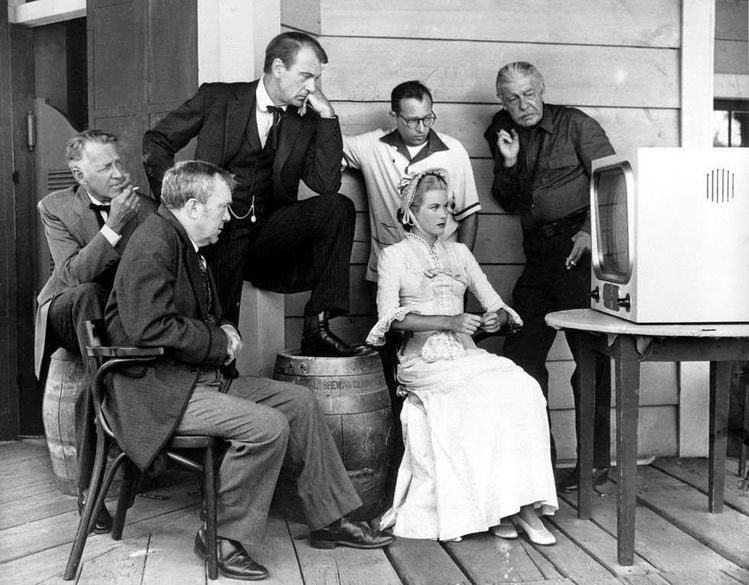
Cooper and the cast on the set of “High Noon.” (Courtesy of Maria Cooper Janis)

The Defender

Cooper found himself defending others on film and in real life, and sometimes those two mixed. Although he stated before Congress that he was “not very sympathetic to communism,” he was sympathetic to those in Hollywood―actors, writers, and directors―who were targeted by the Hollywood blacklist movement. One of those with whom he was sympathetic was Carl Foreman, who had written the script for “High Noon” and had refused to cooperate with the House Un-American Activities Committee. After “High Noon,” Foreman left for England, where he would write “The Bridge on the River Kwai.”

“My father was actually very close to Carl Foreman,” Janis said. “My father told Stanley Kramer [the producer], ‘If Foreman’s off the picture, then Cooper is off the picture.’” Foreman remained, and Cooper performed one of his most definitive roles as a marshal who stands against a criminal gang in a town where everyone is too afraid to help. “High Noon” is believed to be a representation of the Hollywood blacklist era―a belief that Janis holds as well.

“My father passionately believed you were free to believe what you wanted to believe,” she said. “He was threatened that he would never work in Hollywood again. But he knew what he believed and he lived his life.”
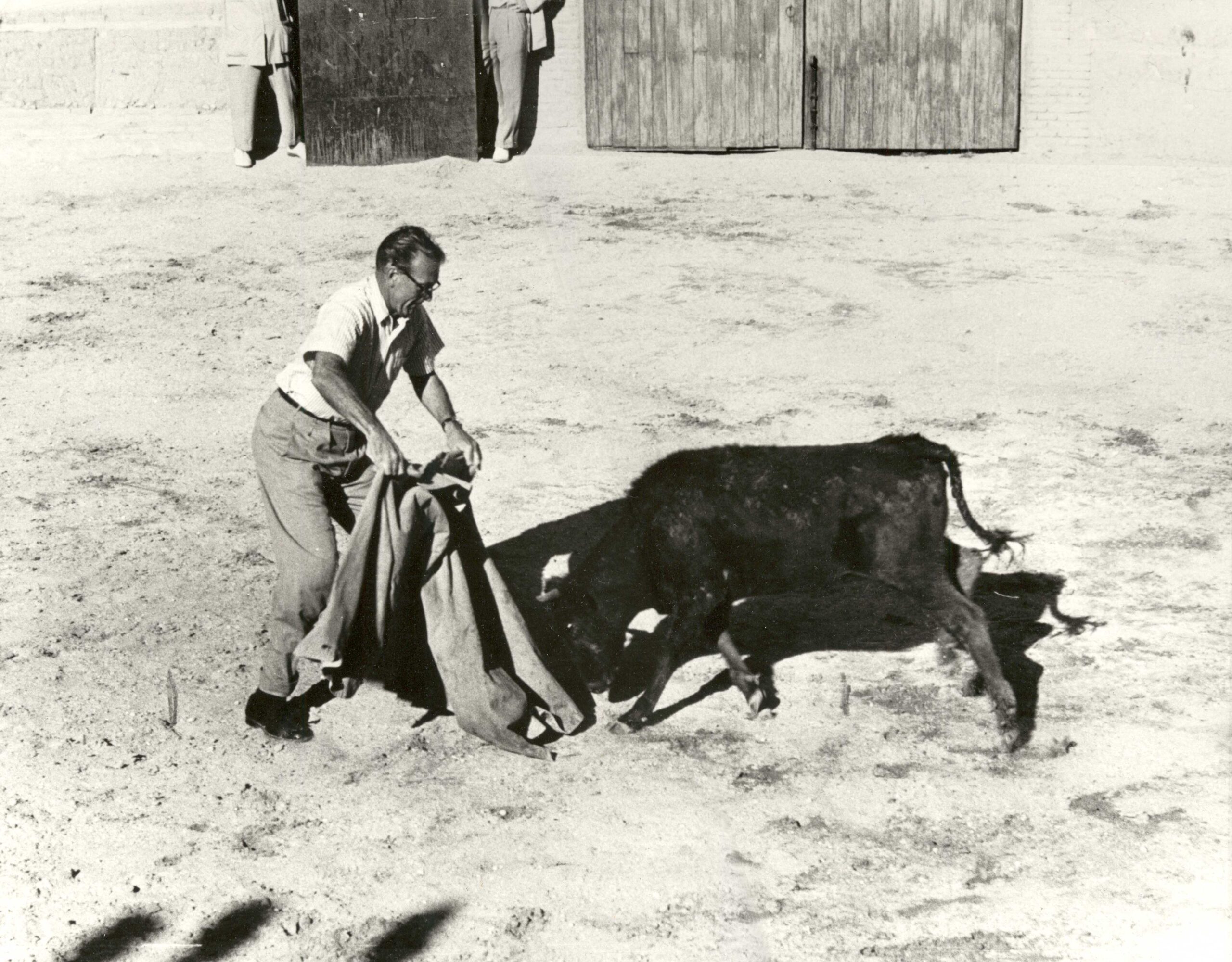
Cooper in the ring with a bull in Pamplona, Spain. (Courtesy of Maria Cooper Janis)

Lessons From Cooper

Cooper kept working in Hollywood for nearly a decade more until his tragic death from cancer. But Janis wants people to know that there was so much more to her father than his time on the big screen. It is one of the reasons she wrote her book “Gary Cooper Off Camera: A Daughter Remembers,” which focuses on his family life.

“We had a very close family bond,” she said. “If you have loving parents who show you discipline, that’s a leg up in life. I think the importance of a loving, strong father figure for a girl is excruciatingly important.”

Her mother and father were both a source of encouragement. Despite growing up the daughter of Gary Cooper, she never felt pressured to go into acting.

“He basically left it up to me. He and my mother were very realistic. I came to my own conclusions about what I wanted in my life,” she said.

She studied art at the prestigious Chouinard Art Institute in Los Angeles and began a successful career as a painter. She said that being an artist was apparently in her DNA, as her father, her grandmother Veronica Gibbons, and her great-uncle Cedric Gibbons, who designed the Oscar statuette, were gifted artists.
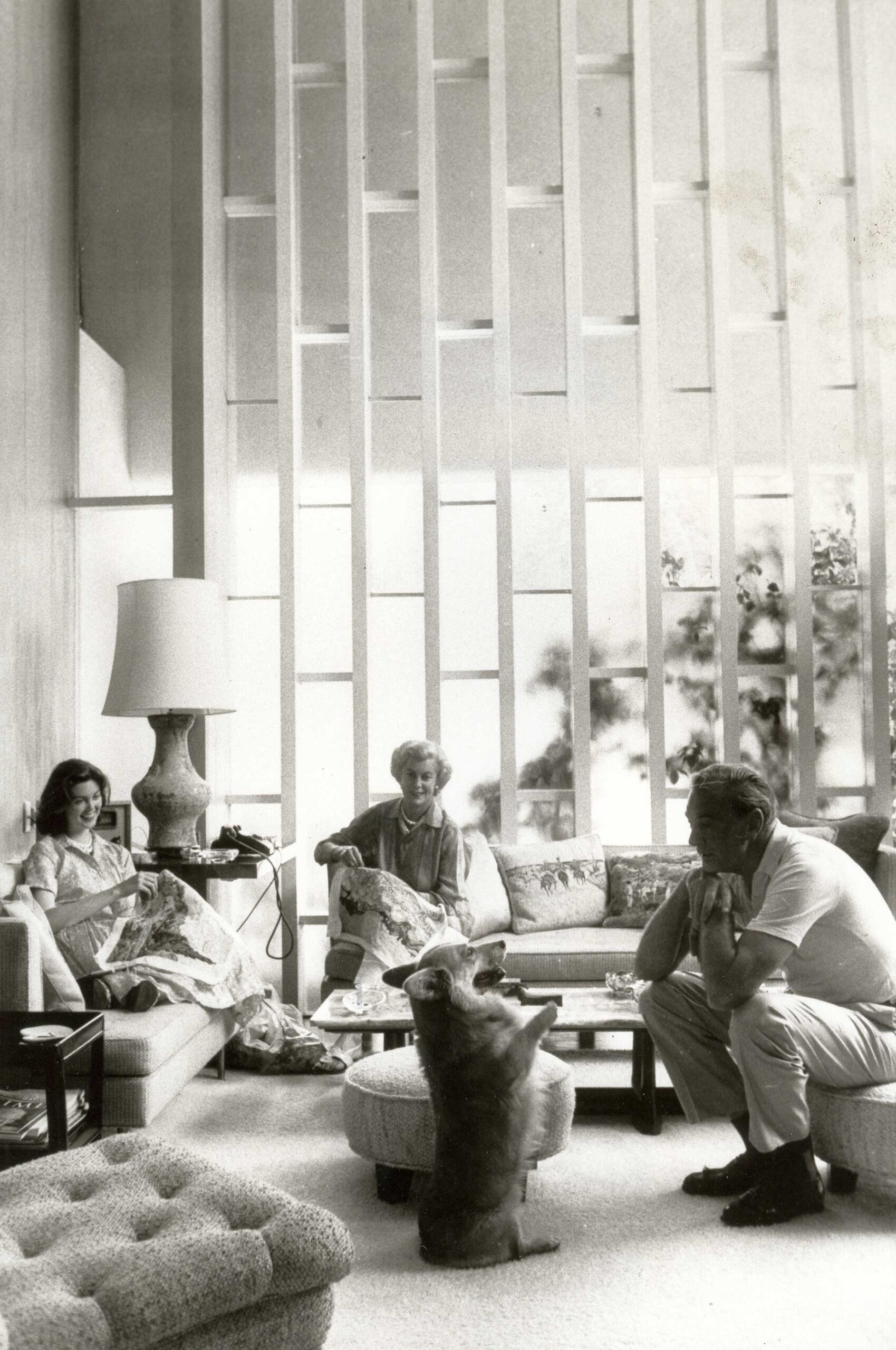
Family time at Cooper’s Brentwood, Calif., residence. (Courtesy of Maria Cooper Janis)

Cooper―at home and on-screen―had given his daughter the proper perspective of what she should look for in a husband. He had thoroughly educated her on the fact that there were some men who “don’t act very gentlemanly.” So he taught her boxing and self-defense.

“He told me, ‘Don’t let any man intimidate you. You are going to be a beautiful woman. Stand up for yourself,’” she recalled. “It was enough to give me a sense of confidence.”

When her father died in 1961, she continued her career in art and retained that confidence. In 1966, she married another artist, Byron Janis, one of the world’s greatest classical pianists. She said marrying Janis was “the greatest fortune that could have ever happened to me.” The two celebrated their 57th wedding anniversary this April.
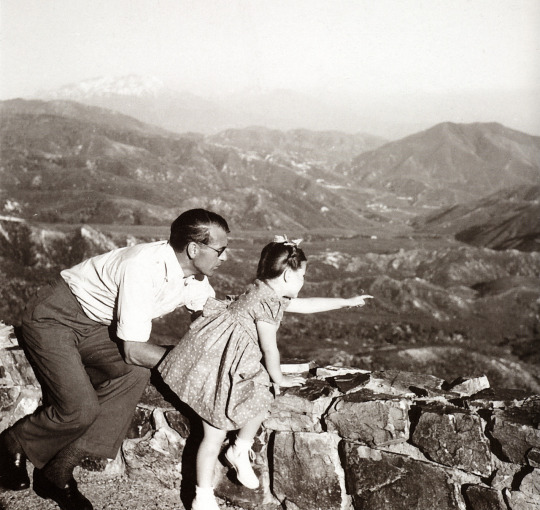
Cooper and little Maria at the Grand Canyon. (Courtesy of Maria Cooper Janis)

In Cooper’s Memory

Although Cooper has been dead for more than 60 years, his legacy remains. That legacy has been entrusted to his daughter’s care. She has worked to champion her father’s causes as well as his name.

Janis established a scholarship at the University of Southern California in Cooper’s name for Native American students who wish to pursue an education in film and television. She also advocates for continuing research into the terminal illness of amyotrophic lateral sclerosis (ALS), famously known as Lou Gehrig’s disease.

Along with her book, she collaborated with Bruce Boyer on his book “Gary Cooper: Enduring Style” and contributed to the documentary “The True Gen,” about Cooper’s friendship with Ernest Hemingway. She also established the official Gary Cooper website dedicated to his memory.

Janis said she has understood her past and that of her father’s better over the years, quoting the Danish theologian Soren Kierkegaard: “Life can only be understood backwards; but it must be lived forwards.” In a broader sense, her efforts are to ensure Gary Cooper will be better understood by all as the years go by.

The family loved making music together. (Courtesy of Maria Cooper Janis)

From Aug. Issue, Volume 3

Categories
Features

Emmy-Winning Costume Designer on ‘Creating a Fantasy’ for TV

Hand carved wooden buttons, a hat with the perfect amount of crease, a tie of just the right width—every visual detail in a great film or show adds to the creation of a world, and Janie Bryant knows how clothing can tell a story.

“Reading the script is like reading a great novel. … A script is like my road map to understanding the character, which leads my imagination, and the costume,” said Bryant, an Emmy award-winning costume designer whose career has been filled with era-defining drama series. The latest, screenwriter-director Taylor Sheridan’s “1923,” is set in a time of contrasts, when “chic” fashion and haute couture found its roots. It’s also a world where different cultures often clashed.

“There’s these worlds with restrictions and boundaries, and then the other side of it is freedom and letting loose and going wild,” said Bryant, who worked on both prequels to the hit “Yellowstone” TV series, “1883” and “1923.”

Scarlett, My Icon

Classic films have served as an inspiration throughout Bryant’s life. As a child, the Tennessee native would watch “Gone With the Wind,” “Wuthering Heights,” “My Fair Lady,” and “Guys and Dolls” regularly with her family, and she still revisits these favorites frequently.

“I mean, Walter Plunkett, he’s probably my favorite costume designer,” said Bryant. Plunkett worked on no fewer than 150 projects during his Hollywood career, including Scarlett O’Hara’s iconic dresses from “Gone With the Wind” which so inspired Bryant as a child. Initially, though, she had no idea this was a career option; Bryant pursued fashion design and went to Paris, then New York, before serendipitously meeting a costume designer and learning about what she did.

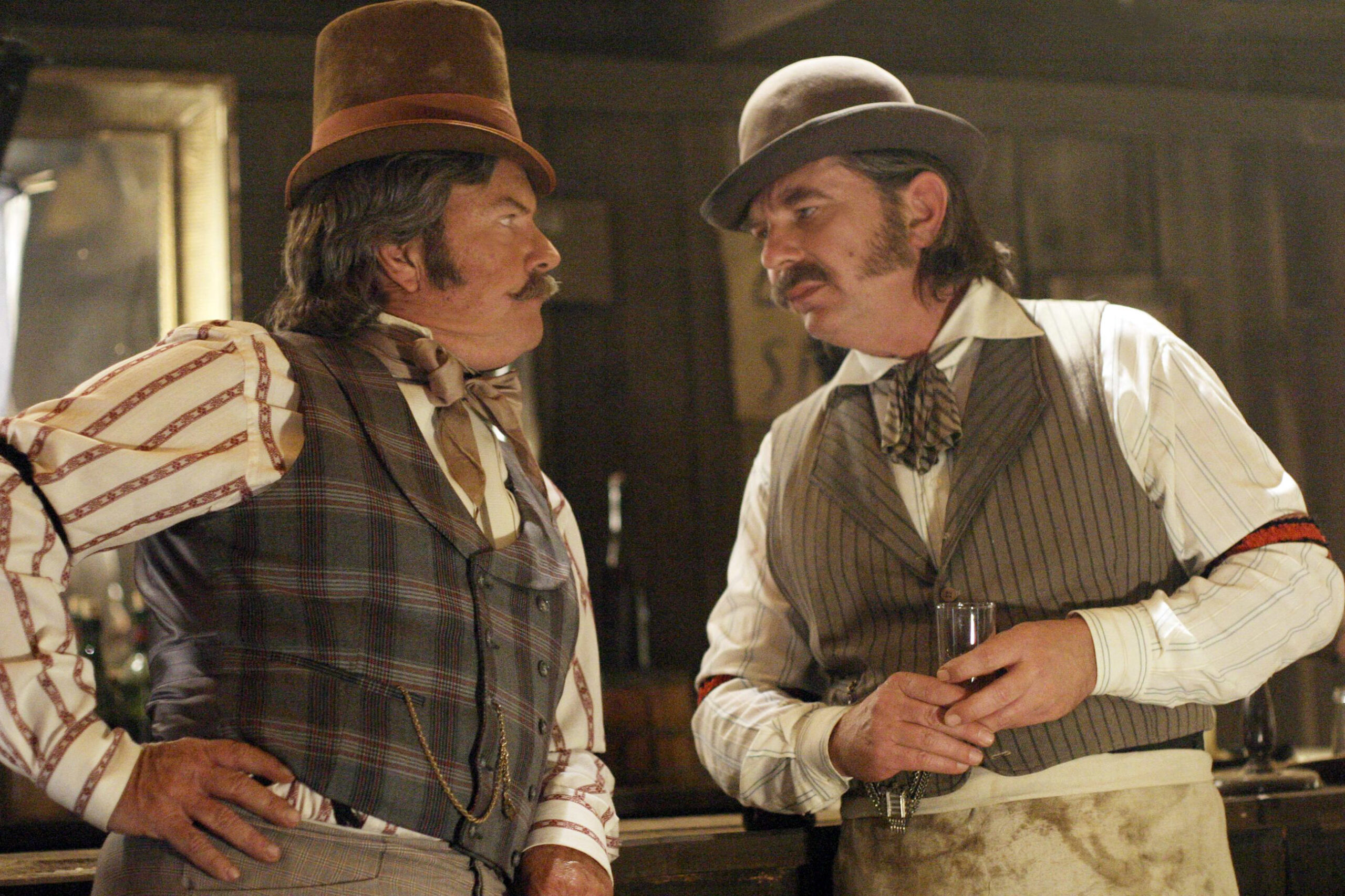
‘‘Deadwood’’ gentlemen at the saloon. (MovieStillDB)

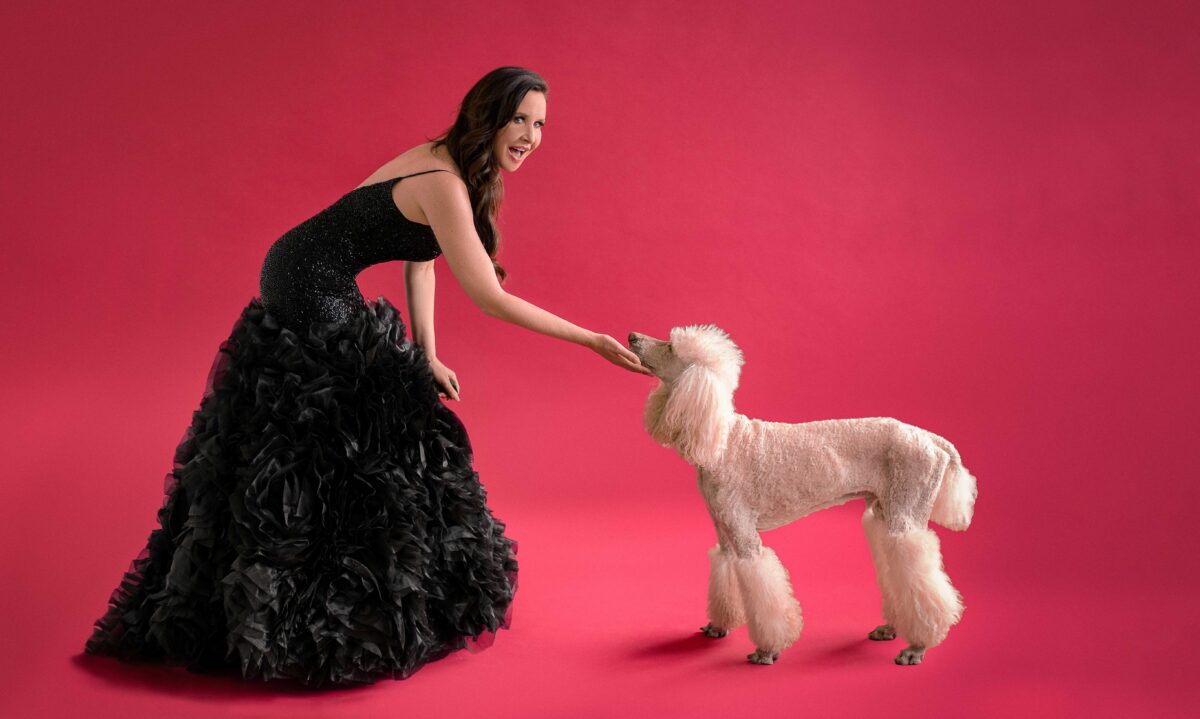
Getting into the industry was a hustle, and staying in it was a bigger one. She designed more than costumes—sets, hair and makeup, and anything else that needed designing—and worked long hours on commercials, independent films, and television. Bryant, who has always had poodles, was about ready to quit and design dog clothes instead (“If I had at that point, I probably would have been a bazillionaire now, but I didn’t do it!”)—when she got a phone call from TV writer and producer David Milch, asking her to work on “Deadwood,” a Western series set in 1870s Deadwood, South Dakota, during the time of prospectors.

“I’d been asking God to please, just let me design a period piece,” Bryant said. “And, you know, it came to me. You ask, and you have to believe that if you are asking, it’s already yours. That’s what I would tell my younger self. Timing is not up to us, but believing and receiving is.” Bryant ended up winning an Emmy in 2005 for her costume design on “Deadwood.”

All the Stars Aligning

“Costume design is bespoke,” Bryant said. It is about creating clothes for specific characters based on the specific events happening in the script, based on the things they say. These costumes are often built from scratch, and sometimes in multiple copies, then aged and distressed to show passage of time and the toll of the environment.

This creativity flourishes greatly, then, with great collaborators. When show creators have already built an immersive world through words and are visualizing the colorways of certain characters; the plot points to an item of clothing or accessory that could carry the story forward; and growth and contrast can be shown through costuming; then the results can be iconic.

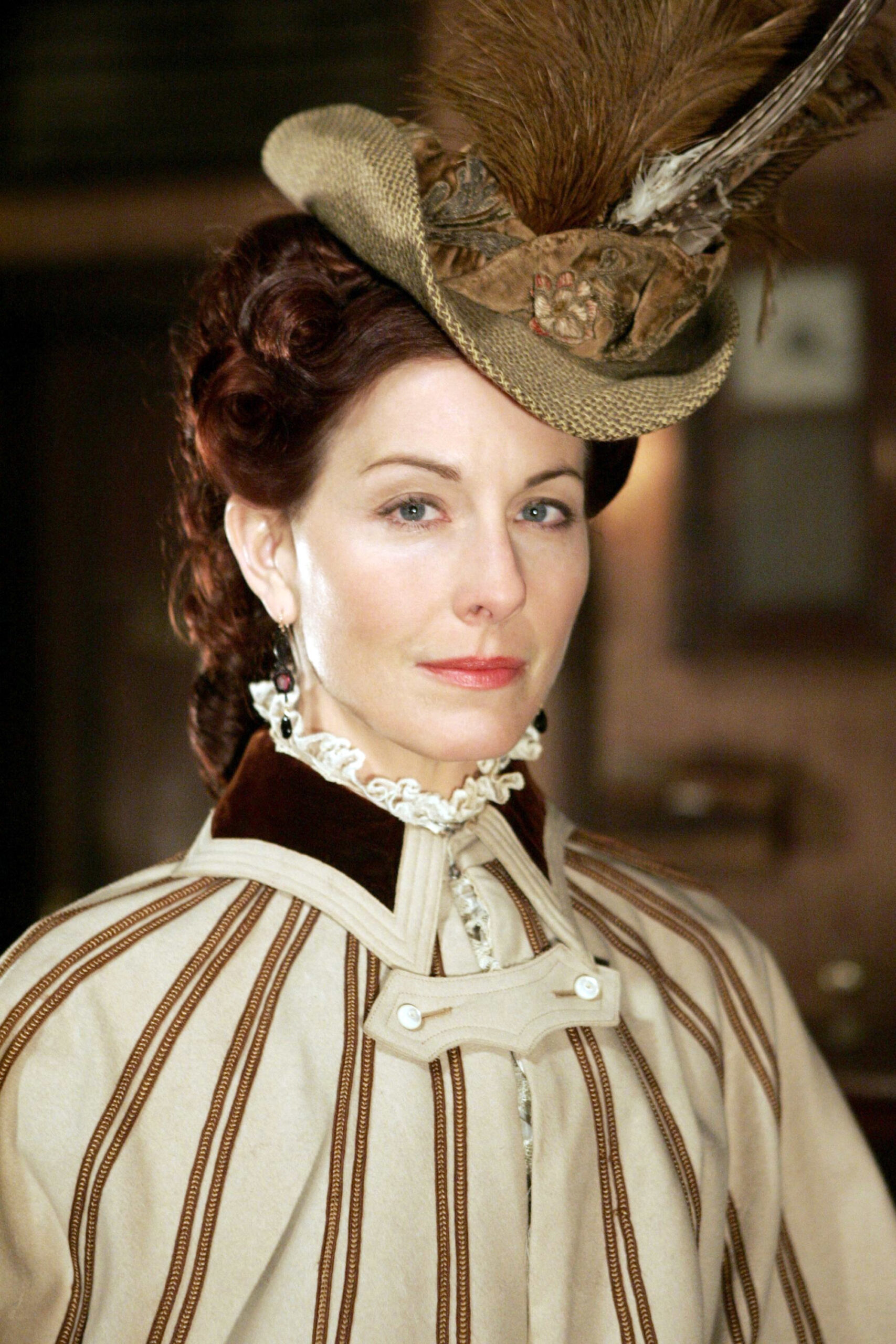
Accessories also played an important role in showcasing characters’ personalities. Here, a ‘‘Deadwood’’ character with a bird-feather-adorned hat. (MovieStillDB)

“I’ve been so blessed to work with so many creators that are incredible, and incredibly talented, like David Milch, Matthew Weiner, Marc Cherry, Taylor Sheridan,” she said. “They’re so passionate about what they write about, and they’re so passionate about the characters that they create, so it’s so inspiring for me to be able to do my work.”

After “Deadwood,” Bryant went back to work on films—when she got a call about a 1960s show. She worked on the critically acclaimed “Mad Men” for the next eight years, and she was nominated for best costume design in the Emmys another four times for her work on the show.

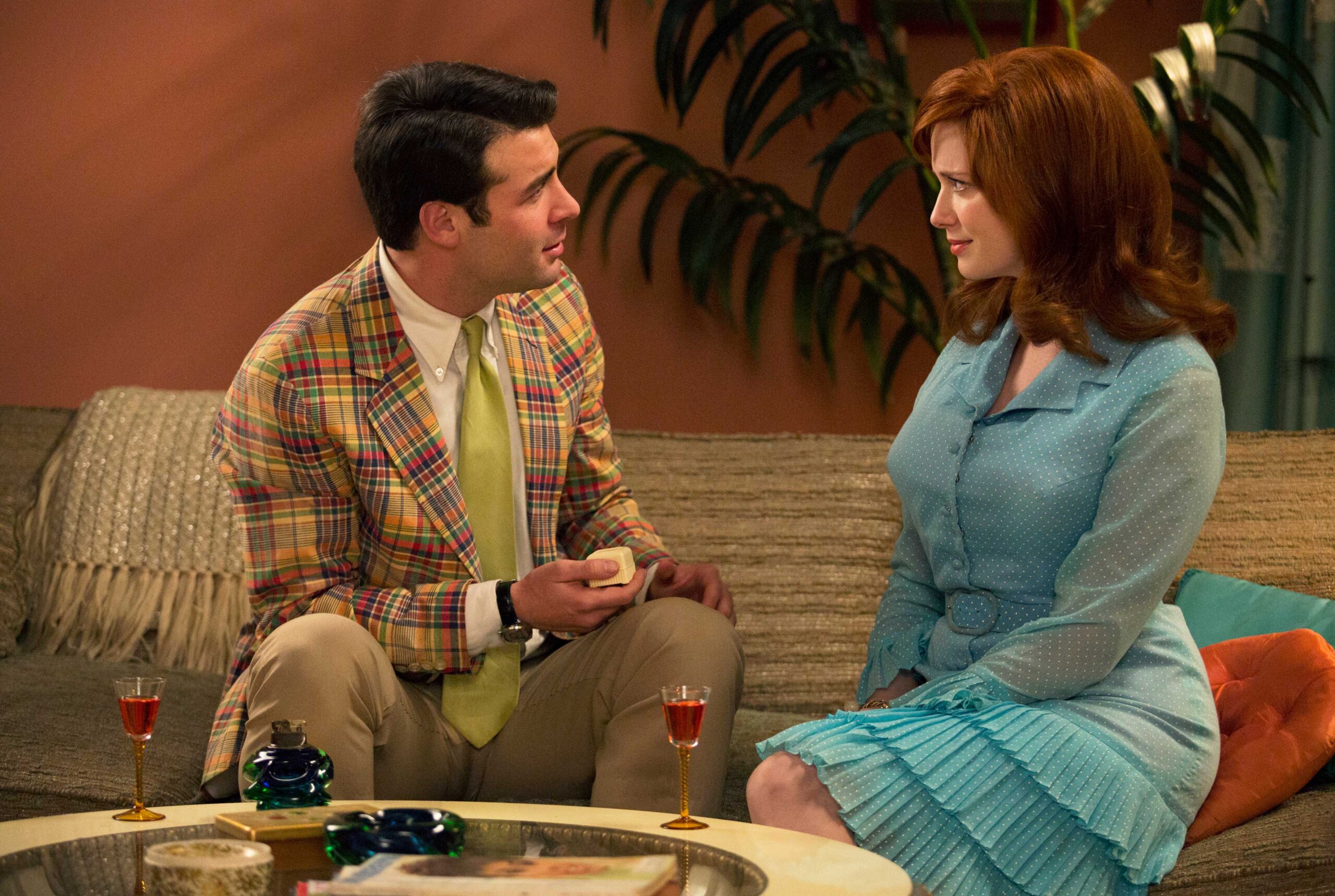
Bryant liked to incorporate vintage pieces on ‘‘Mad Men.’’ (MovieStillDB)

“I always describe ‘Mad Men’ as all the stars aligning. It was like there was magical fairy dust sprinkled on that production, because it just changed so many of our lives in profound and amazing ways,” she said. “For all of us working on the show, … but also at that time people just gravitated to the whole entire design of that show, not only the costume design, but the production design, and hair and makeup. … It had global impact—this resurgence of appreciation and love for mid-century modern.”

The 1960s was another period of culture clashes, and it actually changed greatly from the beginning of the decade to the end in terms of fashion. The looks remain iconic in the American mind. “I’ve always felt the reason the clothing feels accessible to this day: … People can still relate to the period,” Bryant said.

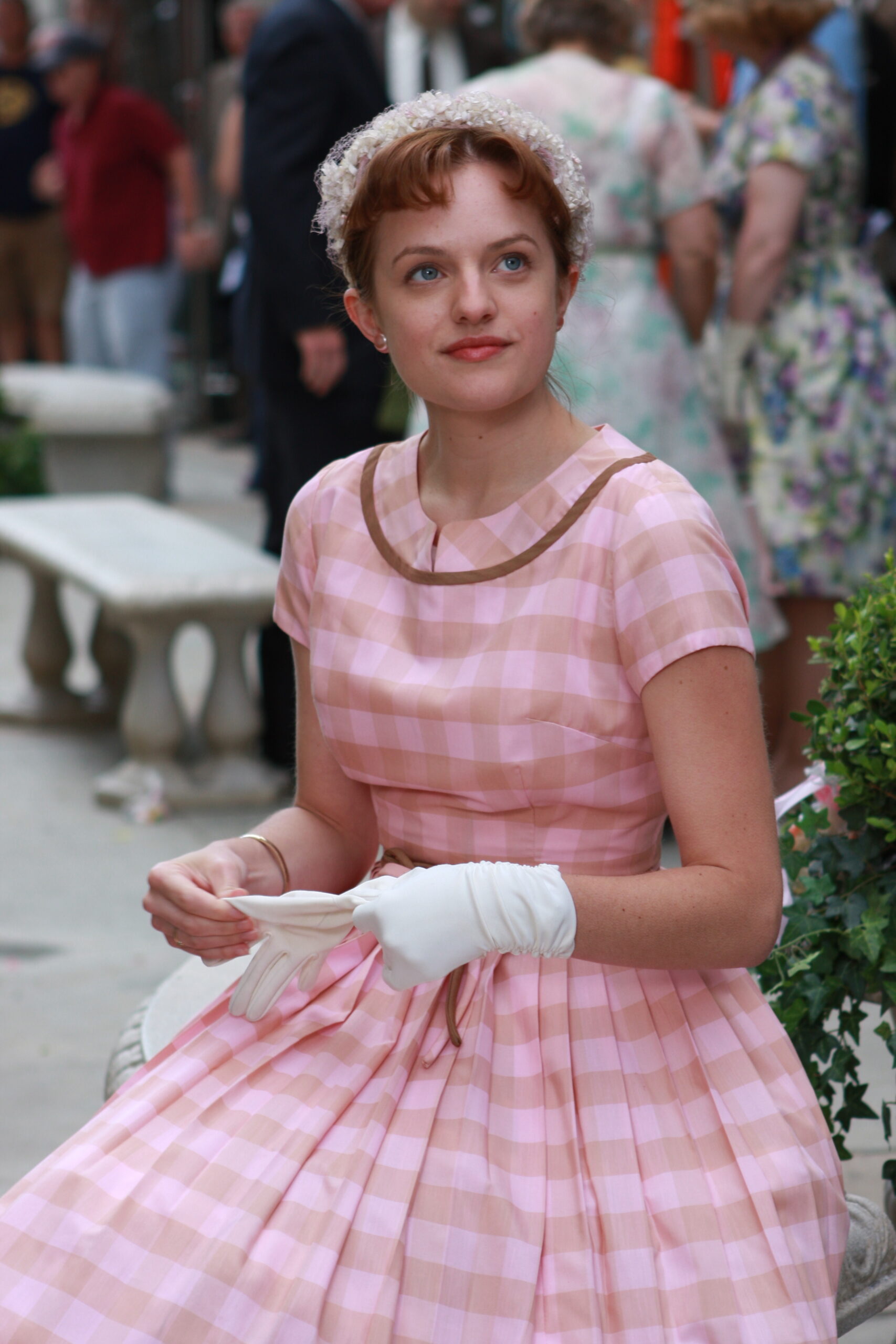
The character of Peggy Olson, played by Elisabeth Moss, in ‘‘Mad Men,’’ dressed for Easter Sunday. ‘‘I always tried to incorporate checks [patterns] for Peggy because I felt they were indicative of her earnest, schoolgirl nature,’’ Bryant said. (MovieStillDB)

The success of the show, and its cultural impact, led to several fashion collaborations. Bryant designed a “Mad Men” edition Brooks Brothers suit; created three collections with Banana Republic; wrote a book on fashion; designed uniforms for the Watergate Hotel staff in Washington, D.C.; and made a dress collection for high-end fashion brand Black Halo and a shoe collection. She was about to leave film for fashion when actress Eva Longoria invited her to work on “Telenovela.” “We had so much fun, and telenovelas are so over-the-top,” Bryant said. The soap opera was filled with lavish gowns and matching shoes.

Television is experiencing what many refer to as a golden age, and even the global pandemic couldn’t put a dent in the amount of programming coming out of every studio. The pandemic was a blessing in that Bryant got to spend three months with all her family, longer than she had since college. After that break, in the past three-and-a-half years, she’s been busier than she’s ever been.

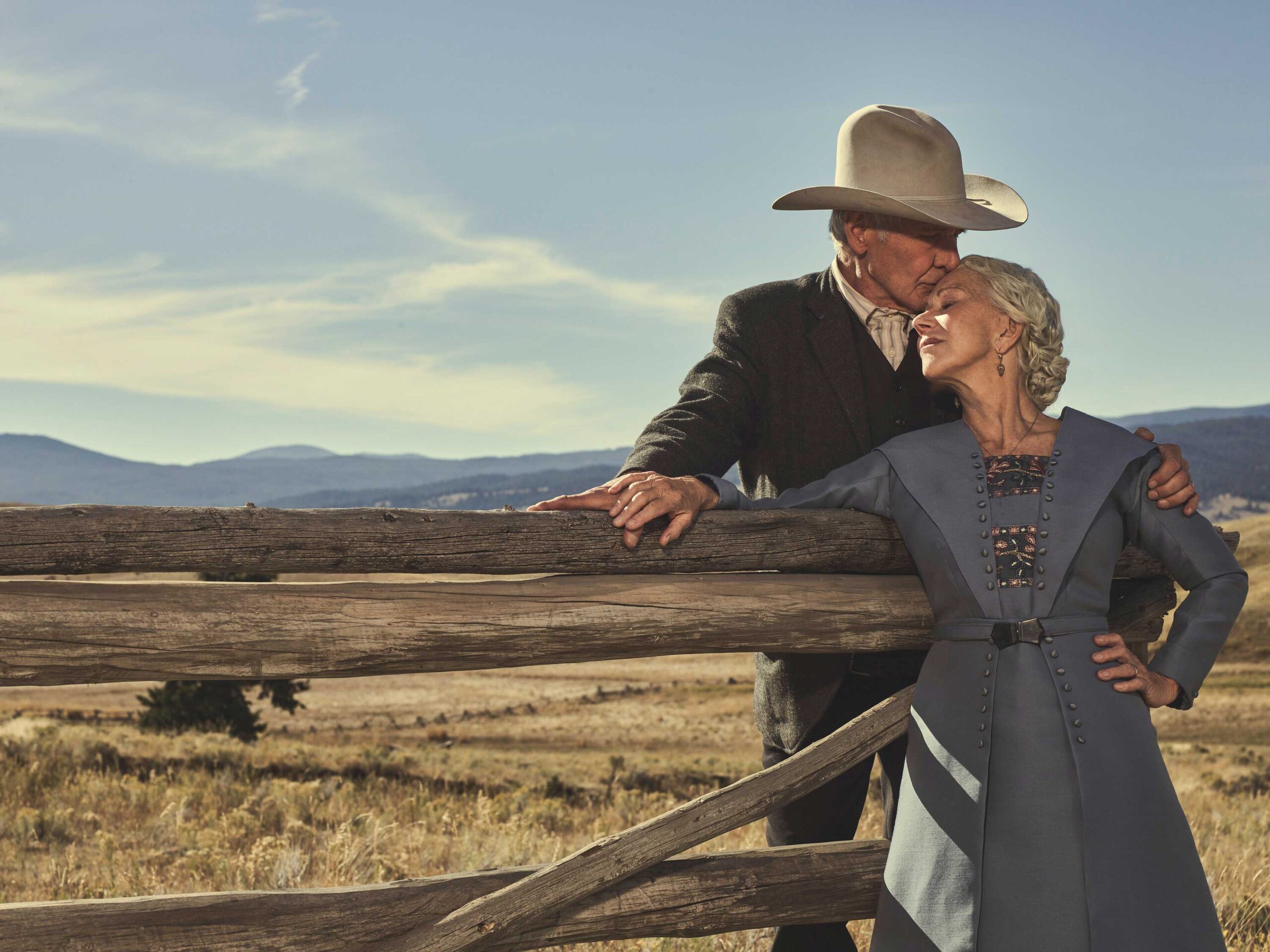
Harrison Ford and Helen Mirren co-star in the “Yellowstone” prequel, “1923.” (MovieStillDB)

The Fantasy

Bryant’s own personal style runs toward the feminine, romantic, and glamorous. At work, she dresses in all black, or all white, and boots—always high-heeled. Her team likes to joke that it’s going to be a bad day if they ever see her in sneakers off the tennis court.

“I love the 1770s—French Rococo. The men are fancier than the women in some cases. I would love to design a fantasy Disney movie, I would love that. Anything that’s period fantasy would be a dream,” she said. A Rococo-period project hasn’t come calling yet, but Bryant has begun working with Will Smith and Martin Lawrence on “Bad Boys 4”; will be back to work on “1923”; is the resident designer for outdoor clothing brand Tom Beckbe; and is designing the uniforms for Lone Mountain Ranch in Big Sky, Montana. The Western theme is a timeless one.

Bryant’s schedule is packed, but she’s become well-versed in work-life balance. “I always say to my team, do not let this job rob you of your beauty.” These days, joy is found in the daily, little things—meditation, practicing gratitude, dinners with friends, being in nature. “The lesson that I still learn is just relax, and believe in yourself. Especially as a creative person, we have to remind ourselves of that a lot. It all works out as it should.”

Perhaps the pinnacle of creation is being able to bring a new world to life. It’s certainly rewarding for Bryant. “I’m truly passionate about designing period pieces, because it is creating a whole entire world,” Bryant said. “It’s part of creating a fantasy in a way. It’s like time travel.”

From Aug. Issue, Volume 3

Categories
Features

How Fear Motivates Dennis Quaid, Who Will Play Reagan in New Film

Dennis Quaid is drawn to projects that strike fear on first encounter.

“You take that fear and you channel it, and you use it. Then what it is is energy,” said Quaid, actor and, some may be surprised to know, singer-songwriter. Fear is what ignited some of his most inspired moments while writing his latest album, “Fallen: A Gospel Record for Sinners,” and what drove him to say yes to playing Ronald Reagan in the upcoming biopic “Reagan,” which spans the life of the late president and is told from the perspective of a KGB agent.

“Fear is really inspirational,” Quaid said with a laugh.

Seeking God

“Fallen,” the album, was 30 years in the making, he explained, built around a song he had earlier written for his mother, “On My Way to Heaven.”

“I was coming out of addiction at that time, and I wrote the song to let my mother know that I was okay,” said Quaid, who has been open about his struggle with cocaine in the ’80s. The song was released with the addition of a bridge he penned within minutes, on the soundtrack of the 2018 faith-based film “I Can Only Imagine.”

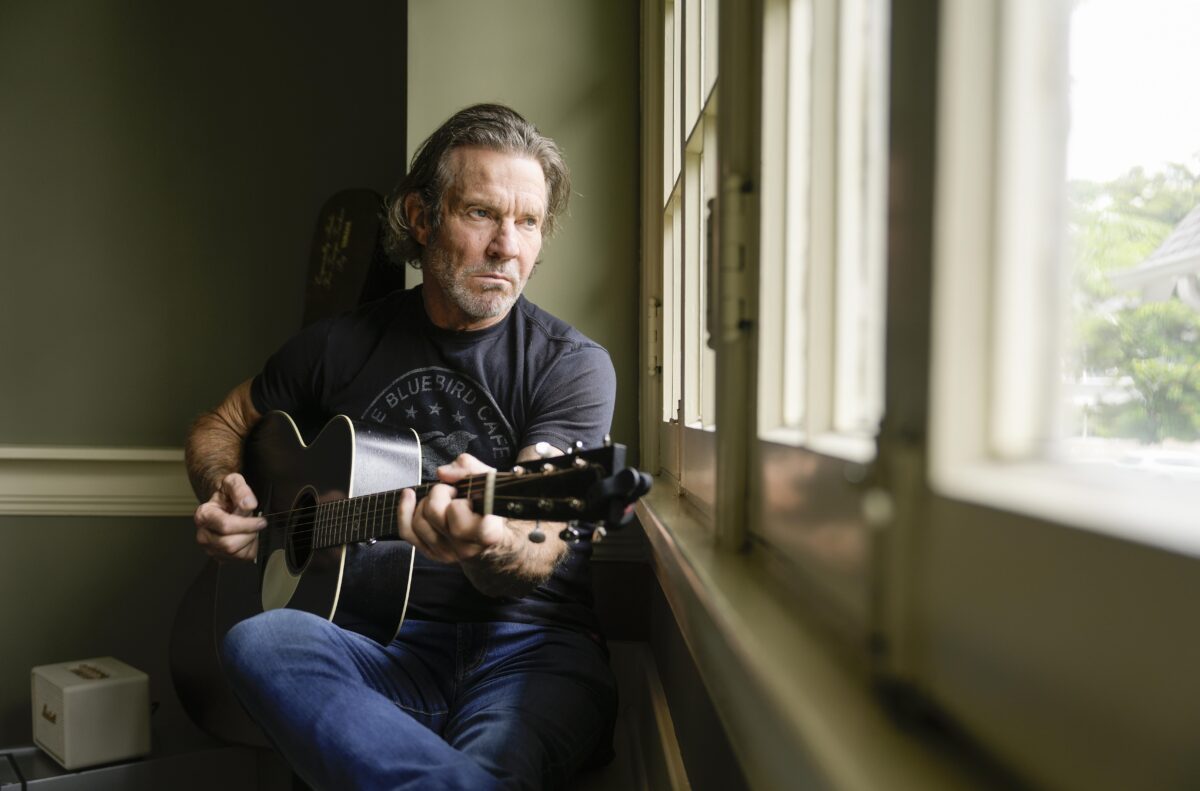
Quaid is releasing his second music album after four decades of touring the country with his music. (Samira Bouaou for American Essence)

“So it took me 30 years and 15 minutes to write the song,” Quaid said. After her passing four years ago, he felt compelled to write a song about her vision of heaven. She was religious, and a bit literal about it, he said; he himself has always been more of a spiritual person.

“My dad passed back in ’87, and my mom passed four years ago, and it led to a lot of thinking about what’s after this, and what is all this for?” Quaid said. “It’s about a personal relationship with God.” Quaid grew up on the hymns of the Baptist Church and loved the music even though he had grown “disillusioned with church-ianity,” he said. In his teens, he read the Herman Hesse novel “Siddhartha” about the life of the Gautama Buddha, and he started on a journey of reading books and sacred texts from different faiths.

“They’re really all about the same thing,” he said. “It’s man seeking God and knowing God.”

When he overcame his addiction, …

…

(This is a short preview of a story from the Aug. Issue, Volume 3.)

Categories
Features

Chef Andre Rush Is Committed to Serving Others—Whether Presidents, Fellow Veterans, or Underprivileged Kids

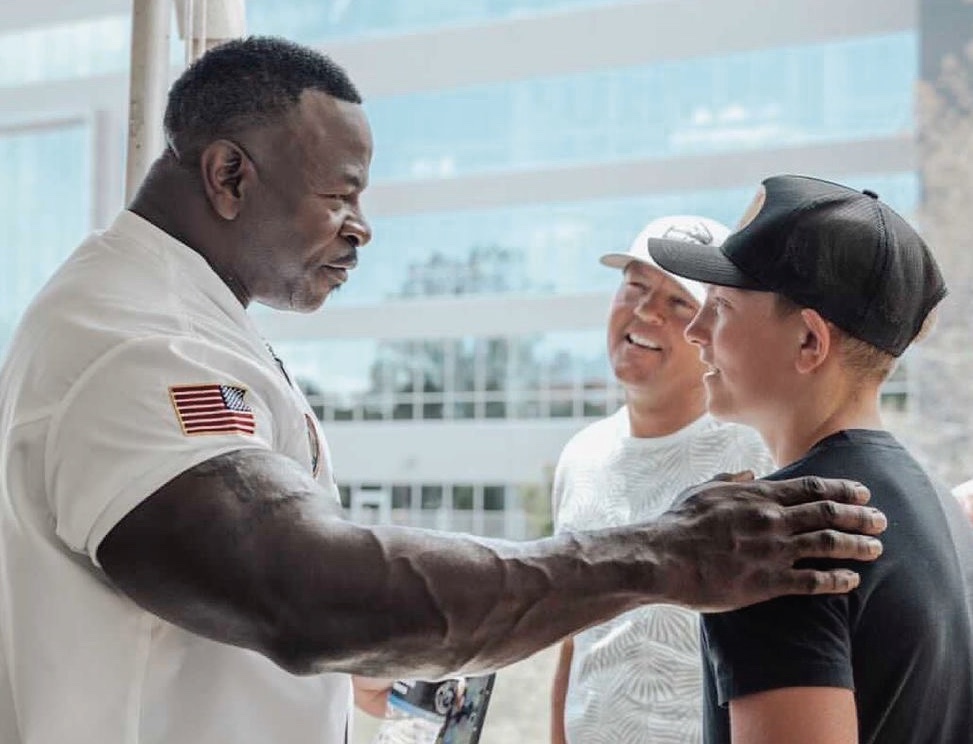
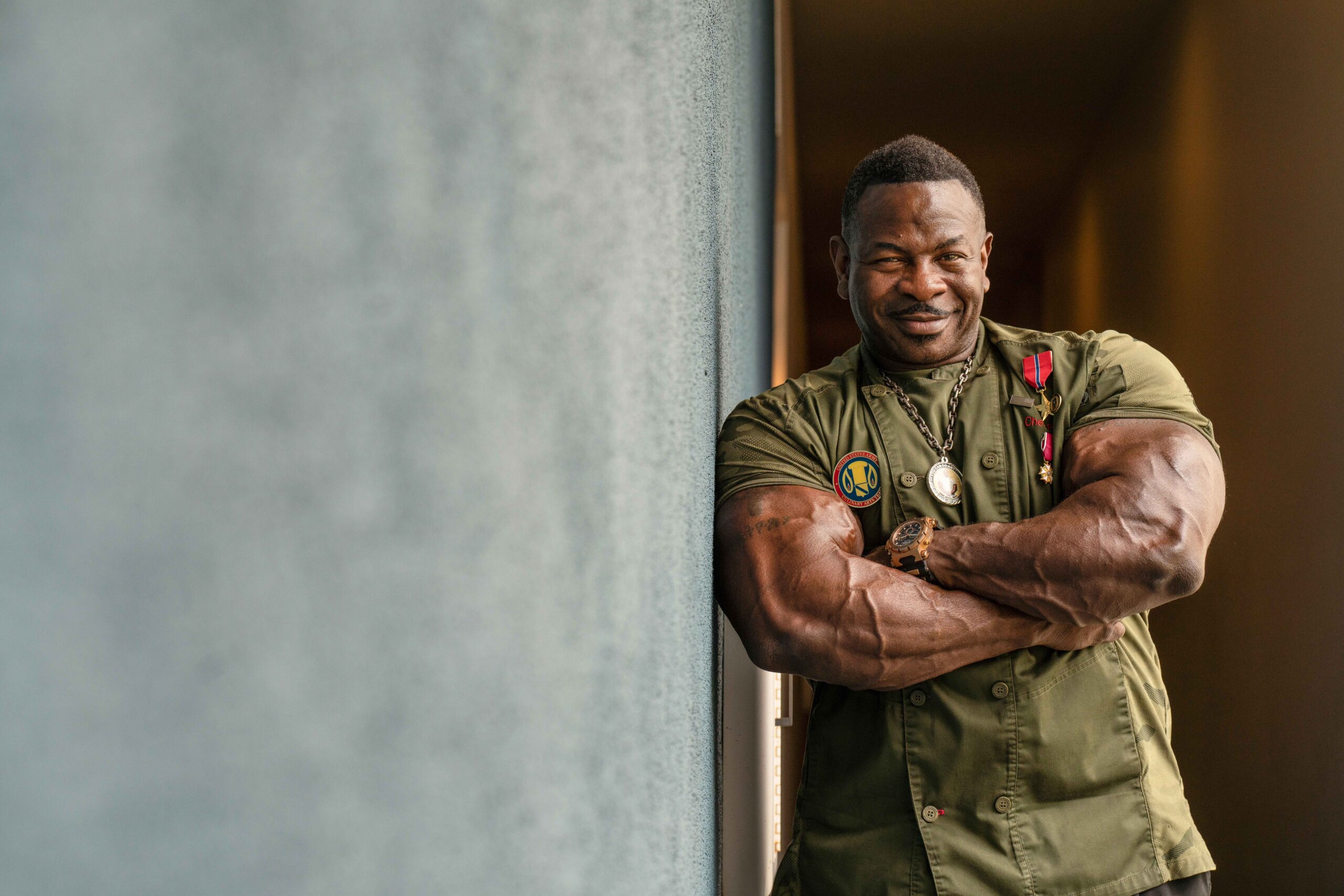
Standing at 5 feet, 10 inches and some 270 pounds with his famous 24-inch biceps, chef Andre Rush is used to drawing looks. But these days, they’re usually from excited 10-year-olds wanting a hug and photo with their “superhero,” he says.

Rush, a retired U.S. Army Master Sergeant, was a White House chef through four administrations, cooking during the Clinton, Bush, Obama, and Trump years. He now hosts the Gordon Ramsay-produced show “Kitchen Commando” to kick struggling Washington, D.C., restaurants back into gear.

Armed with heart and hospitality, Rush uses cooking to create community and raise awareness about mental health, especially for fellow veterans with post-traumatic stress disorder (PTSD), preaching love and service everywhere he goes. He’s proud that his message reaches young people—because the future generations need it, Rush says.

“There may be one little nugget in there who’s going to be Chef Rush times a thousand, and he or she is going to … find someone else to keep pushing it along,” Rush said.

With many kids among his fans, Rush hopes to be an inspiration for younger generations. (Courtesy of Andre Rush)

An Unexpected Path

Cooking was never meant to be a career, said Rush. Growing up poor in Mississippi, cooking was caring and love in action.

One of Rush’s brothers was a Marine, the other was a Navy officer, one of his sisters was an educator who helped the blind, and his mother “cooked for everyone in Mississippi,” feeding all who needed it. Their father led the siblings—five girls and three boys including Rush—to pick food on local farms by hand, to embed fortitude and hard work in their characters. It taught him always to be the hardest worker in the room. It impressed upon him the value of service.

So Rush, who said he had earned an art scholarship, a track scholarship, a football scholarship, and Olympics prospects, decided to join the military himself. He soon joined the food service team only to learn it was nothing like what he thought cooking was about. “It’s mass feeding,” Rush explained. “Feed and go.”

But less than a year into his military career, Rush said a Sergeant Major came up to him out of the blue, told him about a culinary competition, and asked him to train for it.

(John Fredricks for American Essence)

“I didn’t even know what ‘culinary’ meant,” Rush said. He went down to train at the United States Army Culinary Arts Team annual competition in Fort Lee, Virginia, and saw that the hobby he grew up with, cooking alongside his mom, was a serious culture in and of itself. Sugar pulling, ice carving, pastry creation—it ignited the artistic side of Rush. “I just became infatuated with cooking,” he said. In the pre-internet era, he bought books he couldn’t understand to try to learn techniques he’d never heard of, and he used those competitions as his training ground. He went on to win 150 medals and trophies with the United States Army Culinary Arts Team.

A few years into food service, a call came from someone Rush once helped, asking if he wanted to go to Washington. It took him by surprise—even more so when he was told it was to cook at the Pentagon. There, and later when he cooked part-time at the White House, Rush learned much about diplomacy.

“They take food very personal, … it’s one of the main duties,” Rush said. “Food is morale. … Food can save lives and end lives, start wars and end wars.”

Salvation in Service
Rush is a combat veteran who stayed enlisted in the Army during his cooking career. On September 11, 2001, he was inside the Pentagon when the plane hit; it motivated him to return to combat duty and led to tours in Iraq and Afghanistan. He retired from active duty in 2016, and he continued to cook, consult, and prepare major events at the White House—while learning to cope with the acquired trauma.

Rush was in a Wounded Warrior unit, realizing that being surrounded by low energy was dragging him down, too. He decided to go to the gym instead, and, by chance, another veteran from the United Service Organizations (USO) next door decided to join him. “He was a kind of heavyset guy, and in two weeks, his body had changed,” Rush said. It stunned the others around him, and that workout team grew to 5, then 10, then 20.

Rush realized that working out to relieve stress was all well and good, but stress management had to be incorporated into one’s daily life to actually stick. He was cooking for himself at home when it dawned on him: What could be more vital than eating?

“I remembered my mother, I remembered everything that she taught me, and how I felt with it, so I held onto it and I decided to bring it over to the USO,” Rush said. He organized cooking classes for the group, and his own experience with cooking primed him to help others see it the same way. He would ask, “What’s your fondest memory of food?” Maybe their mother or grandmother used to make a favorite dish for them.

Cooking was supposed to be a vehicle for caring and connection, and so Rush grew the classes to include their spouses and children, pulling the veterans out of their isolation. He remembers a man breaking down into tears, apologies, and gratitude when he realized how much care and effort went into preparing a meal—what his wife had been doing for him every single day. A colonel was inspired to start a food truck for mental wellness after participating.

Rush shot to fame in 2018 when, while cooking at the White House’s Iftar celebration, a breaking of the Ramadan fast, a reporter’s photo of Rush and his 24-inch biceps went viral on Twitter.

He used his newfound platform to speak out about mental health and what veterans face, with initiatives like Mission 22, doing 2,222 push-ups every day to raise awareness about the fact that an average of 22 veterans take their own lives in America every day.

“We’re always going to struggle, it’s always going to be there. There’s not a perfect world of perfect people out there, it doesn’t happen that way,” Rush said. “What’s not OK is to not get support, because it’s not only about you, it’s about everything else that you do, everybody that you meet, and it’s also about future generations.”

“I have to break it down for people who think that ‘they’ll be better off without me.’ That’s an absolute lie. You know what, if that’s the case, dedicate your whole entire life that you were going to give up to doing something for everybody else. It’s that simple.” And Rush helps them do it—he takes his fellow brothers in arms to cook for underprivileged kids, people who look at these veterans who think they have no worth like they’re superheroes, too. “If it’s going to save [a] life, it’s going to help someone, then I’m going to do it.”

“It’s humbling to see that you can change someone in so many different ways from just food alone,” Rush said.

(Per Bernal)

Food and Fitness With Chef Rush

You are what you eat—it’s a cliche, but it’s true, says Rush. “What you put in your body is what you’re going to give your body, and don’t say I’ll do it later—you have to do it right now, every day.”

Rush is an endurance trainer, but a core part of fitness is knowledge, he says, and that means understanding how to listen to your body and what it tells you it needs, because every ideal diet and regimen is individual.

“The first thing I tell people is always get your blood work checked out, get your body checked out,” he said.

Then, think about your goal. “When I say goal, I mean life goal, not your fitness goal. Life goal is ‘I want this for the rest of my life.’ They should be hand-in-hand.” Building a body is like building a country, Rush says, not a plywood house. To have a solid foundation, you have to think about your sleep cycle, your lifestyle, your mind, your environment, and everything in concert—it’s not just counting macros.

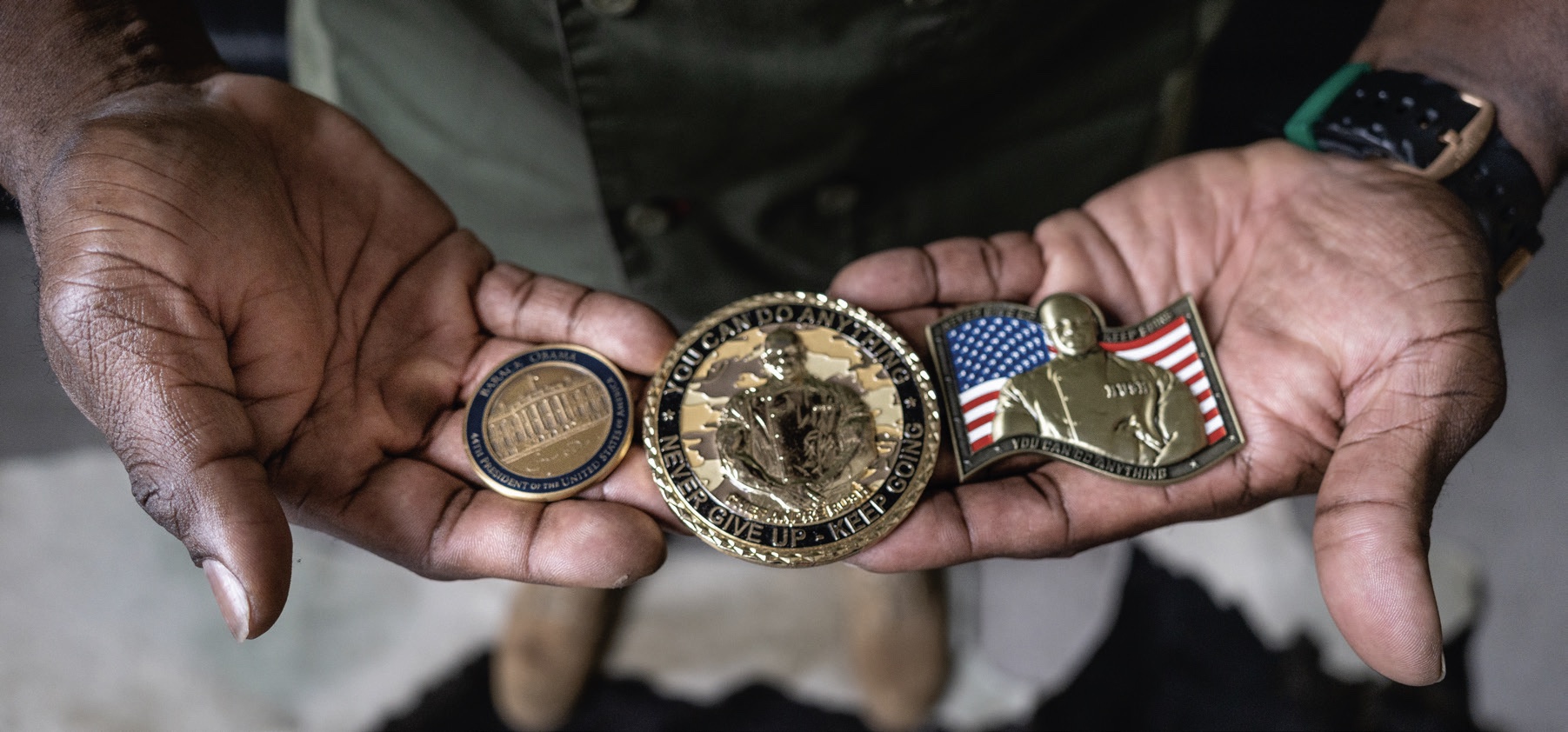
Rush starts his day with early morning meditation, followed by push-ups for his cause, and affirmations: “looking at myself in the mirror and telling me, ‘I can do anything, never give up, keep going,'” he says.

Southern Hospitality

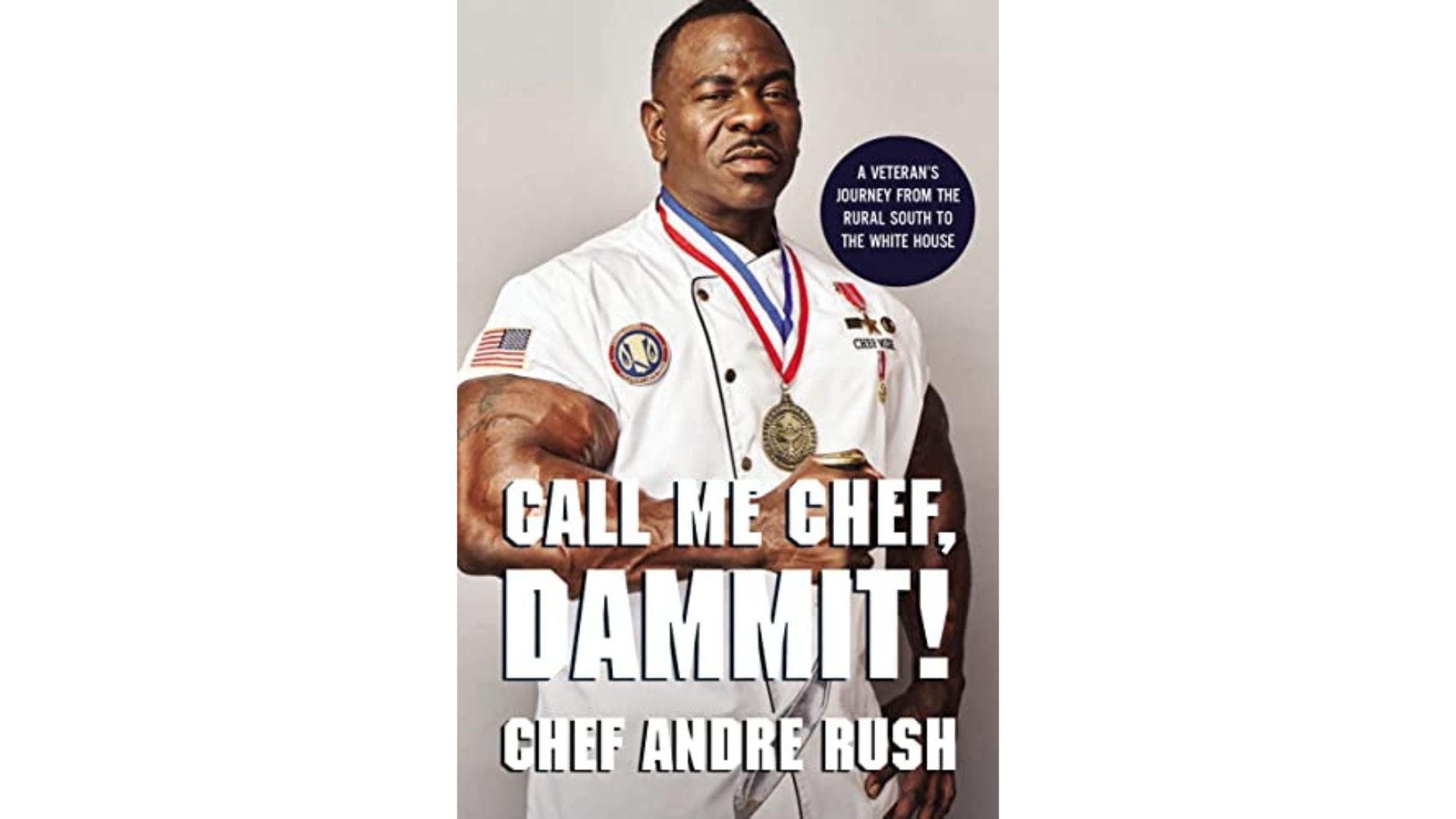
“My mother showed me how to cook. It didn’t start with a recipe but with respect to others. … Whether she was serving her sons and daughters or a complete stranger, Mom always showed love and affection with the food she made. She instilled in me the same desire with the meals I would go on to create. It didn’t matter if they were presidents and kings and queens or homeless people. Hospitality means putting your heart into your work, every single time.” —Andre Rush in his 2022 memoir, “Call Me Chef, Dammit!”

“Call Me Chef, Dammit!” by Andre Rush (Harper Horizon, 2022).

RECIPE: Angry Chicken

From July Issue, Volume 3

Categories
Features

Anxiety Can Help Us—Here’s How to Make It Work for You

Successful people at the pinnacle of their careers often find themselves juggling more things at home and at work and struggling with stress. But what if anxiety could be transformed into an asset? Dr. Chloe Carmichael, the author of the self-help book “Nervous Energy,” said there are ways and tools to redirect anxiety into productive change.

“A lot of people don’t understand that anxiety does have a healthy function, which is to stimulate preparation behaviors,” Carmichael said. When patients ask her to help them get rid of their anxiety, she explains it would be like asking to get rid of all their body fat. In other words, she said, “it’s true that if it becomes excessive, it can be unhealthy, but we actually need certain amounts of it in order to function at our best.”

Instead, when they experience an anxious impulse or feeling, rather than wishing the stress away, Carmichael encourages them to dialogue with the anxiety and ask it, “What is the healthy action that you could be stimulating me to take?”

(Sander Sammy/Unsplash)

Say, for example, that a job candidate is apprehensive about an interview. In this case, taking a deep breath and dreaming of a beach would not help. Instead, Carmichael advised, he or she would be best served by looking “at the extra adrenaline and awareness that comes with anxiety and [saying], ‘Well, maybe I’m going to use this energy to make a list of the questions I anticipate they’ll ask me, and I’ll work out some answers to them. And I’ll try a mock interview with a friend.’”

Next time you get symptoms like a racing heart or sweaty palms, keep in mind that “oftentimes it’s just a raw excess of energy that could actually be used to our favor, if we know how to shape it strategically.”

Learning to harness this nervous energy not only decreases stress in that particular moment, but it also shapes a positive thought spiral and sets up a growth mindset that ultimately leads to more productivity and fulfillment.

“Nervous Energy” by Dr. Chloe Carmichael (St. Martin’s Essentials, 2021).

Authentic Self-Care

A day off from work or some time at the spa is often part of a self-care self-prescription. But Dr. Chloe says self-care can be much more strategic. Enter her “To-Do List With Emotions” technique. Here’s what to do:

  1. Look at your to-do list.
  2. Think of what emotions come up with each item (for example, a stressful situation).
  3. Have a self-care plan that’s specific to the emotion (schedule an event with friends right afterward to provide social support).

She adds this reminder: “Self-care can actually also be making sure that we drink in life’s positive events, too, because the joy, the happiness, and the fulfillment, those are all there to balance out some of the challenges.”

(Nik/Unsplash)

If You Can’t Stop Worrying

Depending on the type of worry you’re experiencing, Dr. Chloe has the following tips.

Dealing With Dead-End Topics

If the topic is a problem that you’ve already learned from, but that your mind keeps on reliving, use the Mental Shortlist technique. Redirect your mental energy into a list of five things you can work on. The list can be broad, from holiday shopping to making weekend plans.

Find the Right Place, the Right Time

Some worries pop up when you can’t do anything about them, such as when you’re in the grocery line and suddenly you remember that you haven’t revised your will in a long time. In that case, use the Worry Time technique. Set aside a time to address those worries. It might be 10 minutes a day for some people; for others, an hour a week. Since you know your concerns will be addressed at a set time with your undivided attention, you’re then free to relax in the moment.

From July Issue, Volume 3

Categories
Features

American Luxury Car Brand Packard Motors Gets a Revival

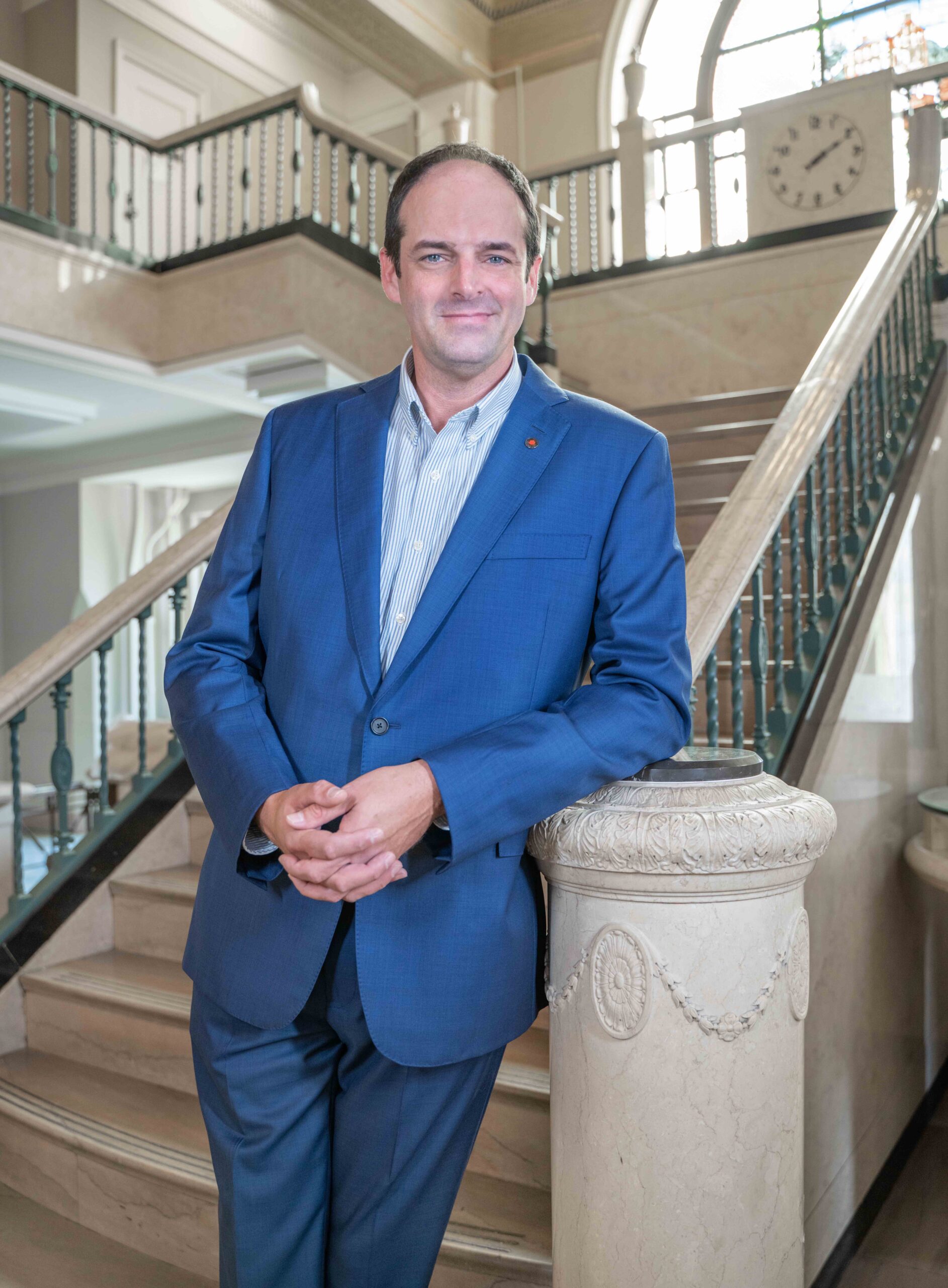
From the time Packard Motor Car Company opened its doors in 1899 to the moment when the last Packard rolled off the line in 1958, the brand has been well regarded in the American automotive industry as a symbol of speed, luxury, and quality. With time, the industry changed, and Packard had to shut down operations. But the company was recently revived through the singular vision of a watchmaker and inventor, Scott Andrews—who believed so deeply in the value of American manufacturing that he acquired the rights and intellectual property to the brand and jump-started the company from scratch.

Now Packard Motors, a new company founded in 2019, has taken it upon itself to become Packard Motor Car Company’s successor in the world of luxury cars and timepieces. American Essence spoke with Packard Motors founder Scott Andrews to find out more about how he unexpectedly discovered the company’s story and revived the brand.

Packard Motors founder Scott Andrews is a watch enthusiast. (Three Driveway Media)

Q: When did your love for Packard cars and timepieces begin?

A: My love for Packard cars began in 2019 and timepieces long before then. My great-uncle taught me how to fix clocks. I applied my skills to watchmaking as a hobby. In 2010, I decided to do watchmaking for part-time income. In spring 2019, I was driving to an event and saw a 1951 Packard for sale. I stopped, studied its unique design, then called my father who is a retired auto mechanic. He explained how Packard was the pinnacle of the U.S. auto industry for years—the one all others looked up to. I researched the company and found Packard is an American automobile industry icon that made amazing inventions which defined exclusive American elegance and automobiles for generations. I fell in love with what the company came to represent: pure American beauty. I then learned how one of the two Packard brothers who founded the company had a watch collection and high interest in mechanical watch movements.

Q: What’s the story leading up to your decision to found Packard Motors in 2019?

A: I found both my passions in Packard: elegant artwork expressed by stunning innovation. Given the amazing American icon Packard is, I knew if properly nurtured back to life, it will thrive and be enjoyed once again. Also, I didn’t want its history to fade away with the passing of the prior American generation. To save and revive Packard is to save and revive America, and give my fellow Americans a new hope and inspiration. I decided to go for it, and it’s been amazing to watch this American prime rise again.

(Three Driveway Media)

Q: What does the legacy of the Packard Motor Car Company mean to you?

A: The legacy means the “north star” of durable innovation seamlessly woven together with pure beauty and elegance. It represents the bravery and perseverance required to keep our heritage and traditional values. A legacy many can identify with and become a part of. We are continuing the standards of honesty, good business ethics, and goodwill within the company and with our clients and visitors.

Q: How similar is Packard Motors’s processes and products to those of Packard Motor Car Company’s? What kinds of upgrades or unique touches may we see from Packard Motors in the future?

A: Similar to the first Packard company, we listen to what people need and want and make it better than anyone else. We then add wonderful surprises to delight and bring joy in owning and using something we make. There will always be one more thing when you think you’ve seen it all.

Q: What is your hope for your company?

A: My hope for the company is to be the shining light on the hill: a liberty-focused heritage, luxurious style, and absolute good moral values for the next generation to embrace.

Q: What does a day at Packard Motors look like for you?

A: Absolute joy and fun. From drawing up a new creative masterpiece for the retail shop to the amazing work on automobiles together with the entire team of people. All for the delight of our clients and visitors.

Q: What’s been your reaction to the feedback you’ve received from the automotive industry and community?

A: A big smile. Many wonder what we’re going to do next, and wonder they should. They know the legend has returned and are watching closely. Will we repeat its demise, or return to its roots and be the guiding light once again? I can’t help but smile knowing the best is yet to come from Packard.

The 1934 Packard Twelve Individual Custom Convertible Victoria by Dietrich. (Three Driveway Media)

Q: Packard Motors has released a limited edition debut timepiece, the 1899 model. Is there anything specific that went into the design to make it special as Packard’s original debut timepiece?

A: Yes, it was inspired by the very first Packard car. It was designed by J.W. Packard in 1899. He was challenged to make his own car after complaining about the poor quality of another brand he bought. Challenge accepted, and the response changed the world forever.

  • Packard cars were the first to have factory-installed air conditioning.
  • The first U.S. car to use tubeless tires was the 1954 Packard Clipper.
  • The 1901 Model C Packard was the first in America to feature a steering wheel.
  • Packard built the world’s first V-12-engine-powered production car, the Twin Six of 1915.

From July Issue, Volume 3

Categories
Features

Following Injury, Veteran Becomes Inventor to Help Disabled

It all began in an automotive repair shop in the hilly Northern California town of San Luis Obispo.

Born into a family of tinkerers and mechanics, Rory Cooper had always been a curious young man and frequently looked over his parents’ shoulders as they addressed a myriad of mechanical problems at their automotive repair shop. “I didn’t really want to be a mechanic,” Cooper recalled. “What drove me was an interest in becoming an engineer: to understand how things work and design new things, rather than fix other people’s things.”

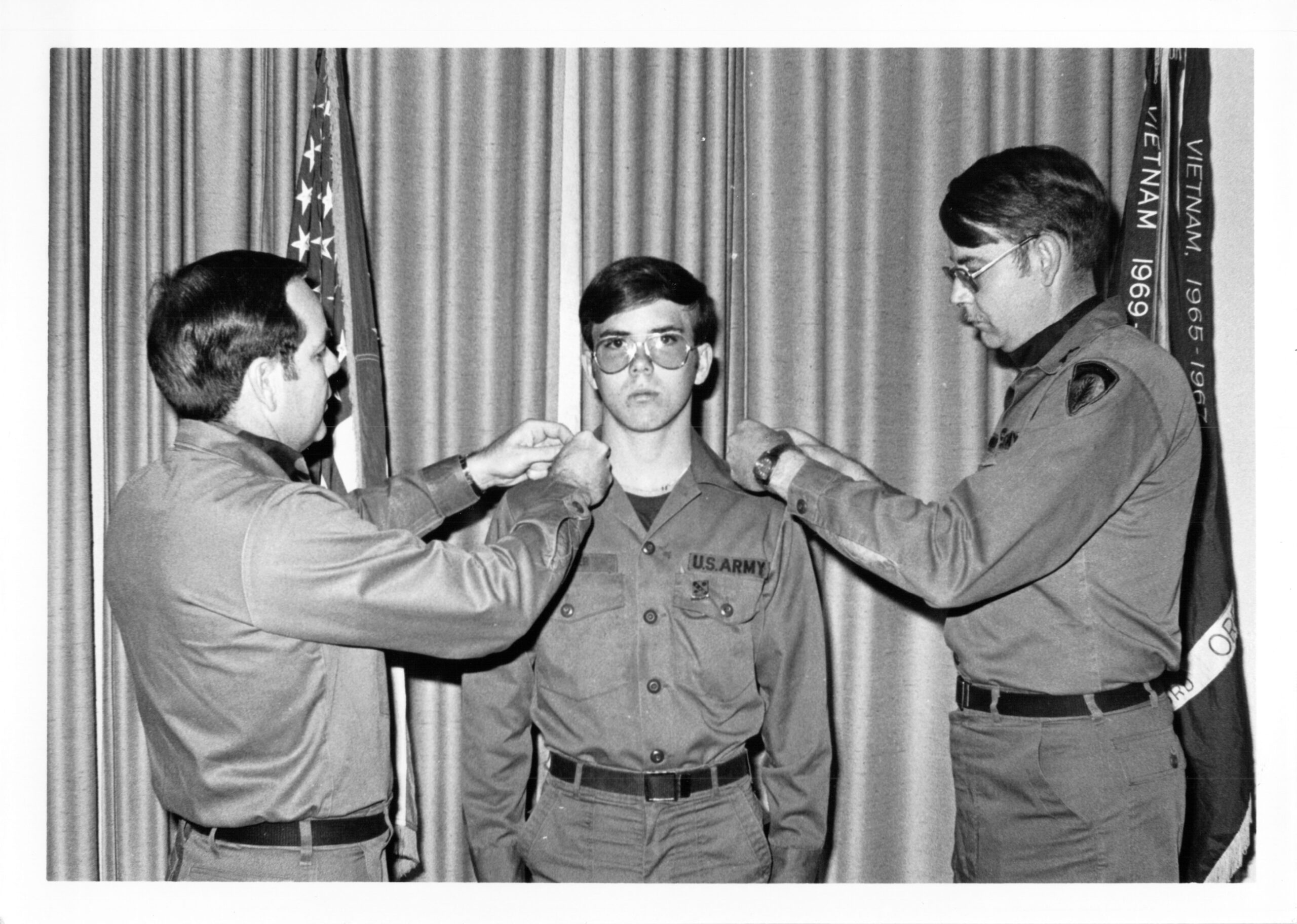
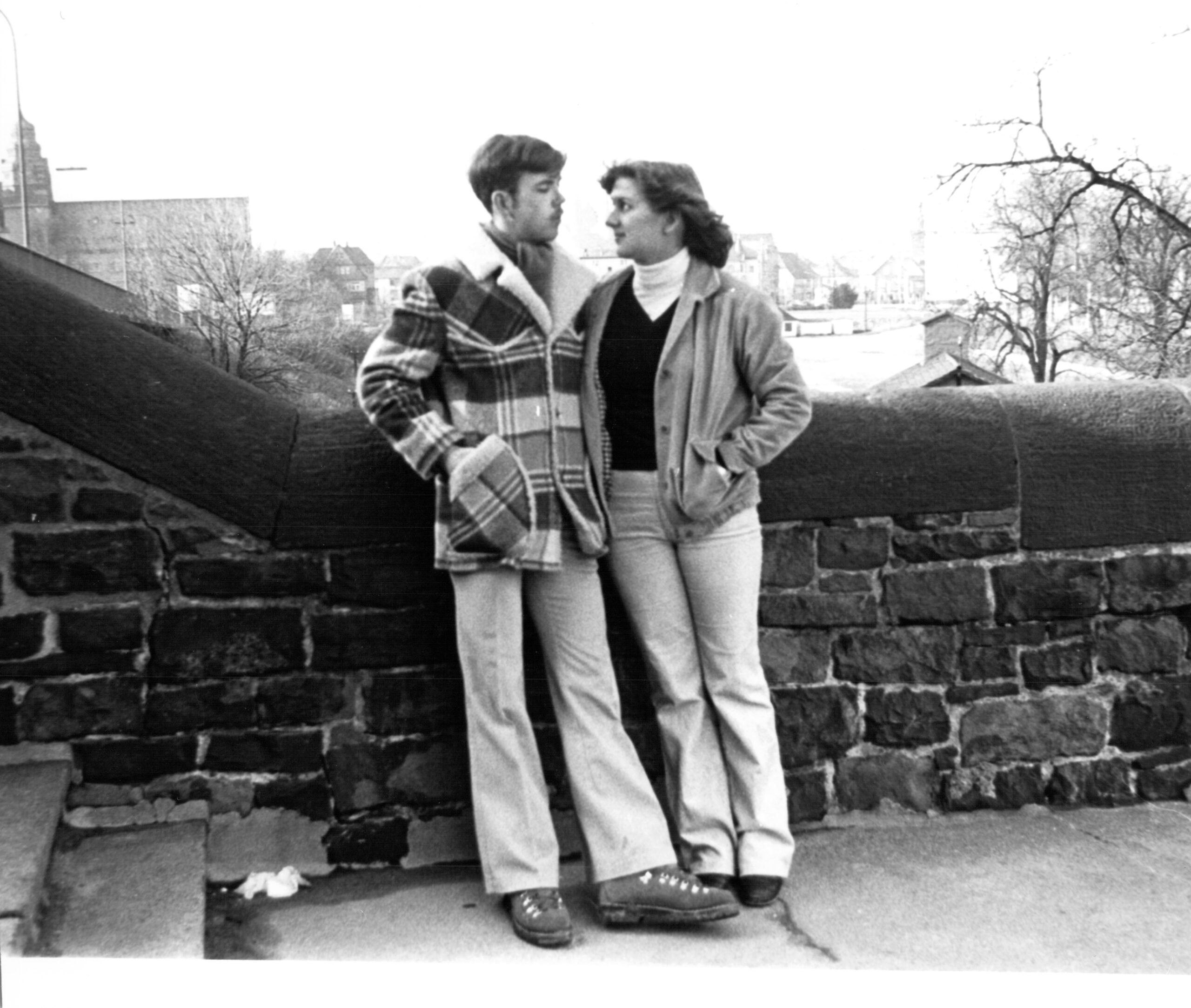
But many members of the Cooper family had also served in the military, including his father. So young Rory joined the Army as a volunteer in 1976. Four years later, tragedy struck in Germany when a vehicle hit Cooper while he rode his bicycle. The accident damaged the 20-year-old’s spinal cord, and Cooper was paralyzed from the waist down.

In 1978, Cooper was promoted to the rank of Army specialist. (Courtesy of Dr. Rory Cooper)

Back home, he underwent intensive therapy. Along with his wife, Rosemarie, Rory’s wheelchair became the center of his life. Via the GI Bill, he was admitted to California Polytechnic State University, earning his bachelor’s and master’s degrees in electrical engineering. But San Luis Obispo was a hilly town, and Cooper said he had to do everything in his power to make it through each day. “When I got out of the hospital I weighed 80 pounds. I worked myself up to 130 pounds. I was about 160 pounds before I got injured. So an 80-pound [manual] wheelchair was a lot of weight to carry up those hills … and I just thought, ‘This can’t be right.’”

Frustrated, Cooper went to the family shop to design a lightweight wheelchair for himself. Thus began his crusade to make life better for any veteran or civilian who was, or would be, wheelchair-bound. He then went on to attain a doctorate in electrical and computer engineering from the University of California, Santa Barbara. 

Equipped with specialized knowledge and a plethora of passion, Cooper gained a deeper realization of the magnitude of the issues faced by those in wheelchairs. He was determined to make things right, and on a massive scale.

Cooper and his wife, Rosemarie, in Germany, 1978. (Courtesy of Dr. Rory Cooper)

An Outpouring of Ideas 

“As I got advanced in my education, I learned that people were developing sores on their hands­­­­, including myself, and then wrist injuries and shoulder injuries that were making their lives more difficult,” Cooper said. He set out to reduce those repetitive injuries. The result was the invention of an ergonomic push rim requiring less forceful gripping with improved propulsion. Users reported less hand and wrist pain and fewer wrist and shoulder injuries.

In 1994, as Cooper’s work on repetitive stress was in its final stages, he co-founded Human Engineering Research Laboratories (HERL), a biomedical engineering partnership of the U.S. Department of Veterans Affairs and the University of Pittsburgh, where he remains its director.

Starting with a staff of three that now stands at about 60, the multidisciplinary team has thrown its energies into finding solutions to everyday problems that plague the paralyzed. Using robotics, “we created this bed and wheelchair that worked together so the wheelchair sort of pours you into bed while the bed pulls you into bed,” assisting the caregiver. Cooper took a prototype to a Veterans Administration care facility. There, a woman who noticed the testing and whose husband had been confined to the hospital for a year requested the apparatus and soon got to take it, and him, home.

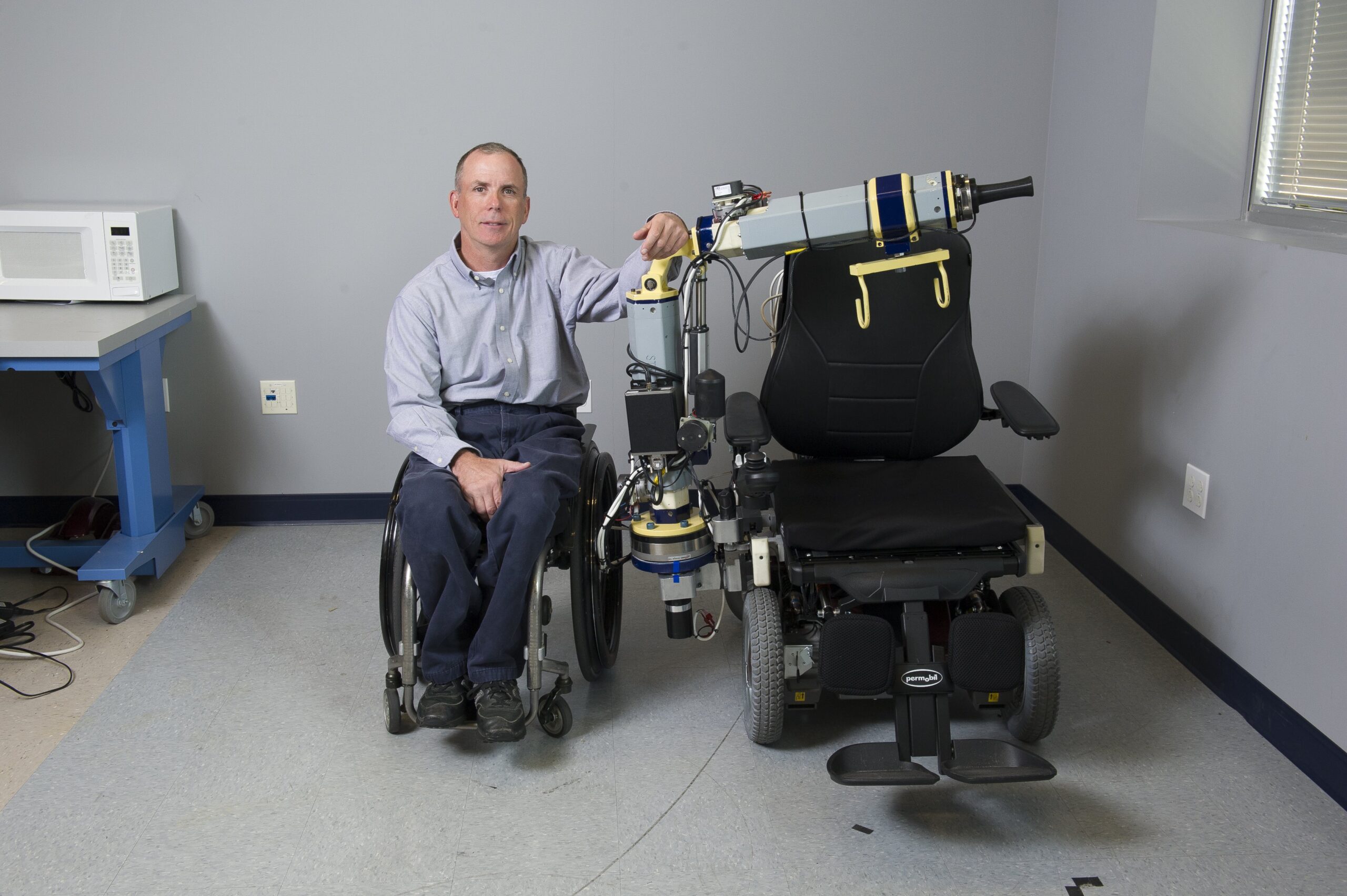
Cooper with his invention, a Mobility Enhancement Robotic Wheelchair (MEBot) that allows the disabled to explore rugged terrain. (Courtesy of Dr. Rory Cooper)

Originally, robots were used for “dirty, dangerous, and remote jobs and a little bit of entertainment,” Cooper noted, prompting him to explore how robots could work in tandem with people. “If you didn’t have hand and arm function or you didn’t have hands and arms, could you use a robot to take a drink or eat a sandwich or pick up a remote-control for a TV?”

Looking farther into the future, HERL is working with Paralyzed Veterans of America (PVA) and other organizations on an autonomous passenger vehicle. Currently, Cooper said, automobile travel by the disabled is extremely difficult. “If you’re in a wheelchair, you have to be able to secure the wheelchair or transfer the wheelchair into a vehicle,” in contrast to a government mandate that requires public buses to install ramps for the handicapped. 

Autonomous vehicles would benefit blind people “immediately” because they can’t drive a car right now, said Lee Page, senior associate advocacy director at PVA, who said the blind also have trouble hailing a taxi because many cabbies will see their service dog and pass them by.

HERL is also working with PVA on smart-home technology, said Mark Lichter, the nonprofit’s director of architecture. While smart-home technology in kitchens has come a long way, he said, a program to open windows would be “a huge benefit.”    

HERL’s 13,000-square-foot machine shop, which makes parts for wheelchairs and prosthetics, also engages in “destructive testing” to ensure that inventions are safe and compliant with government and industry standards. Members of the public also test prototypes across the country.  

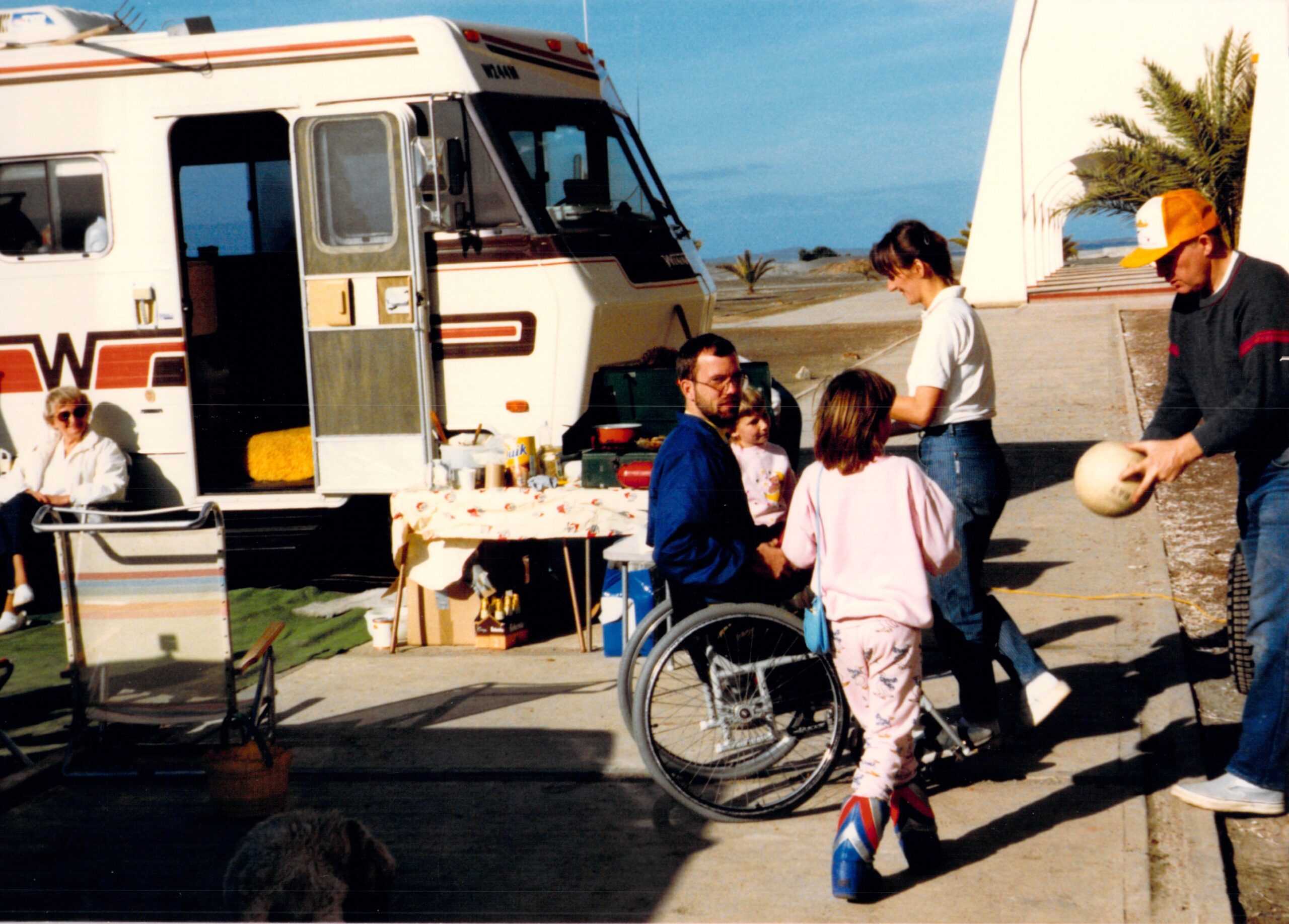
An old photo of Cooper with his family on vacation in Mexico. (Courtesy of Dr. Rory Cooper)

Helping Millions

Cooper said millions of people around the world have used HERL’s inventions. “It’s probably 15 to 20 million people that have been impacted by our work in one way or another. I mean directly impacted. Of course, then you’ve got their families, their caregivers or friends.”

The boy who was fascinated by his parents’ mechanical prowess is now 63 and shows no sign of slowing down. “I’m still alive and I’m still working. And I’m still married to the same woman [as] before I was injured.” 

More than half a lifetime ago, Cooper won a Bronze Medal in the 4×400 meter relay at the Paralympic Games in Seoul. Now, he meets longtime friends at wheelchair games stateside and delights in mentoring the next generation of entrepreneurs.

Cooper will have another chance to inspire young inventors when he is inducted into the National Inventors Hall of Fame at its 50th anniversary celebration this fall. This year’s group of 16 notable patent-holders brings the organization’s total number of inductees to 624.

“I’m just very grateful despite the health setbacks I’ve had over the years to be able to make a difference in people’s lives,” Cooper said.

From July Issue, Volume 3

Categories
Features

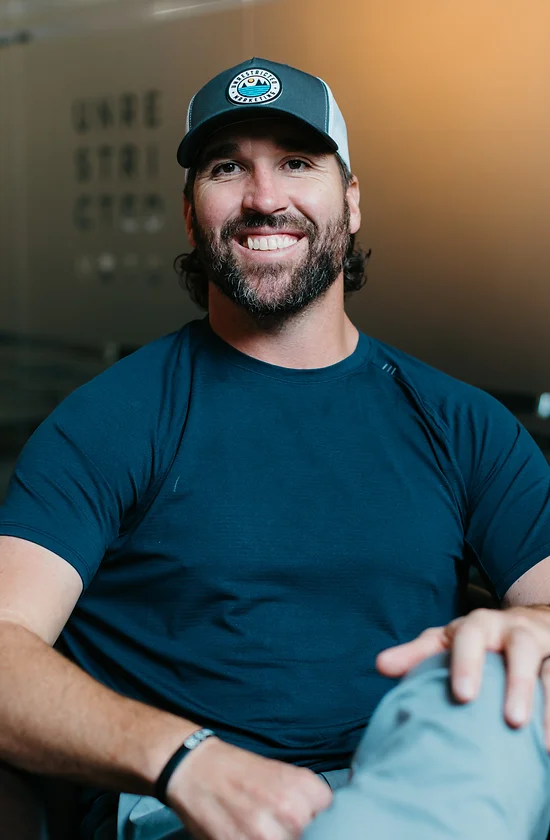
Football Star Jared Allen on Our Duty to Honor Veterans

After 12 seasons in the NFL as a defensive end, Jared Allen took part in a United Service Organizations tour to Iraq in 2009 and discovered a new passion: helping veterans. He returned home and founded Jared Allen’s Homes for Wounded Warriors (JAH4WW), a nonprofit organization that raises money to build and remodel homes for veterans who sustained life-altering injuries while serving in Iraq or Afghanistan. Each house is made injury-specific and tailored to the needs of individual veterans, to ensure that their homes are as accessible and comfortable to live in as possible. To date, JAH4WW has completed 22 houses since 2009, with more being planned.

American Essence spoke with Allen about his work with veterans, as well as his other interests outside football.

(Minnesota Vikings-Steve Smith Photography)

American Essence: Why are you especially passionate about helping veterans?

Jared Allen: My grandfather was one of my heroes. He was a 23-year Marine Corps vet. I have many family members that are vets and was always taught that the men and women who serve this country are the reasons we get to chase our dreams.

AE: What was the most memorable moment from your USO trip to military bases in the Middle East?

Mr. Allen: Hanging with SEAL Team 5.

AE: What is unique about the homes that Homes for Wounded Warriors builds?

Mr. Allen: We build our houses for the specific needs of the recipient, and they own the home mortgage-free when we give them the keys.

(UNrestricted MKTG)

AE: Could you please tell us about some of the veterans you’ve met through the project? What were the most touching stories you have heard about their dedication to this country?

Mr. Allen: All our recipients were injured in heroic acts for our country. I’m extremely humbled every time I read their stories and get to know them personally. The most touching story about all of them is that they all believe someone deserves it more than themselves.

AE: What would you like the younger generations to understand about veterans?

Mr. Allen: That we are 100 percent a volunteer military and that these men and women are always on the road away from family and friends fighting for the U.S. That men and women lay it down for people they don’t even know so we can enjoy all the little things in life. So, everyone who enjoys that should support those vets.

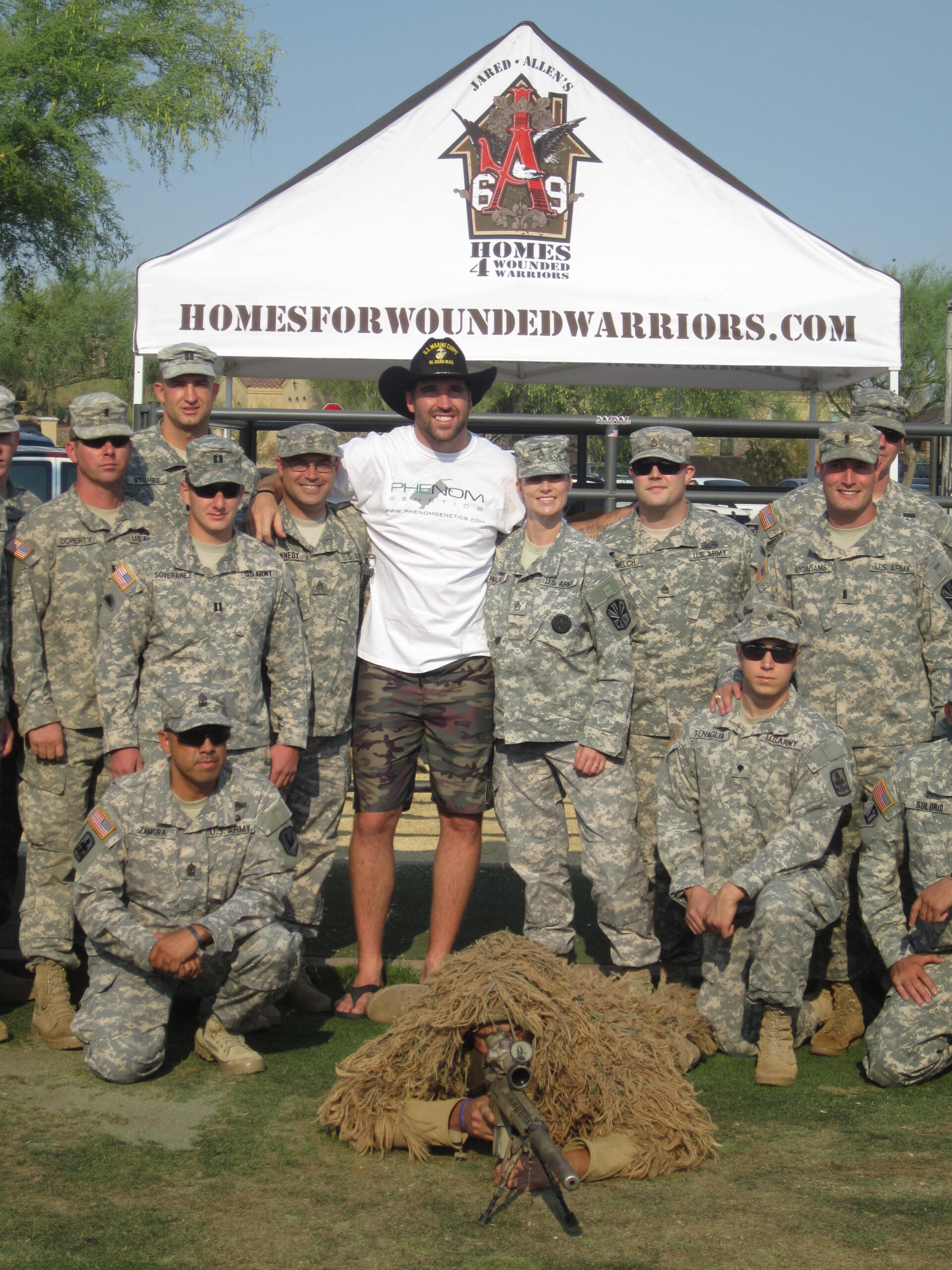
Former NFL player Jared Allen meets with Army soldiers during an event for his charity organization. (UNrestricted MKTG)

AE: As an entrepreneur with several businesses in different industries, what would you say is the key to success when starting new ventures?

Mr. Allen: Passion for whatever you are doing.

AE: What have you been passionate about recently? Any new projects to share with us?

Mr. Allen: I’m trying to make the Olympics in curling.

(Courtesy of Jared Allen)

From July Issue, Volume 3

Categories
Features

Marine Finds New Mission for Vets: Help Protect the Oceans

Transported to an underwater world, Rudy Reyes finally felt at peace. He was scuba diving in the Cayman Islands, stunned by the sheer beauty that surrounded him. It was a completely different experience from his time as a combat diver for the Marine Corps, part of an elite reconnaissance team that often performed dangerous missions in Iraq.

“Ten kicks in, you’re in the most gorgeous reefs,” he said. “For a whole week, I was immersed in the beauty of God’s creation.” In those restorative waters, he found healing—and a new purpose.

It was a turning point for Reyes. Only days earlier, he was on the brink of taking his own life. 

His Calling

Through a childhood protecting his younger brothers and a grueling journey in the Marine Corps, Reyes gained a profound understanding of what it means to serve. “There is a standard of character in which a young man must fight for the good. A young man must discipline himself and let go of the child and embrace manhood. Manhood means protecting, it means sacrifice, it means a humble nobility that only comes from the pursuing of truth and leaving oneself—leaving oneself as an individual to the side and embracing leadership of community,” he reflected in a recent interview. 

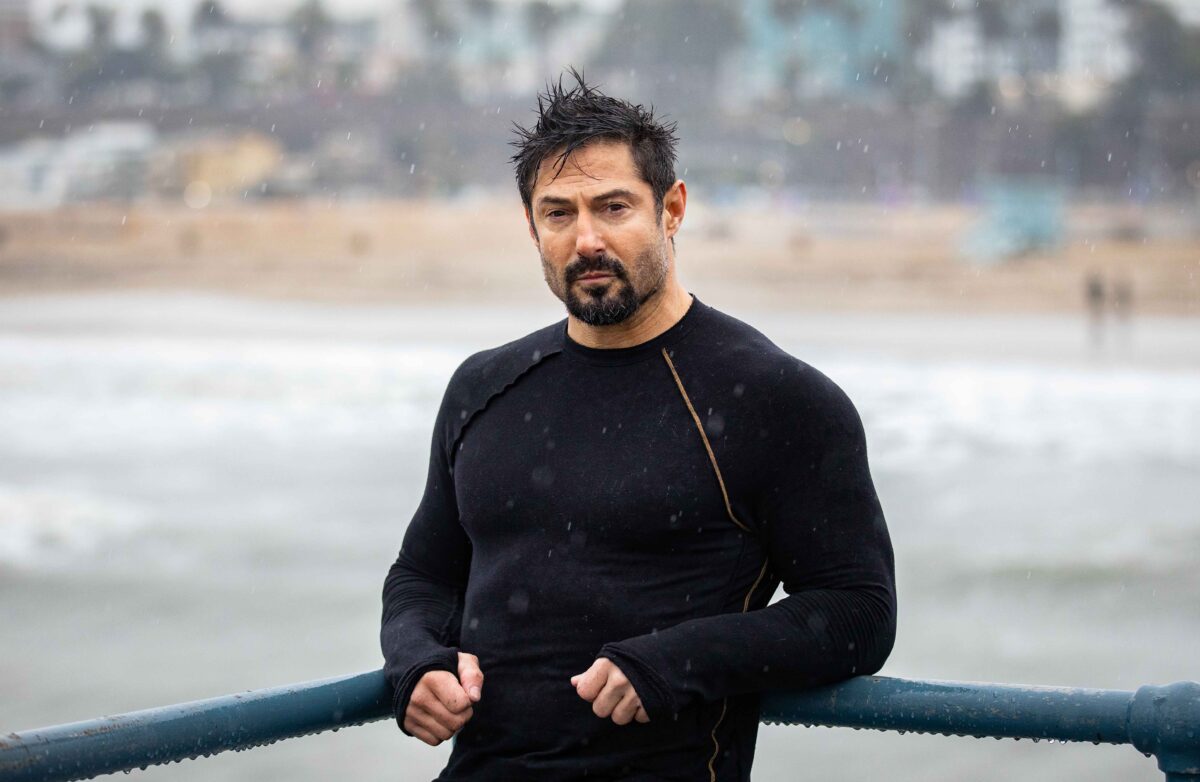
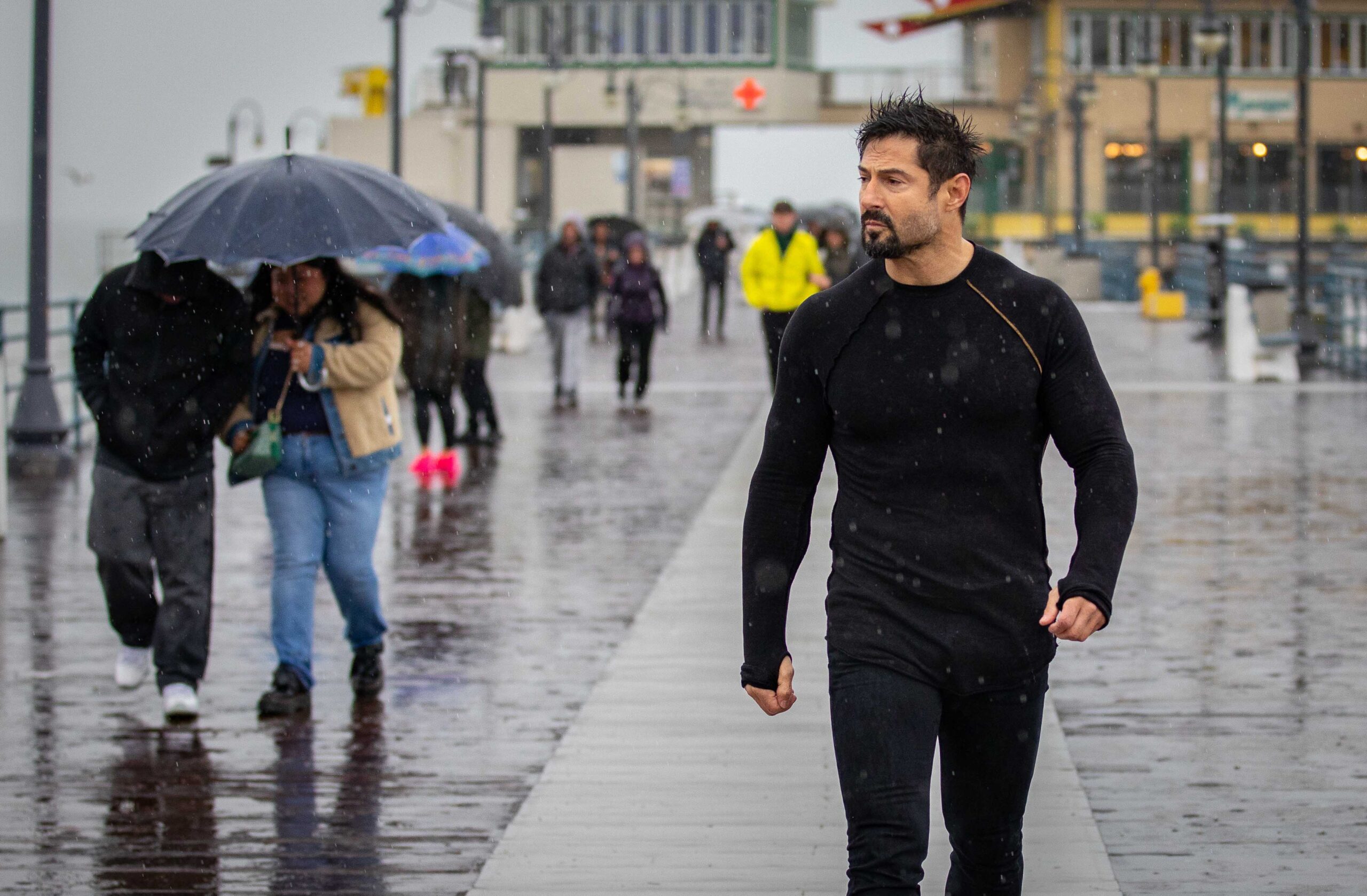
Rudy Reyes walks along the boardwalk at the Santa Monica pier in California. (John Fredricks for American Essence)

Growing up, Reyes and his brothers had to fend for themselves. Following their parents’ divorce, their mother battled depression with drugs and alcohol, and they were left to the care of relatives. When their grandparents passed away, they became adrift in the Midwest, with no permanent home, until eventually they were taken in by a boys’ group home in Omaha, Nebraska. Housed together with other boys who grew up in tough backgrounds, life was like the “law of the jungle, … very ‘Lord of the Flies,’” Reyes said. He took up physical training in order to protect his brothers. At 17, Reyes emancipated himself so that he could later become their legal guardian.

Reyes worked various odd jobs to support his brothers. In 1998, when he was 27, he watched a documentary on children in Kosovo who were orphaned as a result of the conflict there. Their plight motivated Reyes to enlist in the Marine Corps. His superior performance earned him an opportunity to try out for the reconnaissance team. He was accepted. 

“Our country is one of the very few countries in which, through military service, any man or woman of any color, of any religion, can sacrifice their individual identity, become part of a collective, to then forge—completely merit-based—a new identity,” Reyes marveled. “And that will transcend the hard streets, and the gangs, it can transcend the poverty and the abuse. … We can transcend and supersede anything that’s limiting us if we’re willing to sacrifice and throw ourselves totally into the mission.”

Purpose Lost and Found

Reyes was an effective fighter. But after all that he witnessed during tours in Iraq and Afghanistan, he returned home a broken man. “I did not believe in good anymore. I didn’t believe in human beings anymore. I didn’t believe in anything,” he said. He struggled to readjust to civilian life. “I felt completely like a stranger in a strange land.”

He turned to drugs and alcohol, and he tumbled in and out of toxic relationships. “I was just trying to numb or fill the hole that was inside my heart,” he said. It was a rapid downward spiral. After he lost his job and his son was taken away from him due to his emotional instability, Reyes felt there was no point in living. “I felt completely useless and worthless.” He put his gun in his mouth. 

Suddenly, he heard a higher power call out to him. “This voice, this power said, … ‘Everything’s going to be OK. And you’re needed, Rudy Reyes.’” From that moment on, he embarked on a different path.

(John Fredricks for American Essence)

A few days after the epiphany, Reyes bumped into a former colleague from a previous acting gig. “He could tell that I was not well, like a shadow of who I used to be,” Reyes said. So his friend invited him to go diving together in the Cayman Islands. Reyes accepted the invitation, but he didn’t expect to be so deeply moved by the experience. “Just seeing the beauty and what was at stake—[I thought] that we cannot lose this,” he said. It sparked an idea: What if veterans like him could retool their combat diving skills to fight for coral reefs instead? 

In 2016, Reyes launched Force Blue, a nonprofit that trains veterans in marine conservation efforts. Marine scientists teach participants how to identify marine animals, preserve coral reefs, survey underwater environments, and remove invasive species and marine debris. 

“We have a fighting force that fought all these other wars. But we can use this fighting force that has skills like no one else has, under the water to fight a battle that we all believe in—which is to protect our planet, to make it beautiful for our children and grandchildren,” Reyes said. He hopes that by helping veterans find purpose in civilian society, and immersing them in the healing natural environment, Force Blue can play a part in preventing veteran suicide. 

Reyes is grateful for the veteran community that has shown him support in the years since. “A lot of young people and old people look up to me, so it’s a great reminder about my responsibility as a leader,” he said. “That’s a great reminder to keep my character super sharp, and to keep my pursuit of truth pure.”

From July Issue, Volume 3

Categories
Features

Get to Know Delilah, the Woman Behind the Popular Radio Show

Delilah’s warmth emanates from her voice—a voice that is familiar with over 8 million radio listeners who tune in to her popular evening show weekly, making it one of the country’s most-listened-to programs. For several hours each night, Delilah listens as people turn to her about their love problems, requesting a song to reminisce about a long-lost lover or to console their broken hearts. Many share their tales of triumph and loss, and Delilah listens carefully, offering a dose of positivity and encouragement. She has been on air from the Seattle, Washington, area since her show started in October 1984.

In a world of chaos and uncertainty, Delilah’s words are like a salve, reminding us that there is still hope. It is remarkable that in spite of her personal tragedies—having lost two sons and her stepson in the span of several years—she still exudes an unbridled verve for life. Her 15 children, many of whom she adopted or fostered, are her reasons for living, she said. She never worried about how to take on the responsibilities of being a mother, only assured that she’ll take things one step at a time. “I was not born with the fear factor—it’s just not in my DNA.” She encourages everyone to embrace the same attitude in life. “When you realize that there’s very little we can control, then you can realize, why am I worrying about it? Why am I not just enjoying the minutes? Most fear is your imagination picturing the worst possible scenario, right? Why not use your imagination to picture the best possible scenario?”

This interview has been edited for clarity and brevity.

(Courtesy of Delilah)

American Essence: Did you always know that you liked connecting with people?

Delilah: Oh yeah. My mom says I used to walk up to people in grocery stores and start talking to them and ask them if they had children. And could I play with them?

There are very few people that I dislike. When I do, that’s on me. Because what I’m looking at is their behavior instead of their heart. What I’m doing is, I’m judging their behaviors instead of looking at their heart and looking at why they have those behaviors.

If we would all do that, there would not be the problems that exist in the world now. There would not be the divisiveness and the division that exists now, because 99 percent of the divisiveness exists because it’s an “us against them” mentality. It’s “I’m better than them. I’m smarter than you. My political party or my political affiliation is better than yours. My religious beliefs are better than yours.” Or even worse than [that] is, “I’m afraid of you. I’m fearful of you.” And if we could just realize that we’re all eternal beings having a human experience, and get past that “us against them” mentality—I try to make it happen.

AE: Do you feel the hardships you’ve been through have helped you provide listeners with perspective?

Delilah: I don’t know that it gives people perspective, but it certainly taught me to shut my mouth more and listen more. Because I thought I knew what grief was. I thought I knew what hardship was. I don’t have a clue. And going through the stuff that I’ve gone through has made me realize that when people are really hurting, when their life has just been completely shattered, they don’t need my advice. They don’t need my pearls of wisdom. They don’t need me quoting Scripture. They don’t need me telling them things are going to get better. They need me to listen, and to honor them, and to hold space for them. That was the best change in my soul, going through the grief that I’ve gone through.

(Courtesy of Delilah)

AE: Many listeners turn to you with their worries. What are your tips on giving good advice?

Delilah: Most of the time when we’re chatting with our friends, they don’t want advice. They want somebody to listen. And honestly, when people call me looking for advice, most of the time, I would say 90 percent of the time, they already have their answers. They just need validation, and a push in the right direction.

A gal called me last night. The scenario was, she’s been involved with a guy for a couple of years. She’s asked him if there’s a future. He said, “No, I just want to have fun. Stop asking me about that. I don’t see us settling down anytime soon.” And she’s like, “So what do I do?” And I said, “You already know what to do. Why are you asking me this? You know exactly what you have to do.” And she’s like, “Yeah, but I love him.” I said, “So what you’re asking is, is there a way to manipulate him? And change him into the kind of committed man you want and need?” No, there’s not. But you already know what you have to do. You want a long-term forever committed partner. He wants to have fun. There’s a big difference between the two. Okay, well, if all you want to do is be used, stay right where you are. If you want to have a long-term committed relationship, don’t partner with somebody who has clearly told you in his own words that that is not on his agenda.

Delilah lives on a 55- acre farm with her adopted children and many animals. (Courtesy of Delilah)

AE: Have your listeners’ stories offered you a unique perspective?

Delilah: When I lost both my boys and my stepson, I was given so much comfort. People sent prayers, they sent pictures. When my son Sammy died, I can’t tell you how many millions of prayers went up for me and my family during those times. Prayers that sustain me, prayers that gave me the courage to get up every day. When you don’t want to get up, when you’ve lost somebody and you just can’t even breathe, it hurts so bad—those prayers sustain you. I appreciate my listeners. Somebody called last year on Zach’s birthday and said, “Our boys share the same birthday. And I just wanted you to know that I’m so grateful I got to share my son’s birthday this year. And I know you didn’t and I’m just calling to tell you I prayed for you.”

AE: We are living in an era of increased isolation and anxiety. How do we as a society overcome this?

Delilah: It doesn’t matter what the crisis is, or the turmoil that you’re facing; if you have faith, you can get through anything. When you believe in something greater than yourself, and you believe that there is a higher power at work, then you can know that you don’t need to be afraid, you don’t need to be anxious, you don’t need to be filled with fear and trepidation. You can just put one foot in front of the other and keep moving forward. It doesn’t matter what the crisis is, or what the dilemma is; if you can hang on to even a mustard seed of faith, you can persevere and get through anything.

Because of the nature of my show, people call me with issues of the heart. And I have noticed for the last three years, certainly an uptick in loneliness. People are lonelier than I’ve ever heard them before, hungry for connection.

I had a gal call me last night to hear a song for a man she met 20 years ago, dated half a dozen times. And then he left for the military. And she’s not heard from him again. And she was just reminiscing of those beautiful moments they had together, that once-in-a-lifetime heart connection. And I said, “Honey, it doesn’t have to be once in a lifetime. You can open yourself up to love again.” So people are usually calling me and they want to share a story about a connection they have. Whatever the big emotion is that they’re feeling, they want to share that, and for whatever reason, they feel like I’m a close friend they want to share it with.

AE: What shapes your view of people and humanity in general?

Delilah: I believe that we are all miracles, that we are all eternal beings having a human experience, that every person that you encounter is a bazillion, gazillion, trillion miracles wrapped up in skin. And because we’re wrapped in skin and we’re having a human experience, we do human things and we make bonehead decisions. We’re not always the best version of ourselves. But the essence of our being remains in the image of the Almighty, the essence of our being is the Almighty. He created us and we were created for a purpose and for a reason. And when you know that, you can survive anything. Why aren’t we just in awe of every person we meet? Why aren’t we just like, “Oh my gosh, I want to get to know you. I want to know the essence of you, I want to get to know what makes you smile, makes you laugh, brings you joy.” And then I want to contribute to that joy. Everybody’s a miracle. And when you know that, you can look beyond the choice, beyond the circumstance, to the wonderful person in front of you.

(Courtesy of Delilah)

Fun Facts About Delilah

8.3 million listeners
tune in each week, on average

151 radio stations
air Delilah’s program

Florida, Texas, and New York
are the three states where Delilah gets the most calls from

Most requested songs 

“What a Wonderful World,” Louis Armstrong

“Unchained Melody,” The Righteous Brothers

“Wind Beneath My Wings,” Bette Midler

“I Will Always Love You,” Whitney Houston

How Delilah knows what songs to play for listeners

“You know how some people have sports statistics stuck in their head? I have song lyrics stuck in my head. Because I love so many different genres of music, I have millions of song lyrics that are in my head,” Delilah said. She notes that the special ability is partly passed down from her father, who loved to playfully sing lyrics to everyday questions posed to him.

When listeners tell Delilah their story, she takes notes and then types out the names of songs that she’s reminded of.

Delilah screens her own calls

Delilah herself takes all 30 to 50 calls out of the thousands of people who phone into her show each night. The show’s dynamics all depend on fate.

Delilah said she and her producer “have always prayed, ‘God, let whoever you want through to get through, whoever needs a touch from you, needs to be heard, let that person get through.’ That’s my call screening philosophy.”

Delilah doesn’t have a set routine

“Routine is not in my vocabulary. It’s so hard for me to get the kids out the door in the morning because I am so not a routine person. I am a fly-by-the-seat-of-your-pants person. Why plan ahead and miss out on all the excitement of the adventure? If you plan ahead, then there’s nothing like, ‘Oh dang, I forgot to put gas in the car,’” she joked.

How Delilah gets through her busy schedule

“I don’t need help getting through the day. I love my day. I hate when my day comes to an end. I loathe going to sleep at night. The frustrating thing for me is when I get off the air, and I’m done around midnight, and I’m like, ‘I’m so pumped up! I want to call somebody and talk about this.’”

Being a mother is Delilah’s greatest joy

“My motherhood is who I was meant to be. I was born to be a mama. It’s not like, ‘Okay, here’s my life. I’m a disc jockey. I’m a gardener. I’m an artist. I’m a mother.’ No, it’s, ‘I’m a mother.’ And then everything else comes after that.”

From July Issue, Volume 3

Categories
Features

How Rob Kenney, the ‘Internet’s Dad,’ Is Filling the Father Gap

On April 2, 2020, Rob Kenney uploaded his first video to his YouTube channel: “How to Tie a Tie.” In the two-minute video, filmed with his cellphone in front of his bathroom mirror, Kenney walks the viewer through a simple, no-nonsense method of tying a tie, offering helpful tips about what color to choose and how to wear it, and a few key pointers on what not to do.

“This is an important part,” he advises as he drapes his tie around his collar. “At the end, you want the tie to come out right above your waistline. Looks cool that way. … If your knot’s big and you got a short tie? Dorky. You don’t want to do that, alright?” He pauses to offer a smile and shrug at the camera: “Just tellin’ you.”

In his innocence, Kenney thought he might get 30 or 40 views. The video now has more than 2 million.

“It caught me off guard,” Kenney said. But what really blew him away were the comments, filled with people who told him they’d never had a dad to teach them this, and thanking him for “adopting” them as his kids on the internet and making them feel loved. “I’ve had people tell me that they’re watching me tie a tie and they’re crying. In my ignorance, I thought I was just showing you how to tie a tie. It was resonating on a level that I didn’t prepare for.”

Kenney, now 59 with two adult kids, started the channel “Dad, How Do I…?” with encouragement from his daughter. Within two months, it exploded into popularity via social media, propelling him to stardom as “the internet’s dad.”

“I wasn’t trying to switch careers or do anything fancy,” said Kenney, a self-described introvert. “I was just trying to share some nuggets that I’d learned the hard way.”

From his home in the Seattle, Washington, area, he’s since shown his 4.5 million subscribers—and growing—how to shave, put up a shelf, jump-start a car, iron a shirt, and more. He has a “Tool Tuesday” series, in which he explains how to use tools that he thinks viewers might want in their toolboxes, as well as one-minute “Wisdom Wednesday” videos, in which he shares quotes that have meant something to him. In “Dad Chat” videos, he covers topics like attitude and integrity.

What is it about these ordinary videos that moves people in such extraordinary ways? Watch one and it becomes apparent: He teaches the viewer exactly the way he would teach his own children. He speaks in a calm, patient, down-to-earth manner, walking through step-by-step methods with a genuine warmth and kindness that come through the screen. As a man of faith, Kenney said, “I do think I’m called to love everybody.”

Becoming ‘the Internet’s Dad’

Kenney’s own dad chose to leave his family of eight children to start a new life in a different city when Kenney was 14 years old. Kenney ended up living with his newly married older brother Rick and his wife in a tiny trailer. He spent his youth learning how to do many ordinary things, from pumping gas to putting on cologne, the hard way, muddling through on his own. “I think maybe I have a bit more empathy because I struggled,” Kenney said.

He dreamt up the idea for “Dad, How Do I…?” several years before it came to fruition. He used YouTube to learn some skills, but he often found himself frustrated by having to sit through a 20-minute video for the two-minute nugget of information he sought. He drew up a long list of skills that he “want[ed] to pass along,” that he thought he could teach to people with short, simple, helpful videos, without wasting anybody’s time. The name for his channel came from picturing his own children calling from another room, “Dad, how do I…?” and going running to fix it.

As the views and comments poured in, it quickly became apparent that his channel was doing more than teaching people basic tasks. A video that ended with a simple sentence, “I’m proud of you,” generated a huge response. Thousands of viewers wrote to tell Kenney that they’d never heard that phrase, and it brought them to tears to hear him say it. “People have said they’ve put that on loop,” Kenney said.

He was unprepared for the responses of thousands of viewers telling him their stories of growing up without father figures, struggling through abandonment, a broken foster care system, and grief so powerful it breaks his heart.

“The flip side of my channel ‘going viral’ is that it’s so needed—it’s heartbreaking,” he said. “If you spend any time reading the comments, it will bring you to tears. … It’s been eye-opening for me.”

Rob Kenney with his family. (Courtesy of Rob Kenney)

Faith and Forgiveness

A big part of what Kenney hopes to do with his channel is to shine a light on the healing power of forgiveness. It’s something that, for Kenney, arose from his faith: “I’ve been forgiven much myself,” he said. He doesn’t shy away from his faith on his channel, and he ends every video by saying, “God bless you.”

“We live in a society that has a victim mentality and wants to blame somebody. But unforgiveness is like drinking poison and hoping it somehow hurts the other person—really, it’s killing you,” Kenney said. “You need to let it go so you can live your own life.”

Kenney struggled to forgive his own father. “I call it coughing up a hairball,” he said. “I had many phone calls with [my brother] Rick, sobbing, struggling to just get it out.” When he finally was able to, “boy, there was freedom on the other side that I wasn’t anticipating.” He has compassion for his father, he said, and a greater understanding of his choices now that he has his own children.

“I want to encourage dads to hang in there,” he said. “I want to encourage people that if they’ve been through something, don’t bring that into the future. Let’s break the cycle so that you can still be a great dad yourself.”

For Kenney, being a good dad starts with being present. He chose a career that would support his family but also give him enough flexibility to “see pretty much everything my kids ever did,” he said. He believes that quality time comes from quantity time: “The good stuff often happens when you’re just hanging out.”

It was important to Kenney to get his kids involved, teach them how to do new things, and let them try—and fail—by themselves. He raised them to be kind and respectful to others, because you never know what people are going through, and to know to own up to mistakes and ask for forgiveness. That came naturally as he prayed with them at night, “because it’s me talking to my Heavenly Father basically confessing that I didn’t handle that very well,” he said. “My kids would hear me and understand that I’m accountable to somebody higher than me.”

He has another important goal: “I also want to show how cool it is to be a dad. It was a real blessing in my life,” he said. Though his own kids have long moved out and started their own lives—a “bittersweet” moment for him—his audience of adopted “kids” is still steadily growing, and he’s fully stepped into his new role. (He now begins every video with a great big smile and a “Hey, kids!”—and he always offers a dad joke.)

Still, Kenney doesn’t want to be put on a pedestal, because he knows he’s imperfect. He wanted his own kids to know, and now he wants his internet family to know, that “I’m on your team, I’m trying the best I can. I’m going to fail—but I’m sticking with it. I’m here. And hopefully, we can forgive each other when we both mess up.”

From June Issue, Volume 3

Categories
Features

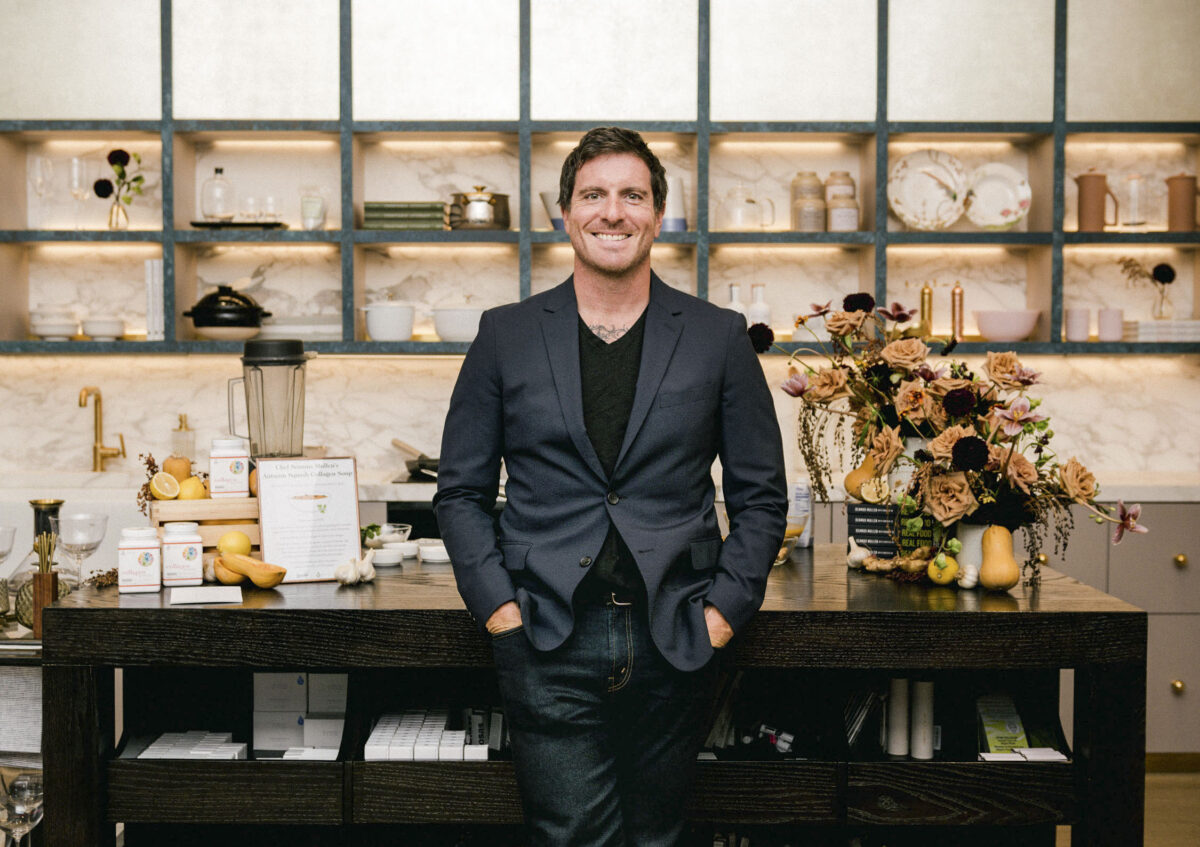
Seamus Mullen’s Recipe for a Healthy Life

Changing your diet can change your life; Seamus Mullen knows that intimately. In 2012, a near-death experience forced him to rethink how he lived.

The award-winning chef, restaurateur, and avid cyclist made a name for himself cooking through kitchens in Spain, San Francisco, and New York, where he opened his first restaurant in 2006. But the job’s long, grueling hours, plus a lifestyle of partying and unhealthy food, took a toll on his body.

In 2007, Mullen was diagnosed with rheumatoid arthritis. The autoimmune disease caused severe chronic pain in his joints, which were so swollen that each morning he couldn’t tie his shoes. He was placed on a cocktail of medications that never fully alleviated the pain—but weakened his resistance to infections, resulting in frequent trips to the hospital. After bacterial meningitis landed him in the ICU with a 106°F fever, he knew something had to change.

Under the guidance of functional medicine doctor Frank Lipman, he overhauled his lifestyle, from improving his exercise and sleep to incorporating meditation and managing his mindset. Most crucially, he transformed his diet, cutting refined sugars, simple carbs, and other inflammatory foods and replacing them with plenty of gut-friendly vegetables and healthy fats.

Within a year, the symptoms of his “incurable” illness disappeared.

Now, Mullen is a two-time cookbook author and passionate advocate for the healing power of food, and he inspires others to take control of their own health.

Here, he shares his wellness routines, tips on staying motivated, and a favorite simple, summer-ready recipe.

My ideal morning routine looks like this: wake up, two to five minutes of breathwork and meditation, three-minute cold plunge at 40°F, two minutes of qigong and dragon breath to warm up, 40 push-ups, and a cup of coffee. In reality, it’s usually two of these things, but I try to get in as much as I can.

Mullen’s ideal morning routine includes a three minute cold plunge at 40°F, a form of cold exposure to build both mental and physical resilience. (Courtesy of Seamus Mullen)

My daily diet starts with: coffee with cream and a tall glass of water. If I’m doing strength training in the morning, I will have a post-workout shake of 20 grams of whey protein plus creatine and BCAAs [branched-chain amino acids].

My first meal is generally around 1 to 1:30 p.m., and that is always a protein-focused meal with grass-fed beef, lamb, or some fish—generally around 8 ounces of cooked protein. I will add in a salad with avocado or some veggies sautéed in ghee or olive oil. Dinner, if I’m staying in, is again protein-focused, with vegetables and a little fresh, seasonal fruit. If I snack during the day, it’s generally fresh fruit or some raw milk cheese.

A really delicious way I cook vegetables is: blanching! [Get] a pot of well-salted boiling water, drop in some sugar snap peas for 30 seconds, and then shock them in a bath of ice water, and the sweetness of the peas is brought to the front of the palate.

To work out I: strength train (heavy lifting) four days on, one day off, and then I ride my mountain bike three to five days a week. This means I usually have two days a week with double workouts, and my “rest” day is usually a light bike ride or a hike. In recent years, I’ve really focused more and more on mountain biking, and I’m loving being in nature, away from cars. I’m loving hiking these days; we have some amazing trails in the Los Angeles area, and I’ve really been into exploring them.

My favorite mountain bike route is: up and down Mount Wilson in the Pasadena area east of LA. It feels like you’re in a legitimate mountain range just minutes from downtown LA!

An avid cyclist, chef Seamus Mullen rides his mountain bike three to five days a week. (Courtesy of Seamus Mullen)

An ingredient I’m obsessed with is: anchovies. Always, these little guys do so much to elevate a dish. I mash them up with garlic and Calabrian chiles in a mortar and pestle to make a delish paste that can be the base of a vinaigrette or rubbed onto some lamb chops before grilling.

Olive oil is a staple. I will be obsessed with olive oil ’til the day I die. I love it on fruit or with some fatty, whole-milk yogurt.

Sumac is a spice I use all the time for a punchy, acidic kick when I don’t want the flavor of citrus. Whipped into some butter, it’s a perfect spread.

My kryptonite food is: ice cream. I’m a sucker for ice cream. Lately, I’ve been obsessed with Straus Family Farms Decaf Coffee With Dutch Cocoa. So good!

Anyone trying to live healthier should: ditch all seed oils for ghee, butter, or olive oil; ditch mayonnaise for homemade aioli (if you have a blender, you can make it!); ditch meeting a friend at the bar for a drink for pilates, yoga, hiking, or meditation.

I de-stress and stay grounded with: breathwork. I’ve been practicing Buteyko and Tummo breathwork for a while and both are fundamental to maintaining a healthy mindset for me.

I stay motivated by: reminding myself it’s a process that can feel like a spiral at times. More than anything, I always look back at how far I’ve come so I’m never overwhelmed by the task ahead.

A goal I’m working on is: getting deeper into my meditation practice, tapping into visualization to help discover that state of flow that I feel on the mountain bike, and then learning how to translate that state of flow to other areas of my life.

I wind down at night with: breathwork, reading, lights out.

(Courtesy of Seamus Mullen)

RECIPE: Shaved Summer Squash With Tuna

This is one of my favorite simple dishes to make in the height of summer when the gardens and stores are overflowing with summer squash and zucchini. I tend to eat a lot of salads in the summer, and I usually make sure there’s a generous amount of vegetables in my salad, and some sensible protein.

There’s really no cooking whatsoever that goes into this dish, just a variety of raw summer vegetables, simply prepared. You’ll need a mandoline or slicer adapter on your food processor to cut the veggies as thinly as possible.

Serves 4

  • 12 ounces mixed summer squash, such as small zucchini, yellow squash, and patty pans
  • 4 ounces mixed radishes, such as red, watermelon, and cello
  • 24 Sungold tomatoes, halved
  • 2 shallots
  • 1 serrano chile pepper
  • 1 cup paper-thin slices raw purple cauliflower
  • 4 ounces best-quality tuna packed in olive oil
  • 3/4 cup extra-virgin olive oil
  • Juice of 4 limes, rinds reserved
  • Sea salt and black pepper
  • Chopped fresh dill and cilantro, for serving
  • 1 2-ounce chunk Parmesan cheese

Cut the squash and radishes into paper-thin rounds. Halve the tomatoes. Thinly slice the shallots, serrano chile pepper, and cauliflower. Flake the tuna into large chunks.

Toss the squash, radishes, tomatoes, shallots, chile, tuna, oil, and lime juice in a large bowl. Season to taste with salt and pepper.

Divide among serving plates and top with the fresh herbs. Zest the lime rinds directly on the salad, then shave the Parmesan on top using a vegetable peeler. Serve immediately.

From June Issue, Volume 3