Categories
Uncategorized

Philanthropist Rebecca Dunn on Creating A Lifelong Legacy of Championing Liberty and Individual Rights

Philanthropist Rebecca Dunn lives a full and active life on the Gulf Coast of Florida. Her son and his family live only steps away. Dunn loves being with people and introducing newcomers, and she takes pride in hosting intimate dinners with meaningful conversations.

As a highly visible trustee of the Dunn Foundation, founded by her late husband Bill Dunn, Rebecca spends her time supporting people and organizations across the country through projects focused on freedom, education, and classical liberal values. It’s an endeavor led by her heart, which remains forever loyal to her faith, family, and the nation that made her incredible life possible.

Dunn’s story began in a humble motel run by her family on an island off the coast of North Carolina. She lived there until she was 7, her whole family sharing a tiny, one-bedroom home connected to the motel office. She remembers sweeping sand off the long sidewalks in front of the motel rooms by the age of 5. She laughed when she said that her skills as a hostess today were probably honed at that early age, when she would greet motel guests while her parents were out of the office.
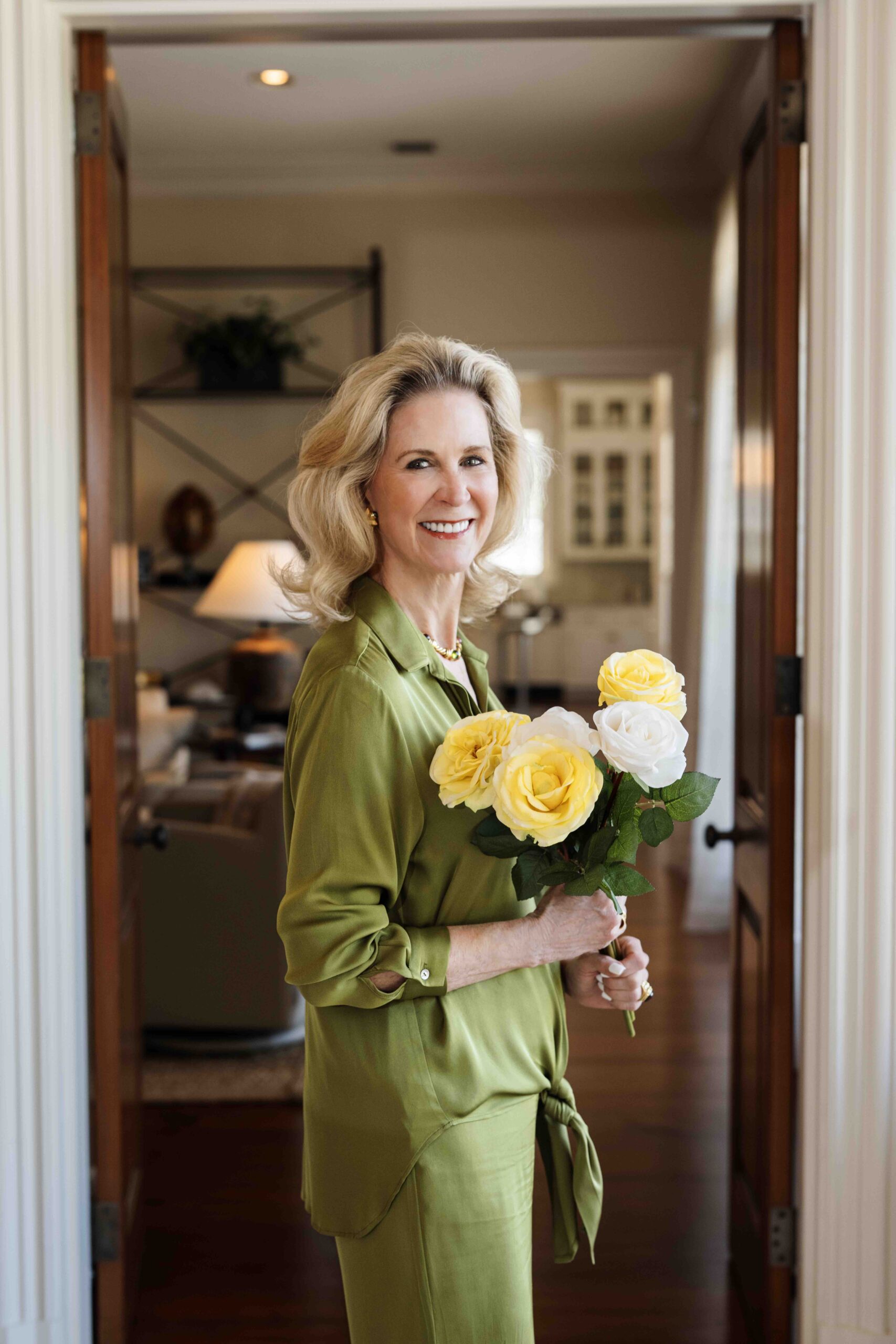
(Adhiraj Chakrabarti for American Essence)

When her father sold the motel, the family moved to an undeveloped part of the island. There, Dunn would hike over a large sand dune after school, walk the empty shoreline, and gaze at the endless ocean.

“I would dream of faraway places and look out at this endless distance. I would dream, and I would also pray. Both of those were habits that, I have to say, were woven into the tapestry of my life. I felt optimistic about the future and what lay ahead, like that endless ocean before me.”

Finding Love

After attending a Baptist girls’ college in Raleigh for two years, then transferring to Florida State University, Dunn met her first husband, Bob, a Yale graduate. They had a son together and moved to the Tampa Bay area. Though the marriage ended after 25 years, they maintained a warm friendship. Dunn said her father advised her, “Even if you have to walk away from everything, keep a good relationship with your husband because there will always be weddings, graduations, funerals, birthdays.”

“Basically, we chose to love our son more than dislike each other. It was a wise and rewarding decision,” Dunn recalled.

“One of the things I have learned in life is that holding onto negative thoughts is a huge burden. Forgiveness and a positive mindset help us to move forward in life with the joy our Creator wants us to experience.”
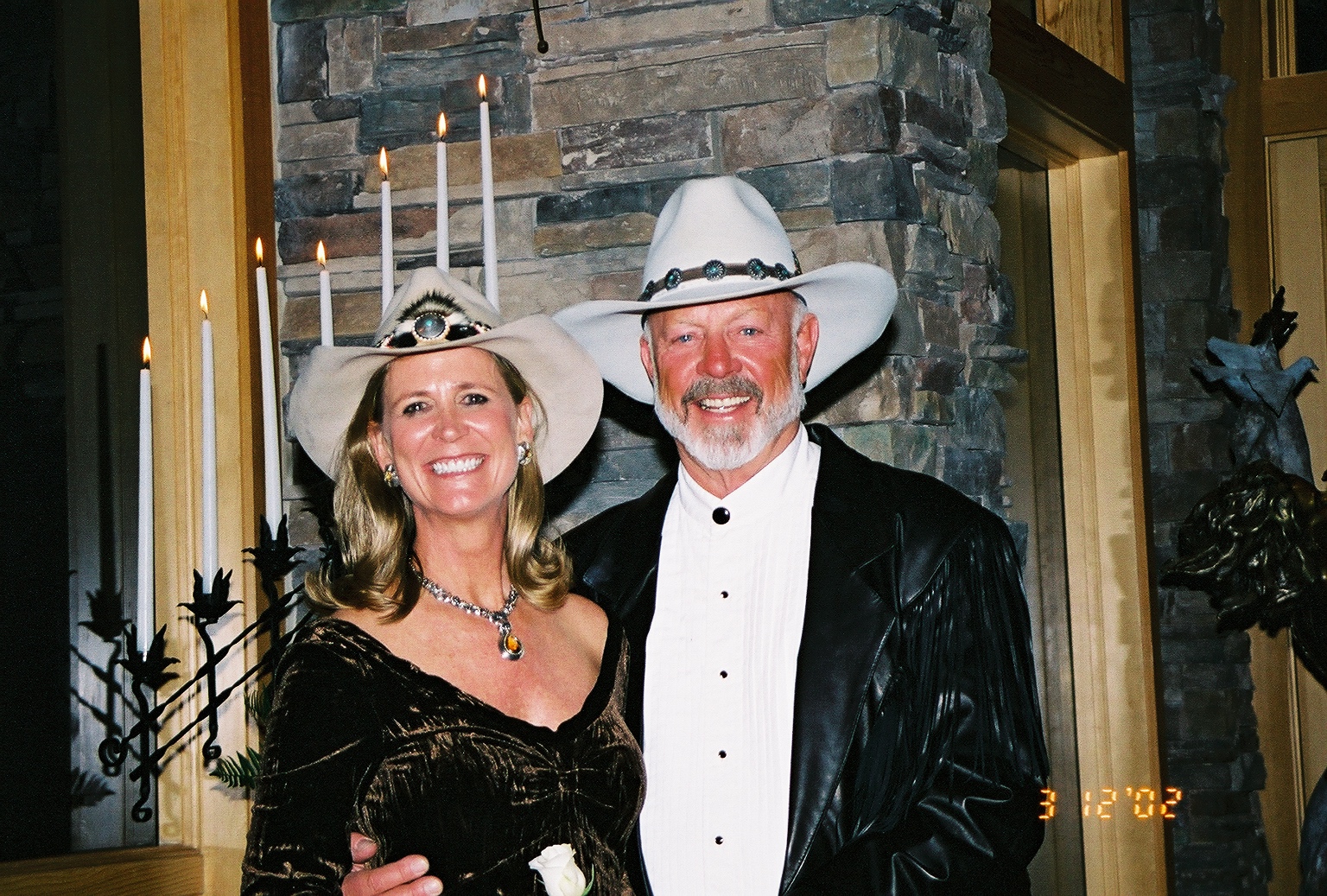
Rebecca married pioneering financial trader William A. “Bill” Dunn in a sweet, swift ceremony in Montana in 2002. They had a grand reception later that year, and they vacationed annually in St. Barths. She stayed by his side until his death in 2025. (Courtesy of Rebecca Dunn)

Rebecca later became friends with Bill Dunn through mutual philanthropic involvement in public policy organizations. He was a brilliant Marine veteran, futures trader, and fierce advocate for liberty. Initially, she thought there was no way they’d ever be involved romantically.

“I would have bet every penny I owned that we would never be in a serious relationship,” she said.

Then one day he asked her, “Do you think a cowboy like me and a lady like you could ever have any kind of future together?” From that day forward, he was her cowboy, and she was his lady.

They married in a spontaneous ceremony in Big Sky, Montana, during a blizzard in March 2002. Rebecca had just 30 minutes in town to buy a wedding dress while Bill replaced the tires on his truck. She found a long, brown velvet dress and wore it with her boots and cowboy hat.
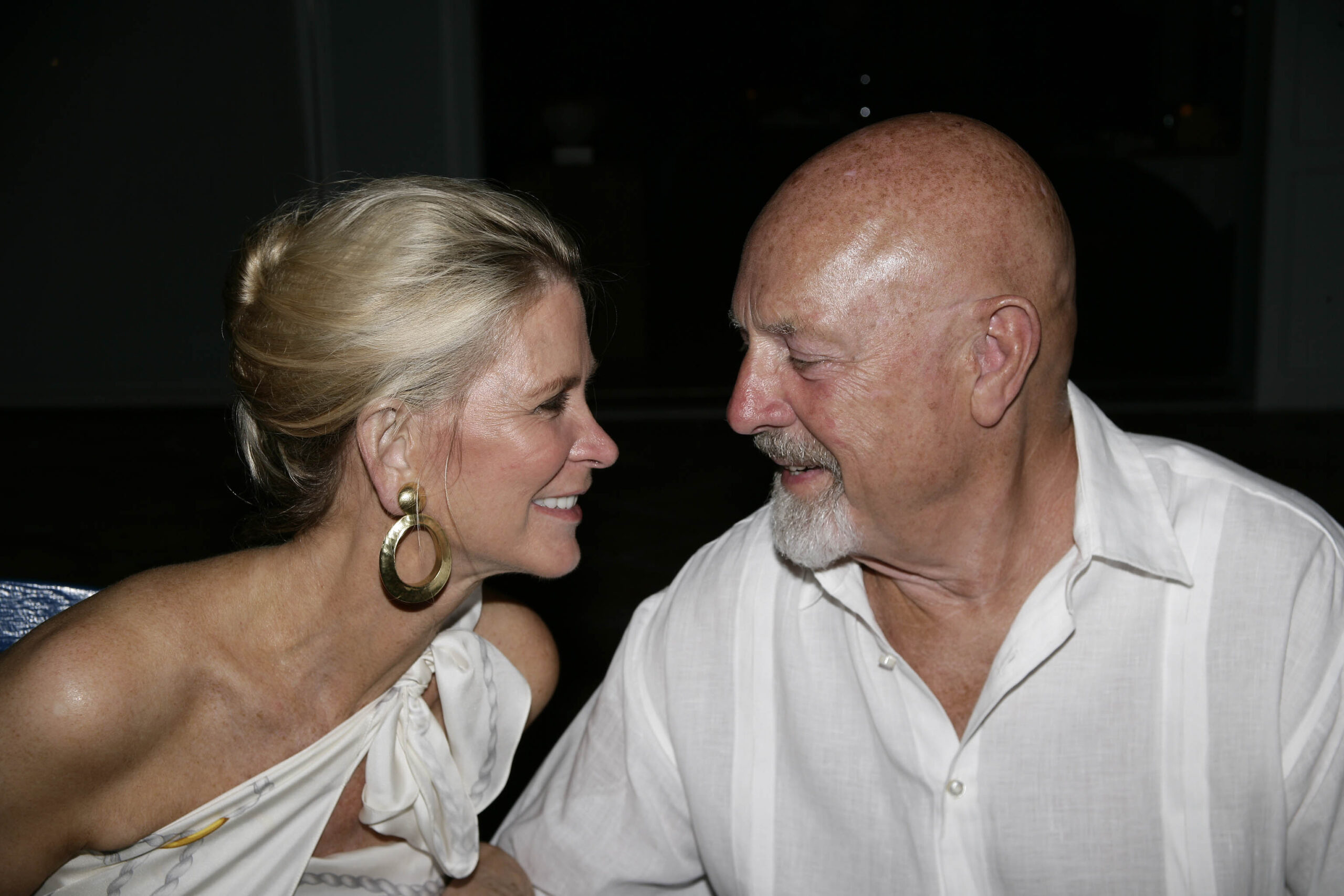
(Courtesy of Rebecca Dunn)

The Cowboy and the Lady

Bill influenced Rebecca’s passion for freedom and good character, she said. He lived by the ideas described in “Cowboy Ethics: What Wall Street Can Learn From the Code of the West” by James P. Owen. The book outlines 10 principles that Owen published in 2005 and that have since been adopted by the state of Wyoming: “Live each day with courage; take pride in your work; always finish what you start; do what has to be done; be tough but fair; ride for the brand; talk less and say more; remember some things aren’t for sale; and know where to draw the line.”

Bill exemplified loyalty and integrity. He supported emerging leaders, seeing potential where others did not. He preferred supporting individuals and organizations over politicians, but he didn’t shy away from donating to politicians he felt were important to the conversation.

Dunn remembers seeing him write a substantial check for a political candidate who no longer seemed to have a chance of winning. When she asked him why he wanted to invest in a lost cause, he told her:

“He’s a good person with tremendous character. He elevates the conversation. The longer I can keep him at the table with my support, the more positive influence he will have on the other candidates, and our country will benefit.”

Bill’s quiet strength and generosity profoundly shaped Rebecca. Together, they formed a synergistic partnership greater than either could have been alone.

“My daily support of freedom through the Foundation keeps me connected to Bill’s beautiful ideals,” she said.

Through Thick and Thin

Tragically, Bill battled Alzheimer’s for almost 13 years, remaining at home with Rebecca until he passed in the spring of 2025. They had lived in Palm Beach for most of their marriage when Dunn decided to move back to Florida’s west coast, where her family was living.
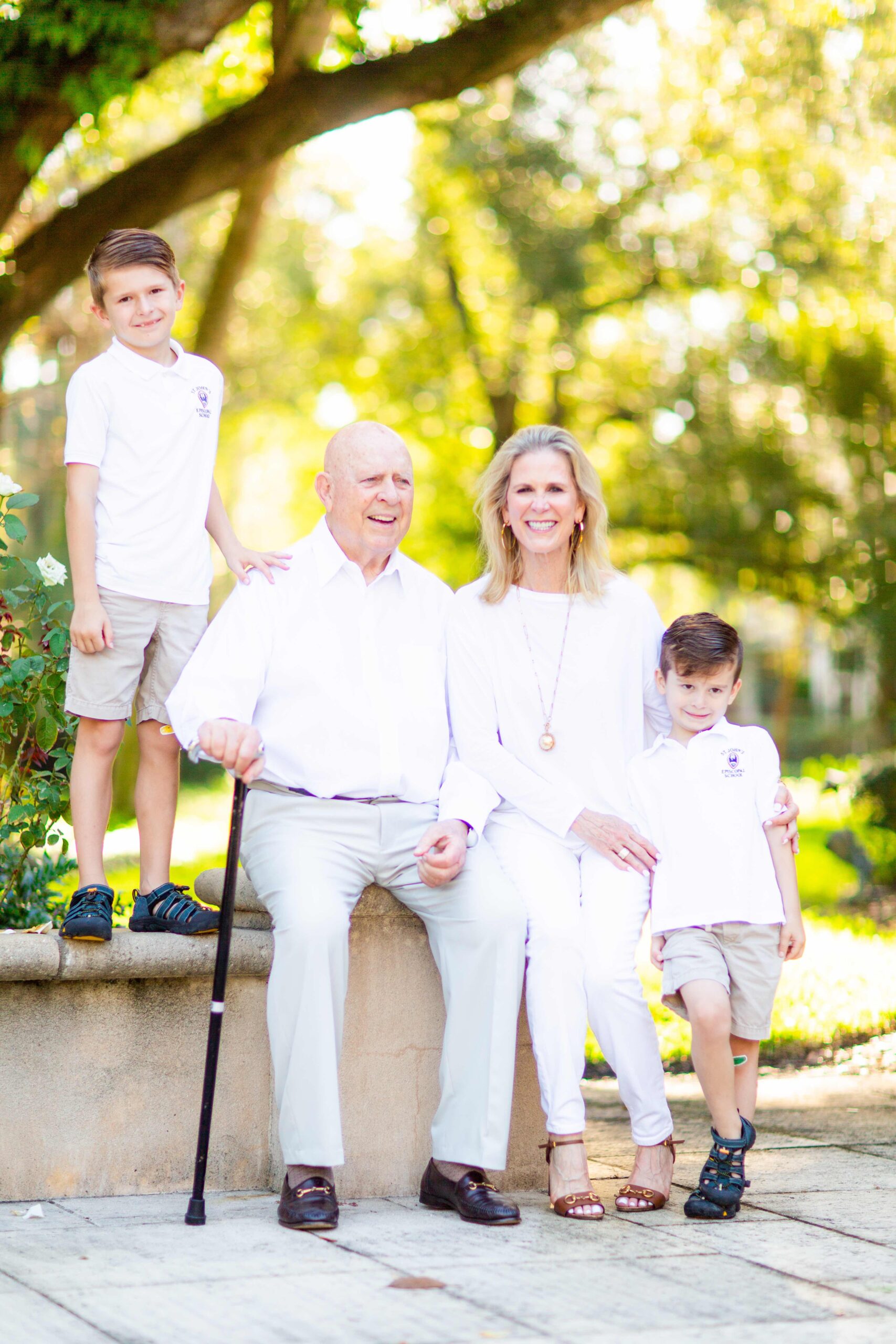
Rebecca and Bill Dunn pictured with Rebecca’s grandsons. Rebecca remains a trustee of The Dunn Foundation. (Courtesy of Rebecca Dunn)

When friends in Palm Beach asked why she was leaving the exciting social life she had enjoyed there, she told them:

“You can always buy back a social life if you throw enough money around, but no matter how much money you have, you cannot buy back time. I am going home to be near my son and my grandsons, so that I can develop a closer relationship with them. That is more important than all the parties here.”

In his final years, as Bill’s ability to speak faded, he was left with just two simple phrases: “love you” and “thank you.” Even his caregivers cherished him for staying so gentle through such a devastating illness.
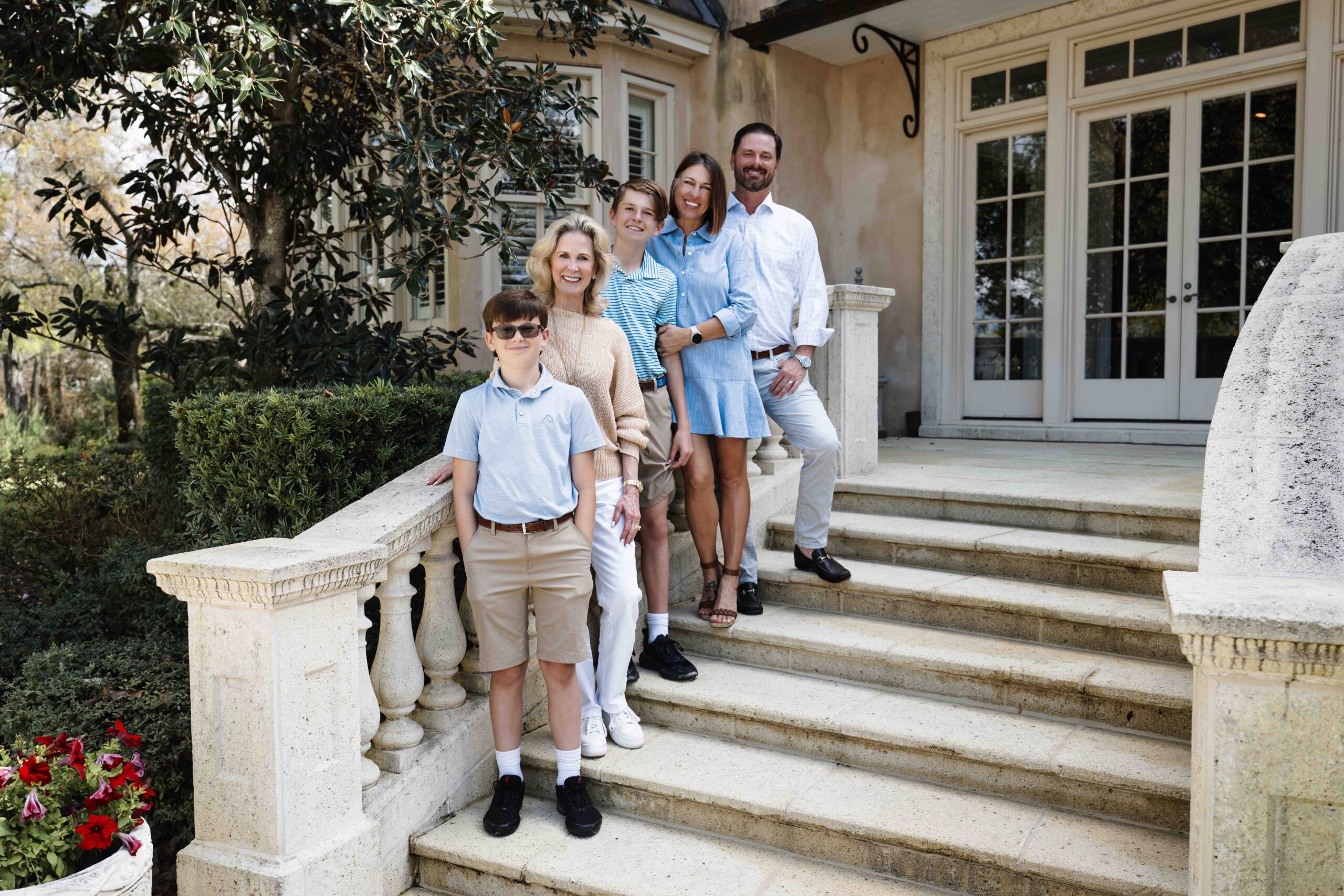
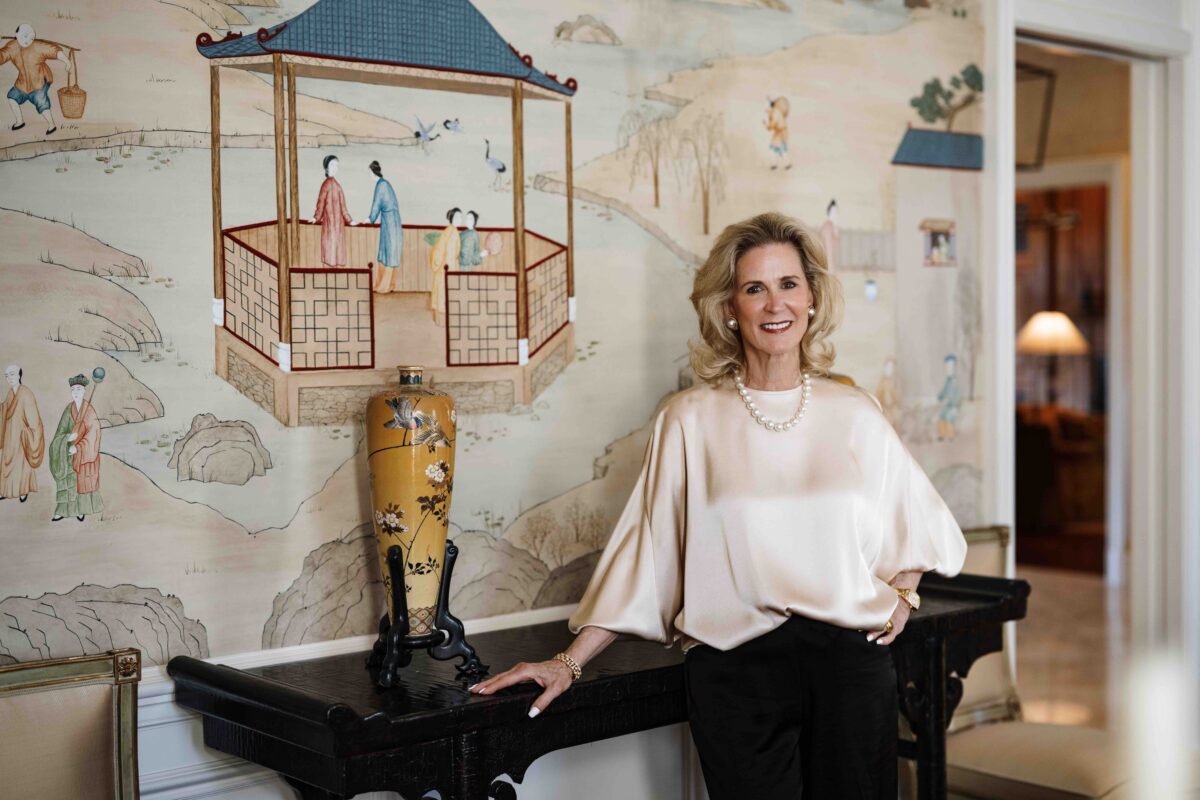
Dunn lives in Tampa, Fla., near her son, daughter-in-law, and grandsons, now 14 and 11 years old. (Adhiraj Chakrabarti for American Essence)

“Bill was a man who had been a Marine, a force to be reckoned with,” she said. “But at his core, he had a beautiful heart.

“It was a challenge but never a burden caring for Bill. It was my privilege. He was my rock in the early years of our marriage. I got to be his rock in his final years.”

The Power of Faith

Like many people, amid the hustle and bustle of a busy life, Dunn slowly began taking her Christian faith for granted. It never left, but neither was it prominent. That changed on the eve of September 11, 2002—one year after the terrorist attacks.

She felt incredibly connected to the tragedy, having been on a flight to New York on the day the Twin Towers came down. On this fateful day, one year later, she went out at night to buy an American flag from a neighborhood store in Florida. It was dark when she got back to her car, and suddenly she felt a gun pressed into her side. She was being mugged at gunpoint.

“I thought for sure I was going to die that night,” she recounted.

Then she remembered a Bible verse from her childhood about faith the size of a mustard seed—Matthew 17:20: “Truly I tell you, if you have faith as small as a mustard seed, you can say to this mountain, ‘Move from here to there,’ and it will move. Nothing will be impossible for you.”
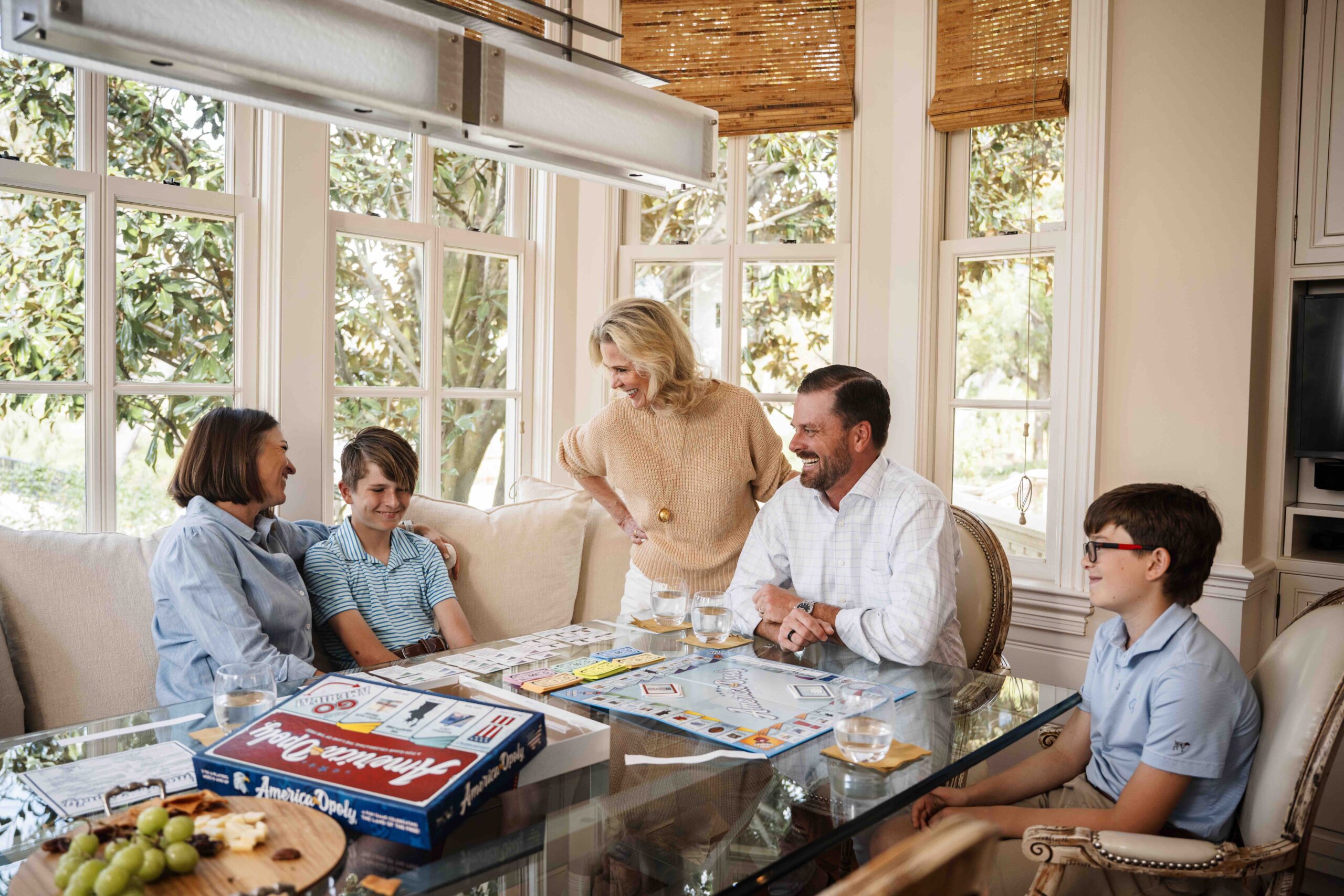
In Dunn’s kitchen, the family enjoy spending time together over pastimes like board games. (Adhiraj Chakrabarti for American Essence)

With that memory she prayed, “God, if I’m going to live, only you can save me. Help me.”

Then these words came out of her mouth to her attacker: “You must be in a great deal of pain to be so desperate. How can I help you?”

Her words changed him. He froze. “I know you think harming me will make you feel better, but it won’t. It’s only going to make you feel worse, and I don’t want that for you,” she told him.

“I was so sure that God, angels, or whatever you want to call it, were surrounding me, that I then said to him, ‘I haven’t looked at you. I want you to feel safe.’ I was so calm. I said to him, ‘I don’t know how much money I have, but I know I have some. Would that help?’

“He said yes.

“So I took out whatever money I had, and I handed it to him, and I said, ‘I hope that this will help you. I am going to pray that your life gets better. I really want that for you, and thank you for giving me my life back.’”

Then he left.

Dunn said she promised God that night, “You saved me, and I belong to you for the rest of my life.”

She now sees every day as a day she might not have had, and she upholds her promise with gratitude.

A Foundation for Freedom

In addition to her strong commitment to family and faith, Rebecca stays active with the Dunn Foundation, remaining loyal to Bill’s vision. When asked how she chooses which projects to support, Dunn said she focuses on excellence:

“Tell me what you do the best rather than trying to create a new area in your organization that seems to fit where we are giving support.”

She also likes to give new ideas a fighting chance—something she learned from Bill, who once told her, “You never know when that new idea may be one of the most important of the day.”

Their support of Charlie Kirk as a young man and his early vision for Turning Point USA is one example of their ability to see promise in a young leader who went on to inspire many.

To date, the Dunn Foundation has supported over 100 different nonprofits that work to preserve, defend, and educate about freedom.

Its latest initiative was two-fold: establishing a training academy at the Conservative Partnership Institute with a $5 million matching grant and creating Bellator Hall, the academy’s home in Washington.
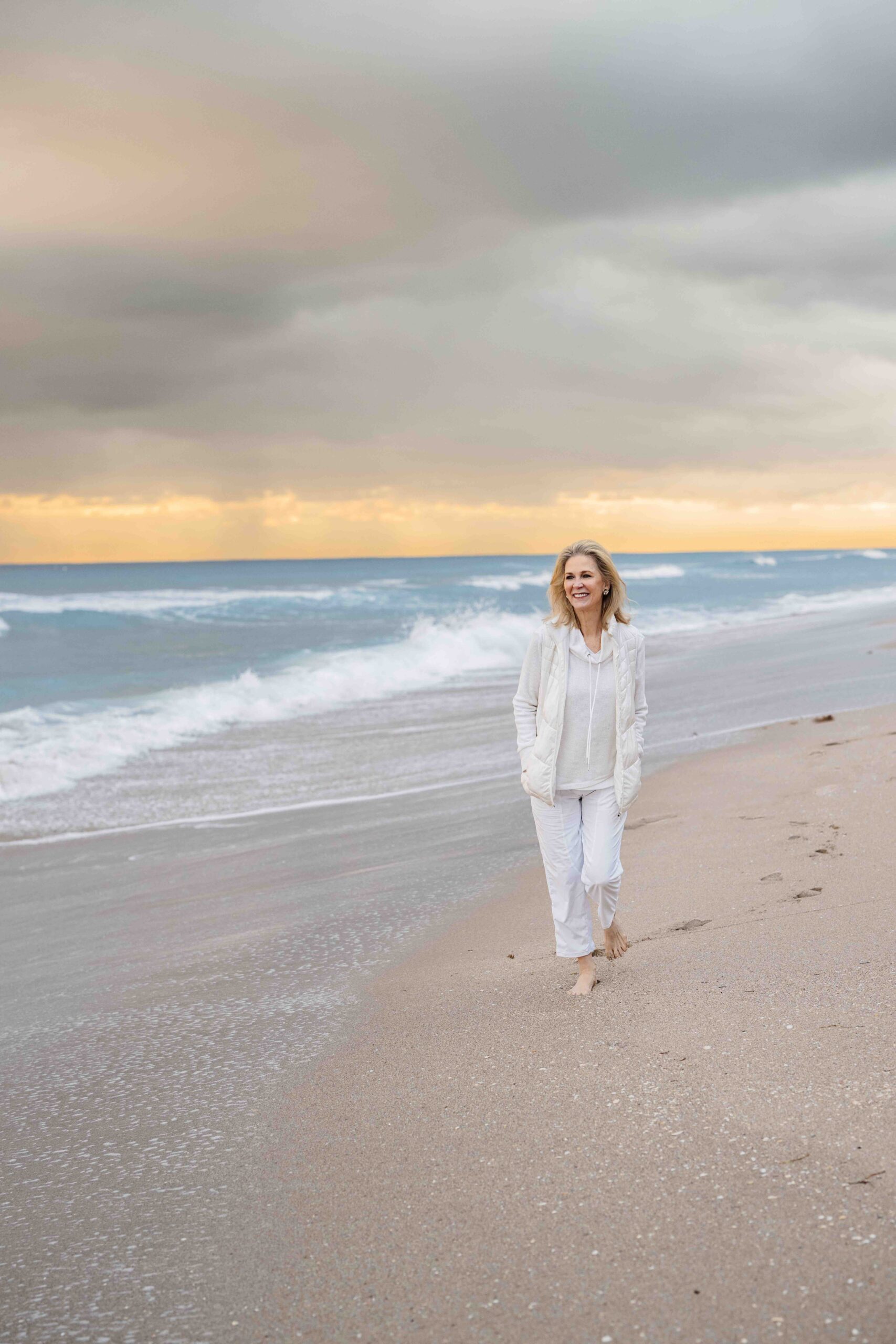
(Adhiraj Chakrabarti for American Essence)

From her childhood dreams, standing atop a sand dune looking across the ocean, to the hard but beautiful days of caring for a dying husband while listening to her grandsons laugh and play outside—from a violent attack transformed into a moment of renewed faith—Dunn said she feels blessed.

“Every day offers us an opportunity to do something positive.”

Dunn said that when her son was still young, she began to see America changing, and not for the better. “I never wanted my son to come to me and ask, ‘Mom, didn’t you see things changing? Why didn’t you do something?’”

Even her aspirations for improving society return to family. “I always wanted my son to know that whether I succeeded or failed, I did something. I have tried to save what I felt was important to the soul of America. I believe this is more important than any wealth I can pass on to him or my grandchildren.”

From May Issue, Volume VI
Categories
Features

Illuminating Culture Through Glass Art

Photographed by Adhiraj Chakrabarti

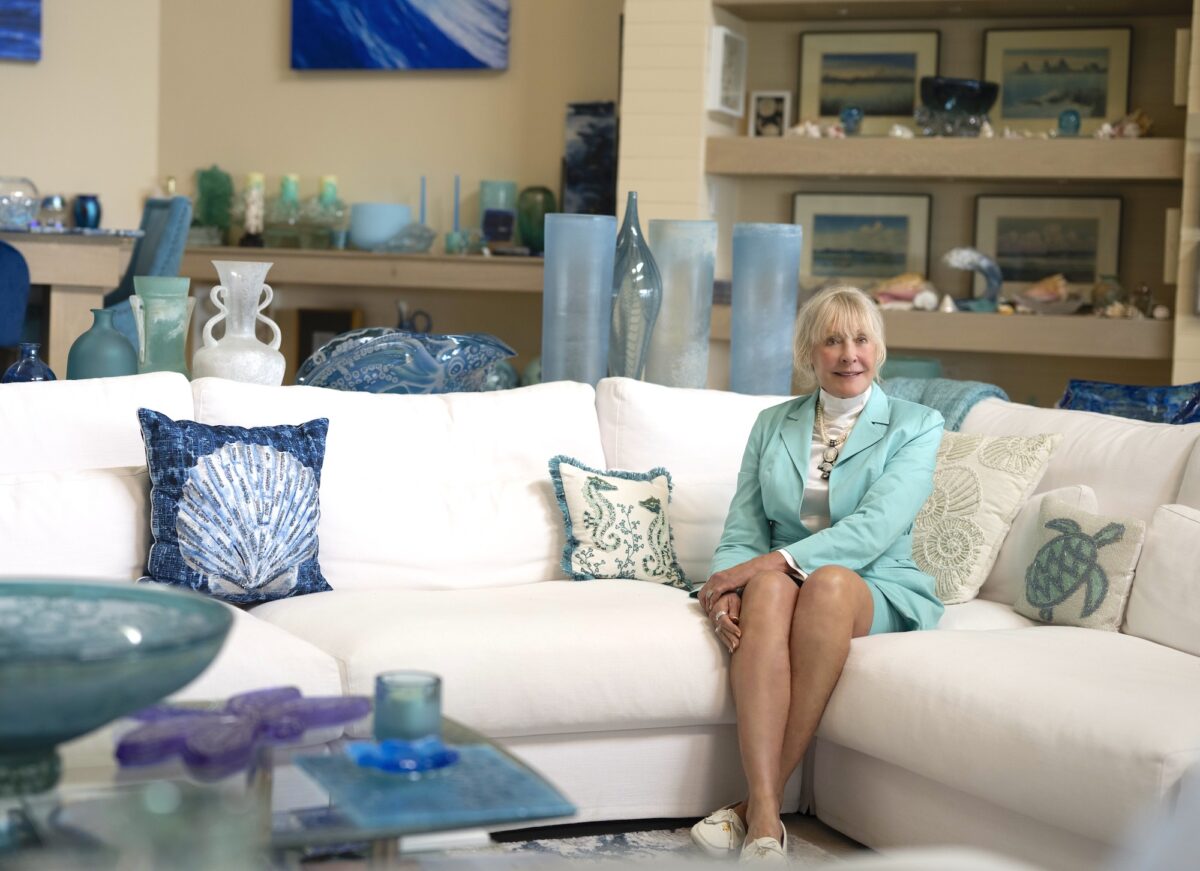
As an artist and the founder of the Imagine Museum in St. Petersburg, Florida, Trish Duggan has made a name for herself that is synonymous with glass art. Light refracts and colors dance throughout, enveloping visitors in beauty. Home to a captivating collection of glass sculptures, it’s a space born of serendipity, unplanned passion, and unrestricted vision.

“The first piece of glass art I saw was at John Travolta’s house. The light was hitting it, and it looked alive! I was shocked. It was so beautiful,” Duggan said.

She began to collect pieces that caught her eye and touched her heart. One day, an artist whose artwork she collected asked her, “Would you like to see how it’s done?”

“I was mesmerized,” Duggan recalled. “Then she asked, ‘Would you like to do a piece?’ I said, ‘I’d love that.’ Well, that was the ‘Goddess of Compassion.’ That was my first piece that I ever did.”

Infused with deep spirituality, American values, and personal introspection, Duggan’s work as an artist, patron, and philanthropist reflects universal qualities and embodies her journey from humble beginnings to a life of profound influence.

Duggan’s artwork featuring inspirational women pays tribute to the remarkable women who shaped history. 

A Life Shaped by Spirituality and Creativity

Trish Duggan’s story begins in Guam, where she grew up in a military family. “I got my first pair of shoes when I was 5 years old,” she said. During those formative years, she was immersed in the island’s beauty. The beautiful sunsets fired up her love of nature; the ocean’s varied shades of blue and green were imprinted onto her imagination. It also filled her with a sense of abundance. Scarcity was never part of her mindset. Her mother and her father instilled in her a steadfast belief in the American dream. “My mom said, ‘If you study, you can be part of the American dream,’” Duggan recalled.

This ethos of hard work and big dreams propelled her to explore the world and discover a love of art. She still maintains a friendship with her Japanese high school art teacher in California—now 100 years old—who introduced her to Japanese printmaking techniques.

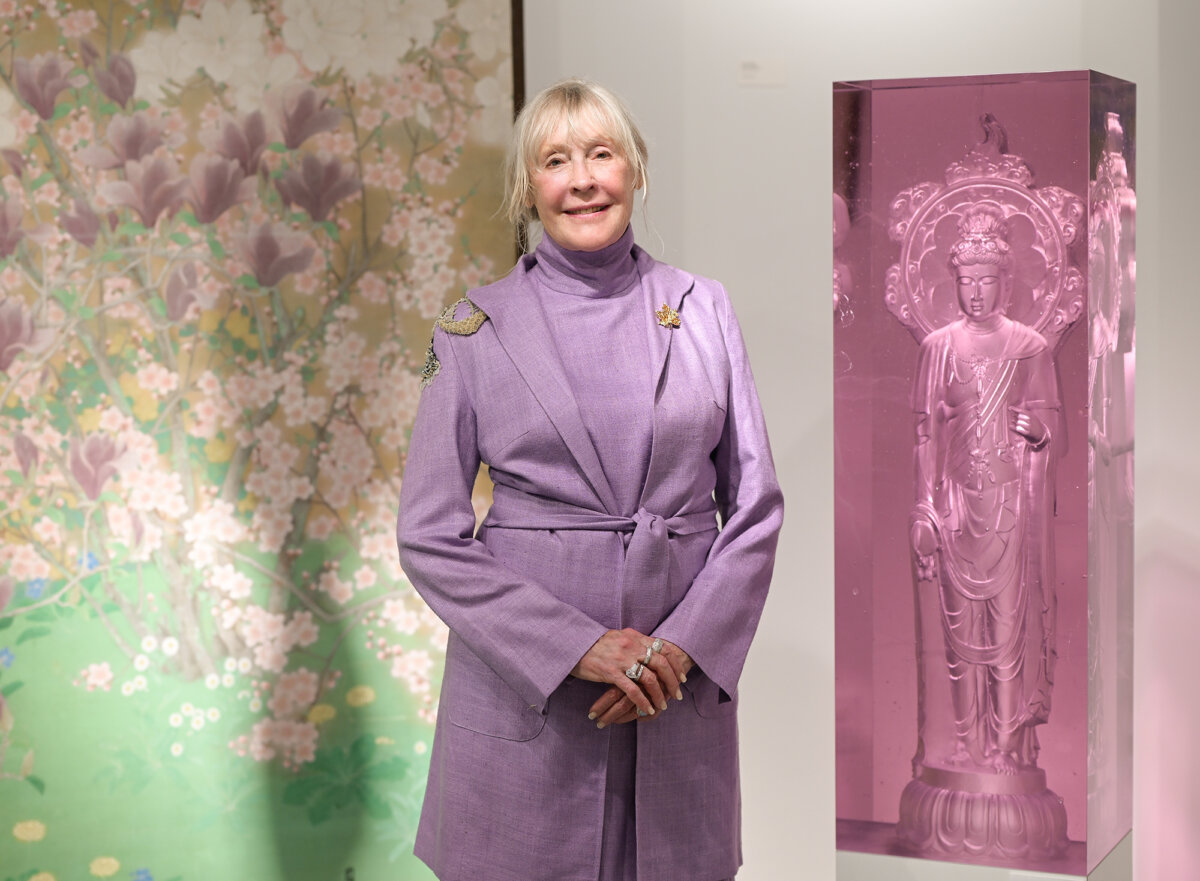
Duggan is a prolific artist. Among her many creations is a 300 pound, pale pink molded-glass sculpture of Quan Yin, the Goddess of Compassion. 

She headed to California to pursue a college degree in political science. Though she was an excellent student, she found herself getting Ds on her papers. When she questioned one of her professors about her low scores, he told her: “It’s your viewpoint [that he disagreed with].” That’s when she realized that she would have to take a different path.

“I’m a dropout,” she said. “It was during the Vietnam War when I went to university; all my teachers were anti-American.” That mindset ran counter to her core beliefs about herself and the world. Seeking an environment free from the political divisiveness in America, she traveled to Nagoya, Japan, to study at Nanzan University. While there, she reconnected with the art and culture she fell in love with in high school, and she began a lifelong appreciation for Buddhism.

After making her first piece of glass art based on a statue of Guan Yin, the Buddhist deity of compassion, she set about creating a series inspired by one of her favorite quotes. “Though you can conquer 1,000 men in battle 1,000 times, the one who conquers himself is the noblest victor of all,” she quoted by heart from a Buddhist text.

Duggan founded the Imagine Museum in St. Petersburg, Fla., in 2018. Its collections showcase the work of American and international glass artists.

The Art of Glass: A Medium of Magic and Inspiration

“Glass is the most important thing that we’ve discovered,” according to Duggan. From microscopes to eyeglasses to fiber optic cables, glass has played a central role in human history.

“How about the mirror alone? The mirror, I say, started the age of introspection: Who am I? What am I doing here? What’s my purpose? We’re all born to help, and where we can help, we should help,” Duggan said.

Her artistic process is deeply intuitive. She draws inspiration from everyday life—patterns in a magazine, a stranger’s outfit, or the natural beauty of Guam’s waves and stars. Her St. Petersburg, Florida, studio, TD Glass, is a space where she transforms these inspirations into glass. She became a working artist under glass artist Chuck Boux, who praised her artwork: “You open a portal to serenity that I have never seen before.”

“I’m grateful to be an American and be part of the American dream,” Duggan said. “We’re so fortunate to grow up in freedom, and I’m deeply respectful for every person who has fought for freedom.”

Working with glass is both challenging and exhilarating. In glass casting, glass is melted in a furnace, then poured into a mold. “Not a lot of people want to work with it, because it’s like working with a volcano. It’s 2,100 degrees. It’s all melted sand. It’s very hot to work with, and you don’t know how it’s going to turn out,” she said.

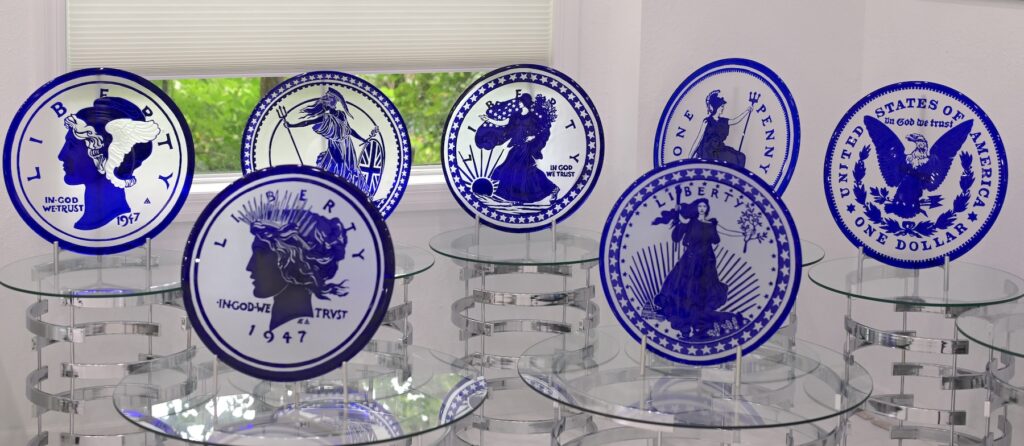
In her artwork, Duggan uses a variety of techniques that allow her to incorporate intricate detail and expressive forms. Her distinctive style blends traditional techniques with innovative approaches. Drawing from her background in Japanese woodblock printmaking, she presses woodblocks into sand to create a mold. Then she pours molten glass into the mold to capture the design.

portrait
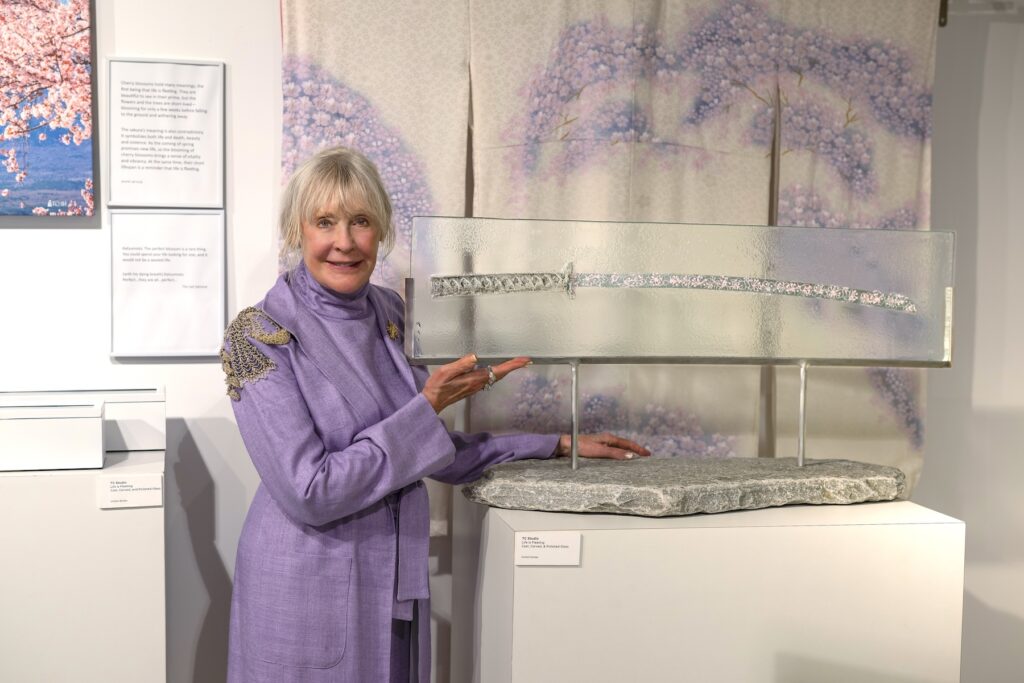
Duggan points to “Life Is Fleeting,” fashioned out of fused, etched, and polished glass, and created by TC Studio. (Adhiraj Chakrabarti)

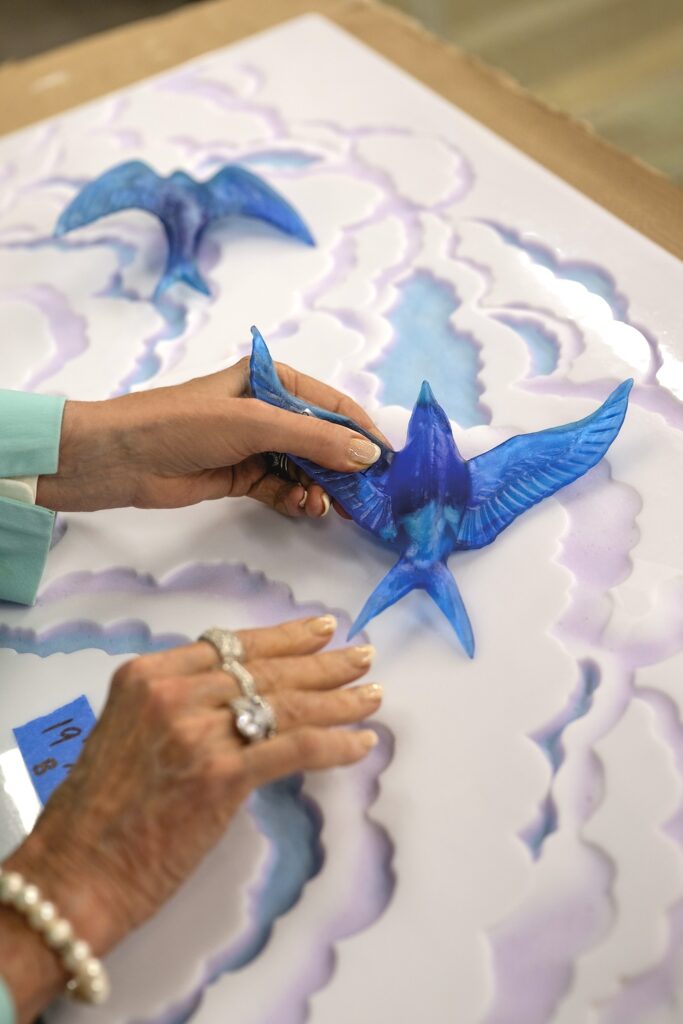
To create the delicate flowers adorning some of her pieces, she uses pâte de verre, made by pressing molten frit (finely ground glass) into molds. Her tropical-themed pieces often feature shells and seahorses and reflect her love for nature and imagination. They incorporate impressions of leaves, shells, and other items from nature that she collects herself.

The medium’s ability to interact with light and create a sense of vitality captivates her. “The most magical thing about glass is what happens when light hits it,” she said.

A Spiritual and Social Vision

When she’s immersed in her work, time slips away. “When I’m in that moment of creation, it’s very spiritual. I’m absolutely in the moment,” Duggan said. “I have raised eight kids, and sometimes I was so into working on a project that when I looked up at the clock, it was 4 o’clock in the morning, and I’ve still got to get up and get my kids to school.”

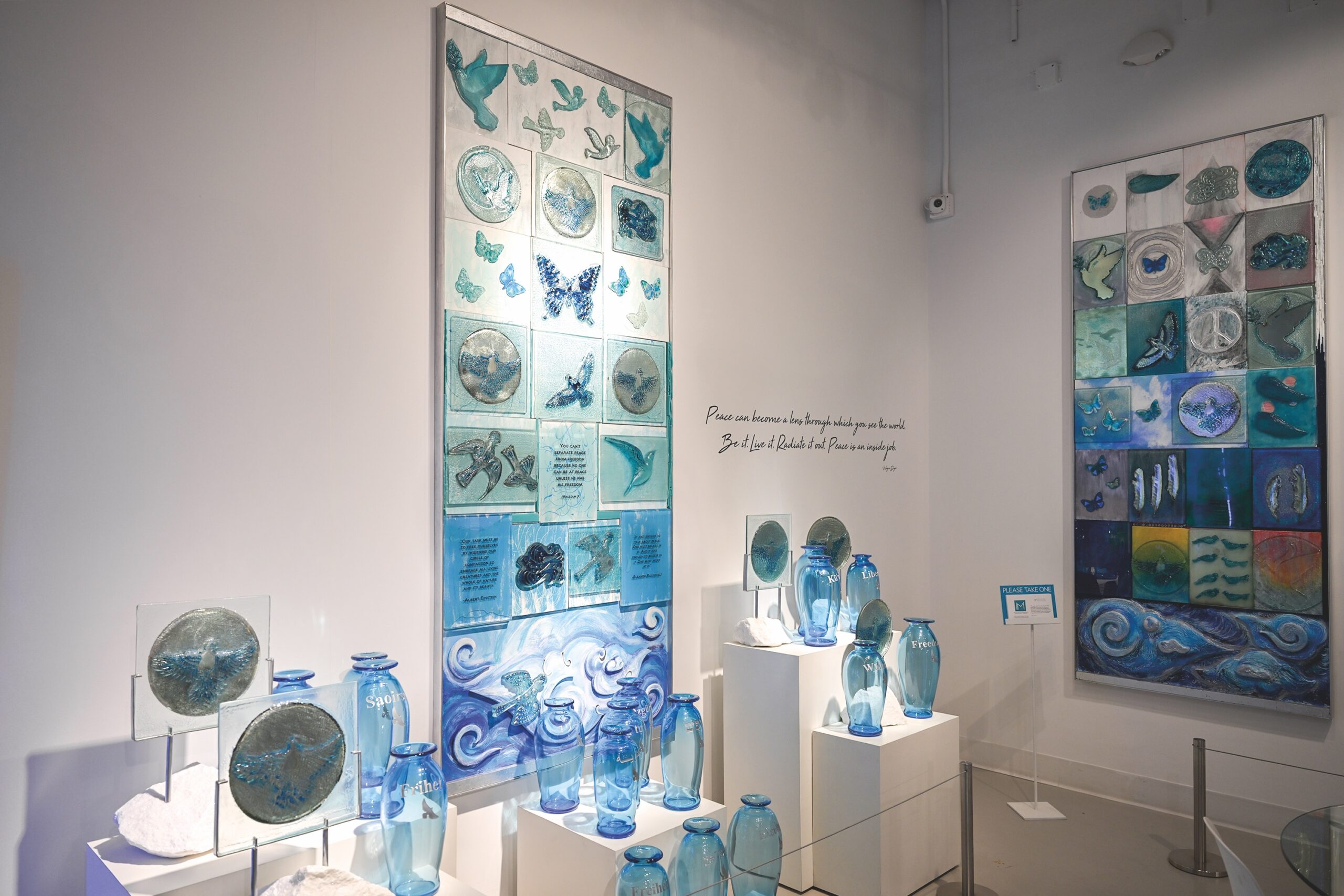
Duggan has a great affinity for the color blue, which evokes peace, imagination, and creativity. She is the author of the book “The Beauty of Blue.”

That drive manifests not only in Duggan’s art, but also in her business and philanthropic endeavors. In 2018, she opened the Imagine Museum in Florida, and she is a board member of the projected Museum for Peace in Costa Rica. She also has plans to open an international museum of glass art, and she is a newly appointed board member of the John F. Kennedy Center for the Performing Arts in Washington.

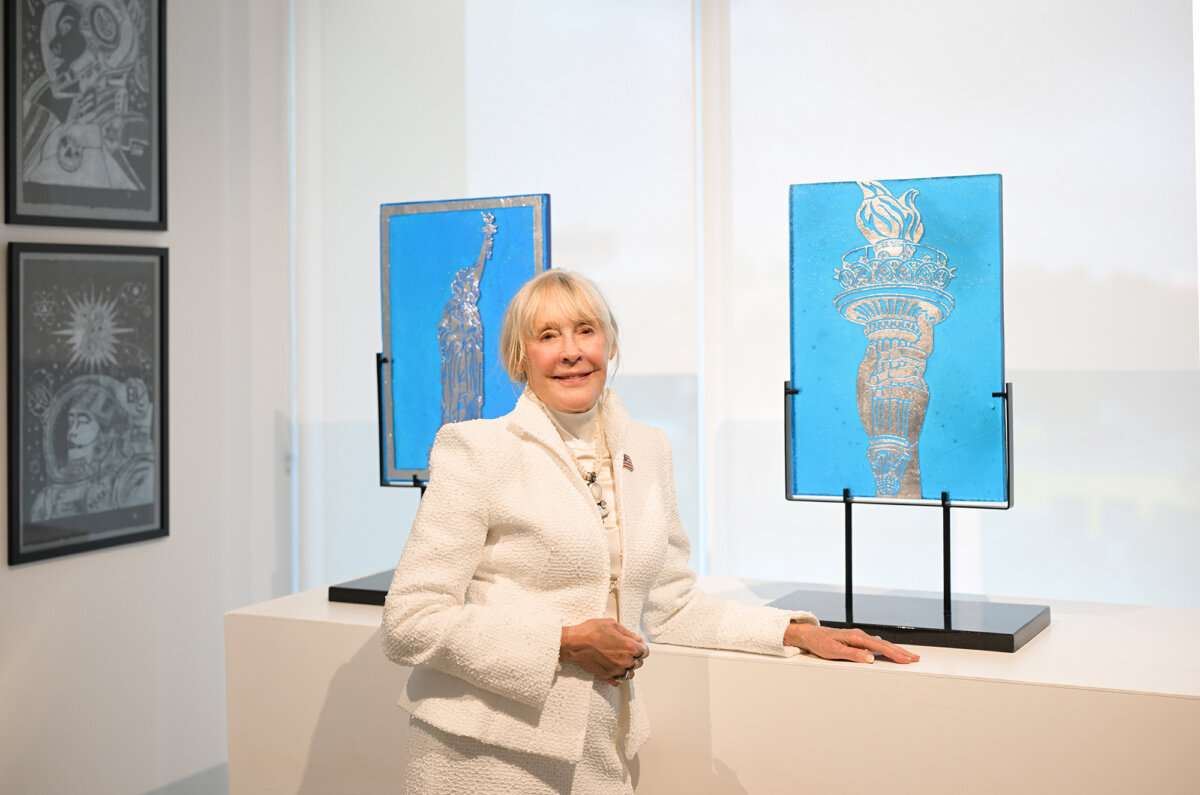
In all her work, Duggan said she hopes to promote American values and support universal human rights. Her Americana room at the Imagine Museum features symbols like the Statue of Liberty and astronauts. It celebrates the spirit of freedom and exploration.

Her experiences in communist countries deepened her appreciation for American freedoms. She recounted a chilling incident in China after she left a picture of the Dalai Lama at a monastery, saying, “I wanted them to know it was the Dalai Lama’s monastery.” Though she and her group were under military surveillance for the rest of the trip, Duggan felt no fear. It only reinforced her dedication to human rights advocacy.

She also highlighted a documentary she once saw about the persecution of Falun Gong in China. Since 1999, the Chinese Communist Party has imprisoned and tortured adherents of the Buddhism-inspired practice, which is based on truthfulness, compassion, and tolerance.

artwork
The techniques employed by Duggan enable her to render delicate details.

“It was so shocking to me. I said, ‘I’m going to do something about it.’ There was nobody who wanted to do anything about it,” she said about the CCP’s lucrative organ harvesting crimes. “You can go and get a liver for very cheap [in China], you could go into the prison and say, ‘Oh, that 18-year-old girl from Falun Gong, I’ll take her lungs,’ and then they don’t use any anesthesia. It’s just criminal what’s going on on the planet.”

“We’re all born free and equal in dignity and rights,” she asserted, emphasizing the need to honor individual worth. “We have to leave a future of freedom, not one of slavery.”

Duggan’s compassion doesn’t just manifest in her art and philanthropy. She grounds her daily life in the same values. She has adopted six children from foster care. After her own success in business, she supported her mother’s education, which was put on hold when she became pregnant at age 16 and eventually culminated in two master’s degrees and a doctorate.

Cultural Leadership and Future Aspirations

Duggan sees art as a unifying force in a divided world, with the power to transcend political and social divides. “People who are on the opposite end of the spectrum than I am … come [into the museum] and they’re like, ‘This is so beautiful.Thank you so much. It’s so uplifting,’” she noted. Her next project aims to “celebrate the future generation,” emphasizing freedom and creativity and countering oppression.

As a patron of the arts and steward of cultural institutions, she hopes her philosophy of compassion and freedom will light a path toward a more inspired and united society.

studio
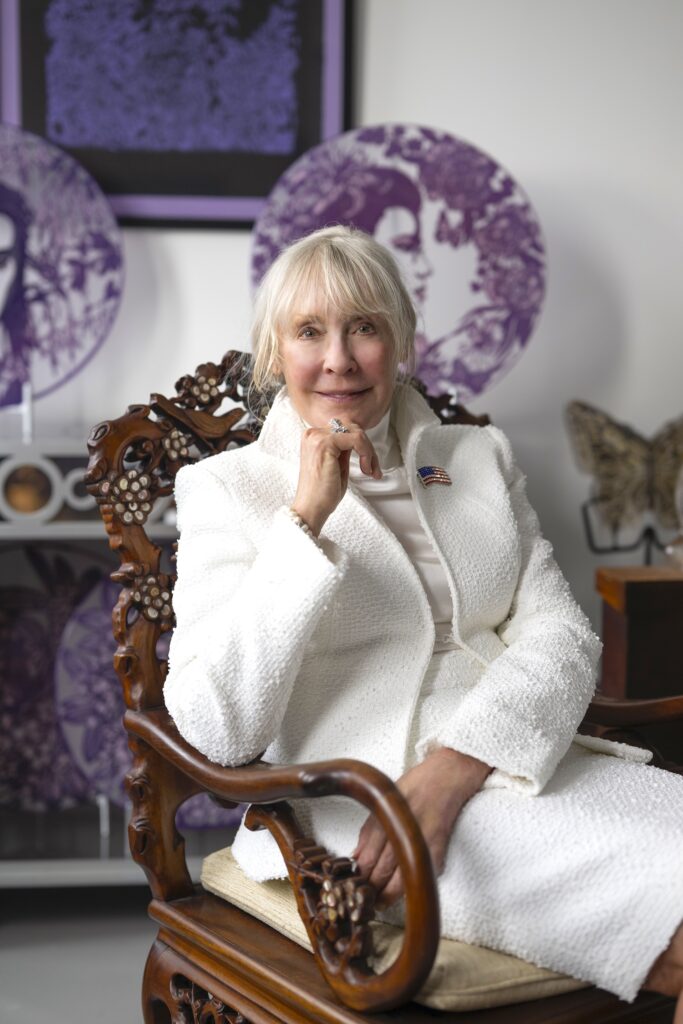
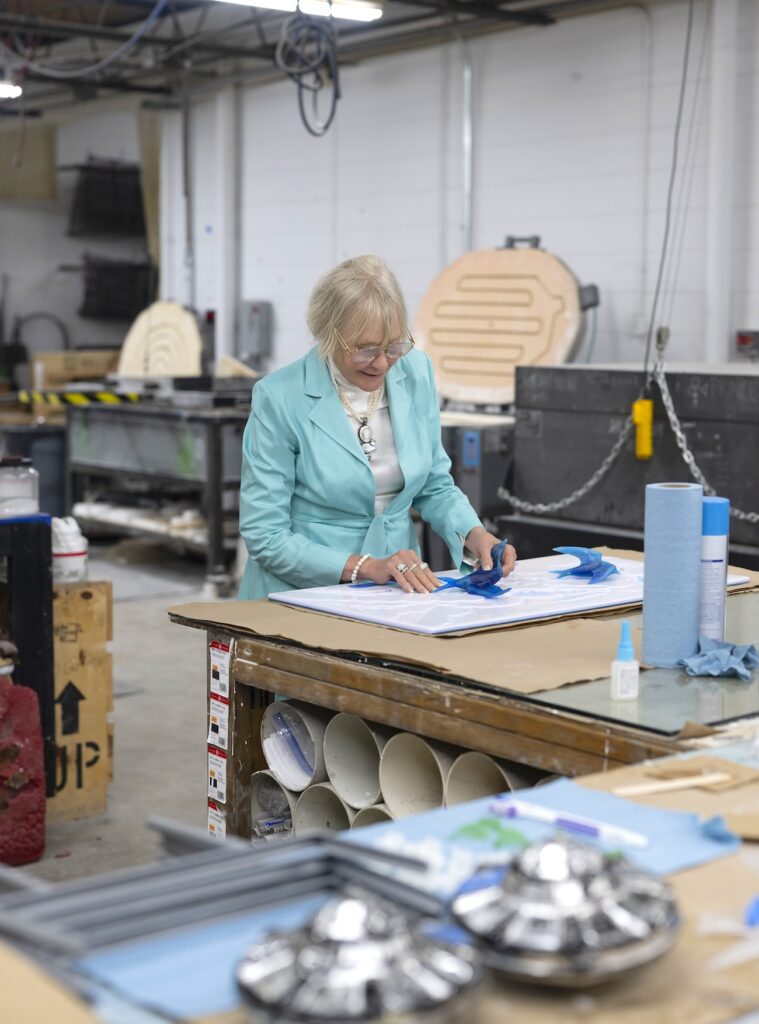
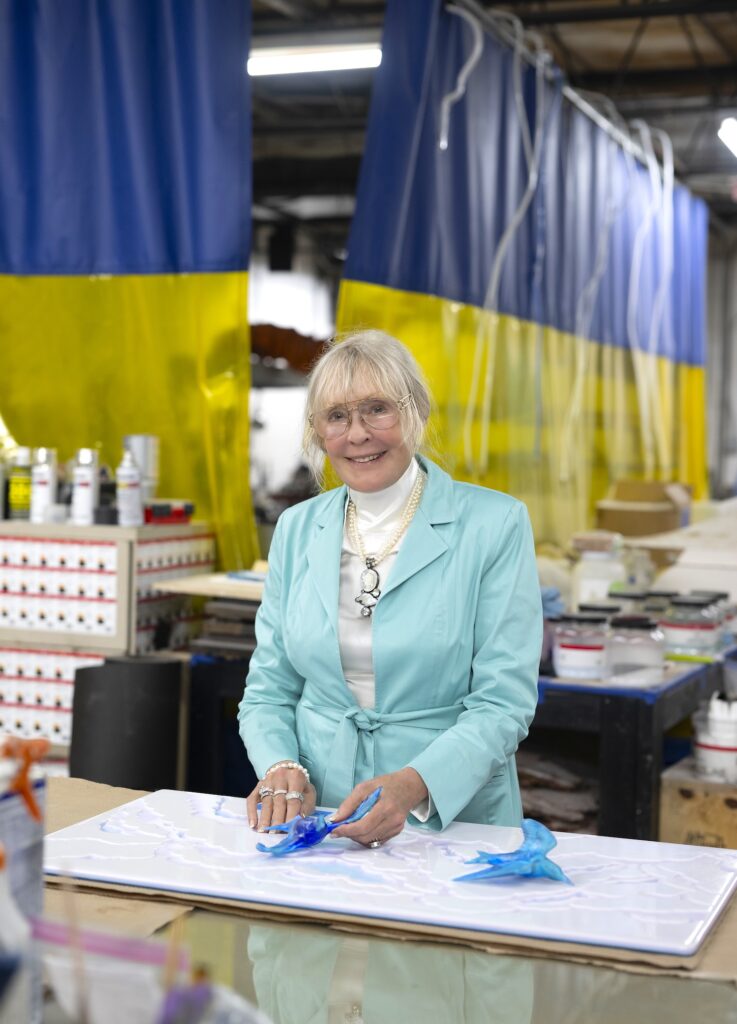
Trish Duggan at TD Glass, her design and fabrication studio in St. Petersburg’s Arts District.

“If you look for beauty, you find beauty. There’s tons of ugliness out there. There’s tons of divisiveness. There’s lots of hatred. If you look for that, you’re going to find it. But I don’t happen to try to look for that. I look for the beauty in things,” she said.

Duggan’s plans and ideas keep her plenty busy. “I’ve got at least three file boxes full of all different projects. I need to live to 250 to get all of these done. Somehow, I’ve got to cheat death or something,” she laughed.

She fervently believes in the transformative power of art: “That’s the artist’s job—to lead people into the future, to create beauty. The purpose of the artist is to help bring man up into the future. That’s culture.”

From Sept. Issue, Volume V