
Categories
Uncategorized

Philanthropist Rebecca Dunn on Creating A Lifelong Legacy of Championing Liberty and Individual Rights

Philanthropist Rebecca Dunn lives a full and active life on the Gulf Coast of Florida. Her son and his family live only steps away. Dunn loves being with people and introducing newcomers, and she takes pride in hosting intimate dinners with meaningful conversations.

As a highly visible trustee of the Dunn Foundation, founded by her late husband Bill Dunn, Rebecca spends her time supporting people and organizations across the country through projects focused on freedom, education, and classical liberal values. It’s an endeavor led by her heart, which remains forever loyal to her faith, family, and the nation that made her incredible life possible.

Dunn’s story began in a humble motel run by her family on an island off the coast of North Carolina. She lived there until she was 7, her whole family sharing a tiny, one-bedroom home connected to the motel office. She remembers sweeping sand off the long sidewalks in front of the motel rooms by the age of 5. She laughed when she said that her skills as a hostess today were probably honed at that early age, when she would greet motel guests while her parents were out of the office.
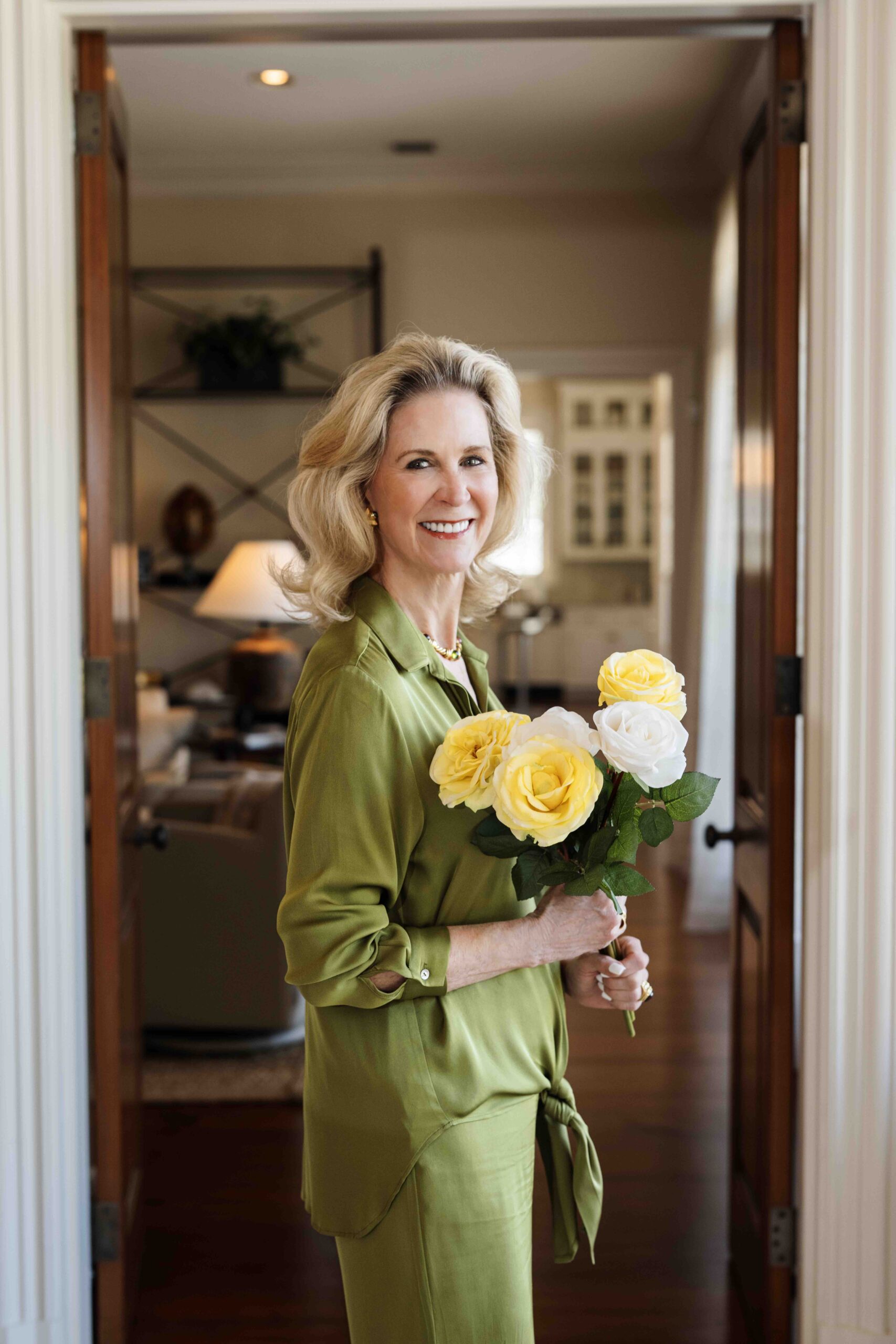
(Adhiraj Chakrabarti for American Essence)

When her father sold the motel, the family moved to an undeveloped part of the island. There, Dunn would hike over a large sand dune after school, walk the empty shoreline, and gaze at the endless ocean.

“I would dream of faraway places and look out at this endless distance. I would dream, and I would also pray. Both of those were habits that, I have to say, were woven into the tapestry of my life. I felt optimistic about the future and what lay ahead, like that endless ocean before me.”

Finding Love

After attending a Baptist girls’ college in Raleigh for two years, then transferring to Florida State University, Dunn met her first husband, Bob, a Yale graduate. They had a son together and moved to the Tampa Bay area. Though the marriage ended after 25 years, they maintained a warm friendship. Dunn said her father advised her, “Even if you have to walk away from everything, keep a good relationship with your husband because there will always be weddings, graduations, funerals, birthdays.”

“Basically, we chose to love our son more than dislike each other. It was a wise and rewarding decision,” Dunn recalled.

“One of the things I have learned in life is that holding onto negative thoughts is a huge burden. Forgiveness and a positive mindset help us to move forward in life with the joy our Creator wants us to experience.”
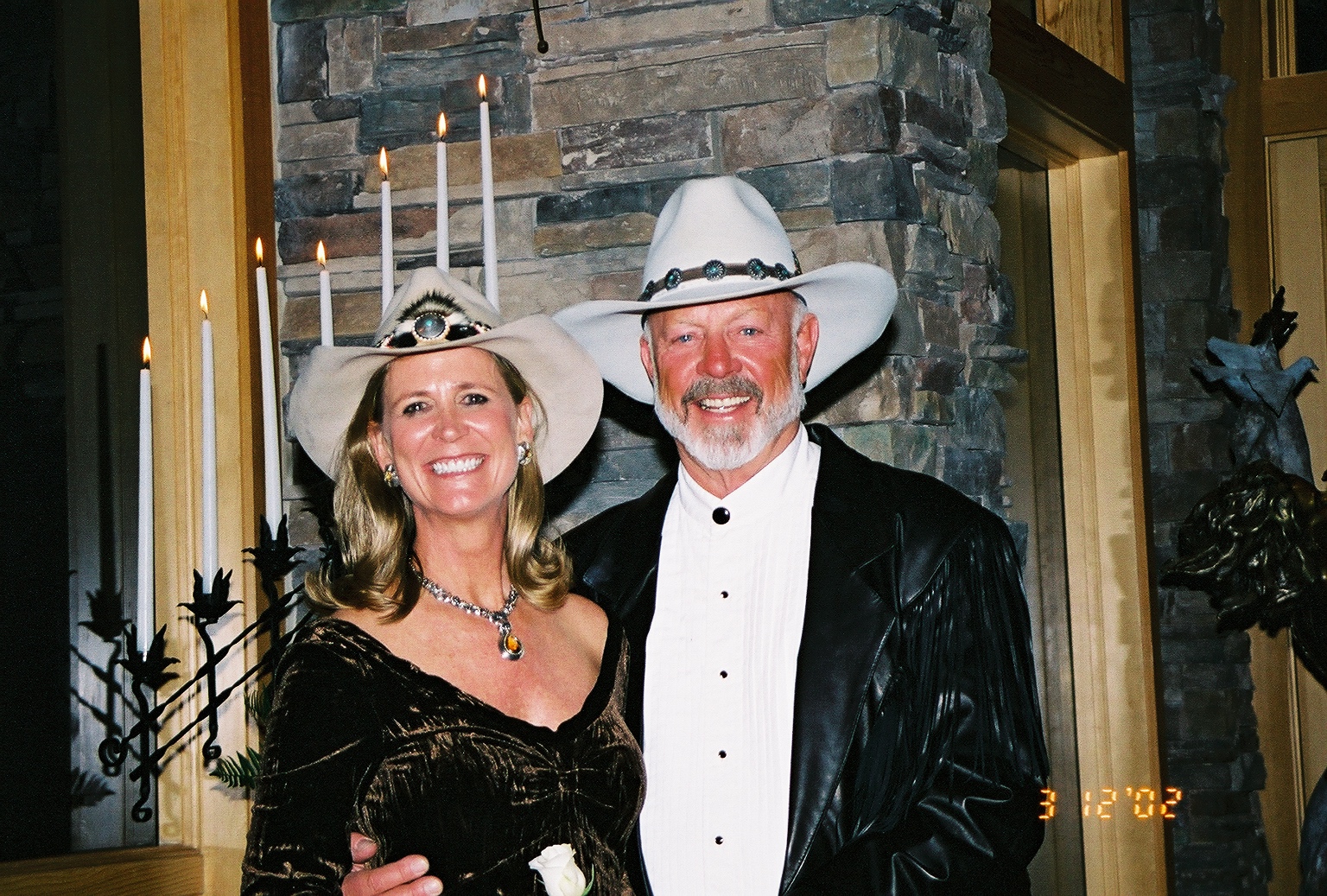
Rebecca married pioneering financial trader William A. “Bill” Dunn in a sweet, swift ceremony in Montana in 2002. They had a grand reception later that year, and they vacationed annually in St. Barths. She stayed by his side until his death in 2025. (Courtesy of Rebecca Dunn)

Rebecca later became friends with Bill Dunn through mutual philanthropic involvement in public policy organizations. He was a brilliant Marine veteran, futures trader, and fierce advocate for liberty. Initially, she thought there was no way they’d ever be involved romantically.

“I would have bet every penny I owned that we would never be in a serious relationship,” she said.

Then one day he asked her, “Do you think a cowboy like me and a lady like you could ever have any kind of future together?” From that day forward, he was her cowboy, and she was his lady.

They married in a spontaneous ceremony in Big Sky, Montana, during a blizzard in March 2002. Rebecca had just 30 minutes in town to buy a wedding dress while Bill replaced the tires on his truck. She found a long, brown velvet dress and wore it with her boots and cowboy hat.
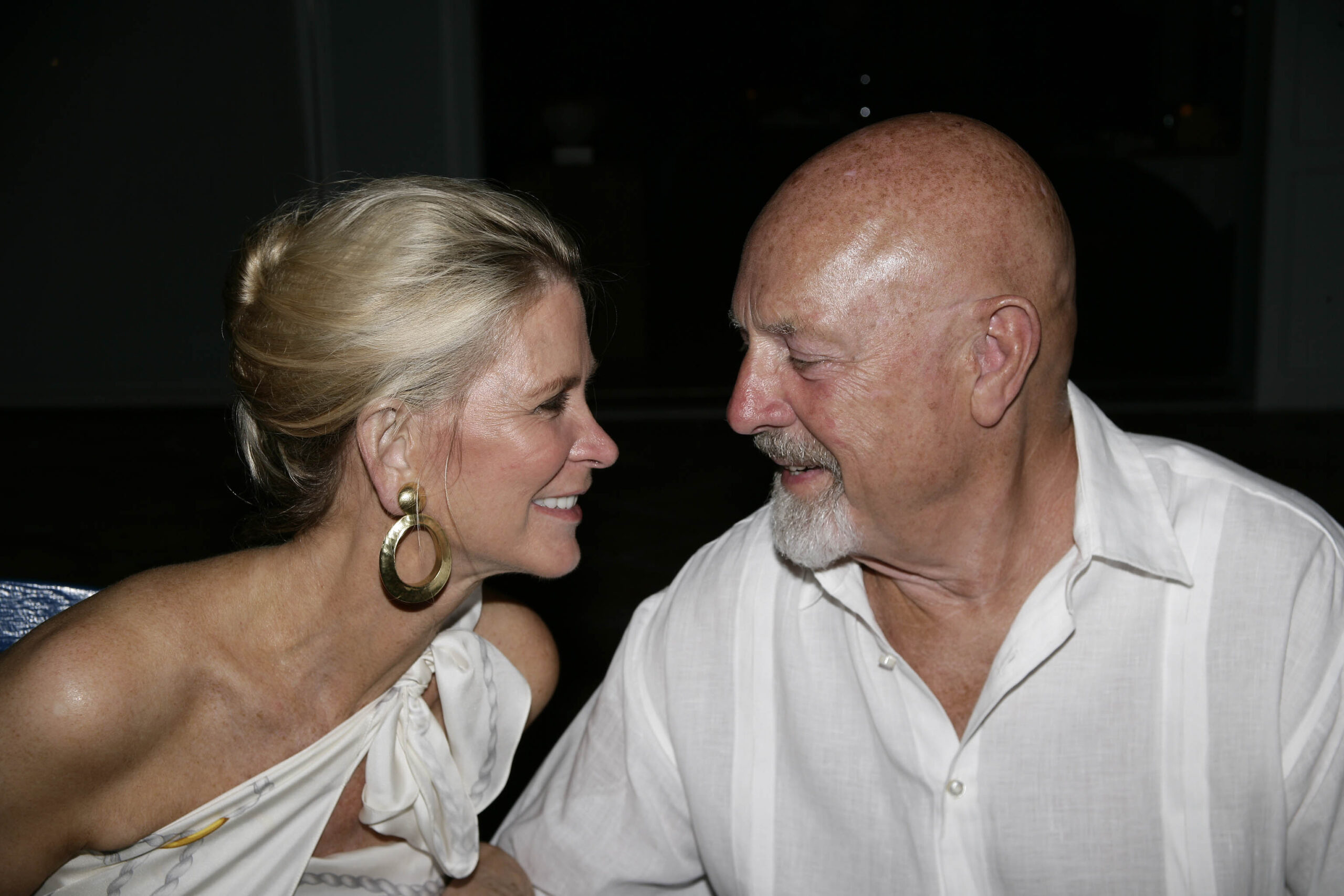
(Courtesy of Rebecca Dunn)

The Cowboy and the Lady

Bill influenced Rebecca’s passion for freedom and good character, she said. He lived by the ideas described in “Cowboy Ethics: What Wall Street Can Learn From the Code of the West” by James P. Owen. The book outlines 10 principles that Owen published in 2005 and that have since been adopted by the state of Wyoming: “Live each day with courage; take pride in your work; always finish what you start; do what has to be done; be tough but fair; ride for the brand; talk less and say more; remember some things aren’t for sale; and know where to draw the line.”

Bill exemplified loyalty and integrity. He supported emerging leaders, seeing potential where others did not. He preferred supporting individuals and organizations over politicians, but he didn’t shy away from donating to politicians he felt were important to the conversation.

Dunn remembers seeing him write a substantial check for a political candidate who no longer seemed to have a chance of winning. When she asked him why he wanted to invest in a lost cause, he told her:

“He’s a good person with tremendous character. He elevates the conversation. The longer I can keep him at the table with my support, the more positive influence he will have on the other candidates, and our country will benefit.”

Bill’s quiet strength and generosity profoundly shaped Rebecca. Together, they formed a synergistic partnership greater than either could have been alone.

“My daily support of freedom through the Foundation keeps me connected to Bill’s beautiful ideals,” she said.

Through Thick and Thin

Tragically, Bill battled Alzheimer’s for almost 13 years, remaining at home with Rebecca until he passed in the spring of 2025. They had lived in Palm Beach for most of their marriage when Dunn decided to move back to Florida’s west coast, where her family was living.
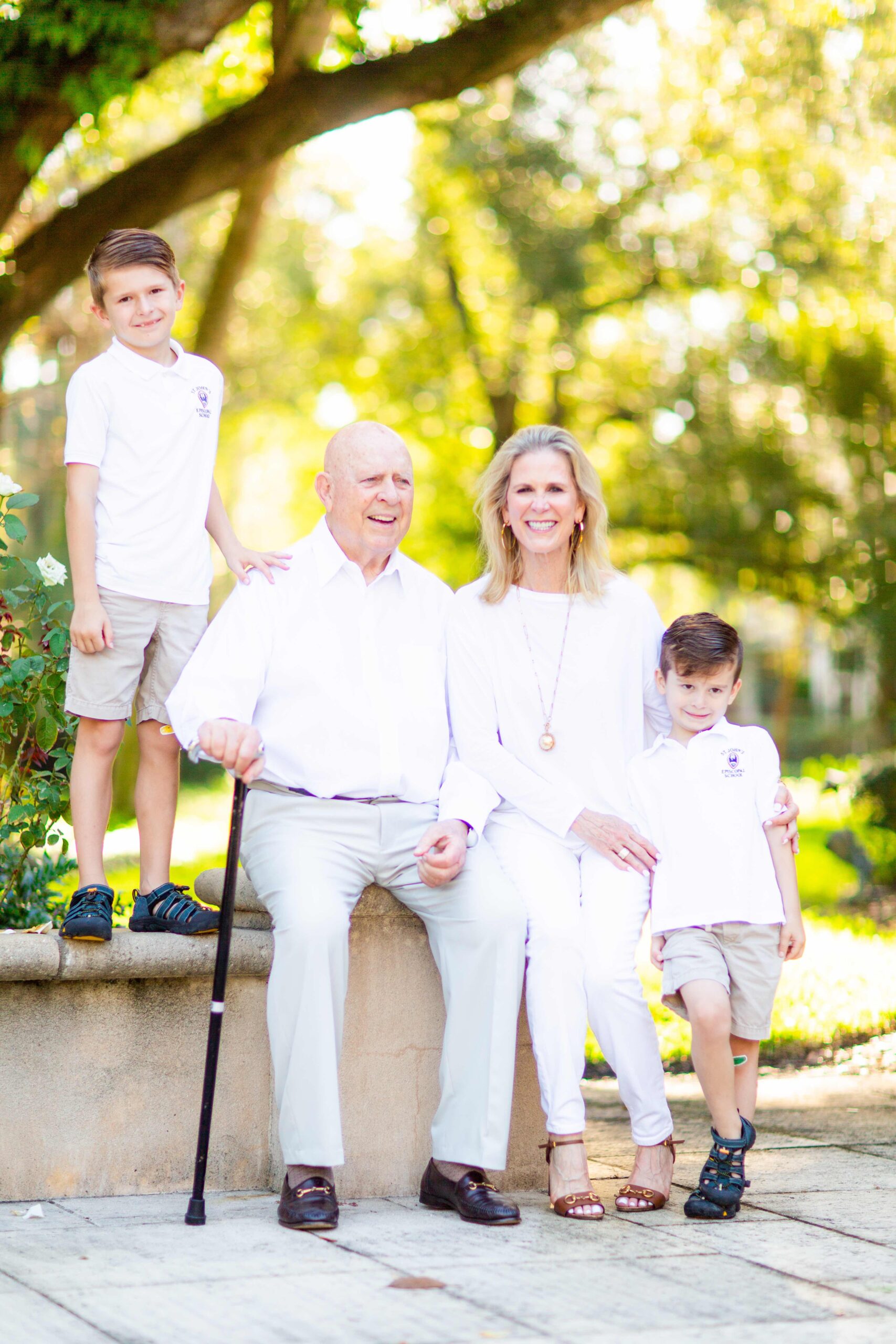
Rebecca and Bill Dunn pictured with Rebecca’s grandsons. Rebecca remains a trustee of The Dunn Foundation. (Courtesy of Rebecca Dunn)

When friends in Palm Beach asked why she was leaving the exciting social life she had enjoyed there, she told them:

“You can always buy back a social life if you throw enough money around, but no matter how much money you have, you cannot buy back time. I am going home to be near my son and my grandsons, so that I can develop a closer relationship with them. That is more important than all the parties here.”

In his final years, as Bill’s ability to speak faded, he was left with just two simple phrases: “love you” and “thank you.” Even his caregivers cherished him for staying so gentle through such a devastating illness.
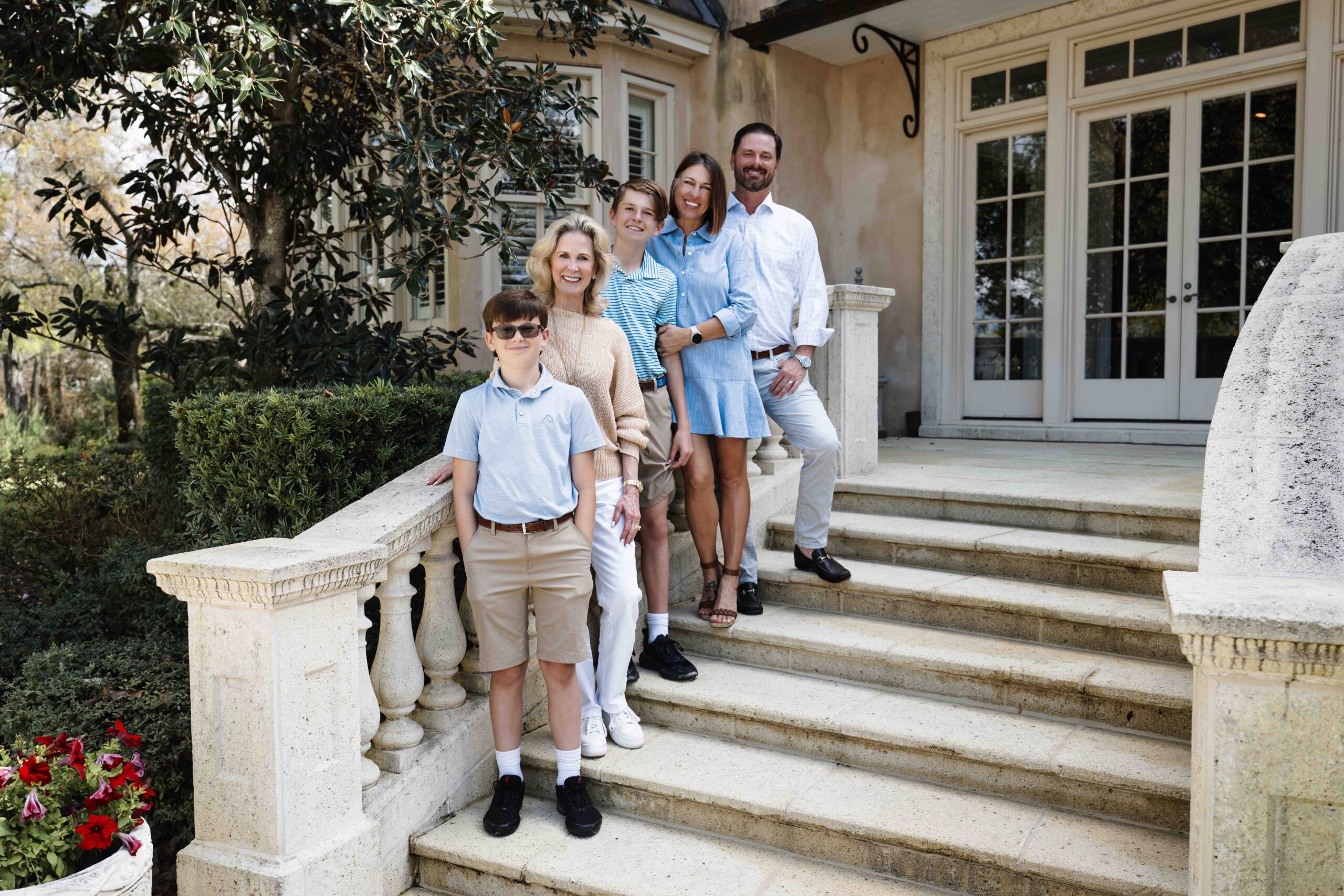
Dunn lives in Tampa, Fla., near her son, daughter-in-law, and grandsons, now 14 and 11 years old. (Adhiraj Chakrabarti for American Essence)

“Bill was a man who had been a Marine, a force to be reckoned with,” she said. “But at his core, he had a beautiful heart.

“It was a challenge but never a burden caring for Bill. It was my privilege. He was my rock in the early years of our marriage. I got to be his rock in his final years.”

The Power of Faith

Like many people, amid the hustle and bustle of a busy life, Dunn slowly began taking her Christian faith for granted. It never left, but neither was it prominent. That changed on the eve of September 11, 2002—one year after the terrorist attacks.

She felt incredibly connected to the tragedy, having been on a flight to New York on the day the Twin Towers came down. On this fateful day, one year later, she went out at night to buy an American flag from a neighborhood store in Florida. It was dark when she got back to her car, and suddenly she felt a gun pressed into her side. She was being mugged at gunpoint.

“I thought for sure I was going to die that night,” she recounted.

Then she remembered a Bible verse from her childhood about faith the size of a mustard seed—Matthew 17:20: “Truly I tell you, if you have faith as small as a mustard seed, you can say to this mountain, ‘Move from here to there,’ and it will move. Nothing will be impossible for you.”

In Dunn’s kitchen, the family enjoy spending time together over pastimes like board games. (Adhiraj Chakrabarti for American Essence)

With that memory she prayed, “God, if I’m going to live, only you can save me. Help me.”

Then these words came out of her mouth to her attacker: “You must be in a great deal of pain to be so desperate. How can I help you?”

Her words changed him. He froze. “I know you think harming me will make you feel better, but it won’t. It’s only going to make you feel worse, and I don’t want that for you,” she told him.

“I was so sure that God, angels, or whatever you want to call it, were surrounding me, that I then said to him, ‘I haven’t looked at you. I want you to feel safe.’ I was so calm. I said to him, ‘I don’t know how much money I have, but I know I have some. Would that help?’

“He said yes.

“So I took out whatever money I had, and I handed it to him, and I said, ‘I hope that this will help you. I am going to pray that your life gets better. I really want that for you, and thank you for giving me my life back.’”

Then he left.

Dunn said she promised God that night, “You saved me, and I belong to you for the rest of my life.”

She now sees every day as a day she might not have had, and she upholds her promise with gratitude.

A Foundation for Freedom

In addition to her strong commitment to family and faith, Rebecca stays active with the Dunn Foundation, remaining loyal to Bill’s vision. When asked how she chooses which projects to support, Dunn said she focuses on excellence:

“Tell me what you do the best rather than trying to create a new area in your organization that seems to fit where we are giving support.”

She also likes to give new ideas a fighting chance—something she learned from Bill, who once told her, “You never know when that new idea may be one of the most important of the day.”

Their support of Charlie Kirk as a young man and his early vision for Turning Point USA is one example of their ability to see promise in a young leader who went on to inspire many.

To date, the Dunn Foundation has supported over 100 different nonprofits that work to preserve, defend, and educate about freedom.

Its latest initiative was two-fold: establishing a training academy at the Conservative Partnership Institute with a $5 million matching grant and creating Bellator Hall, the academy’s home in Washington.
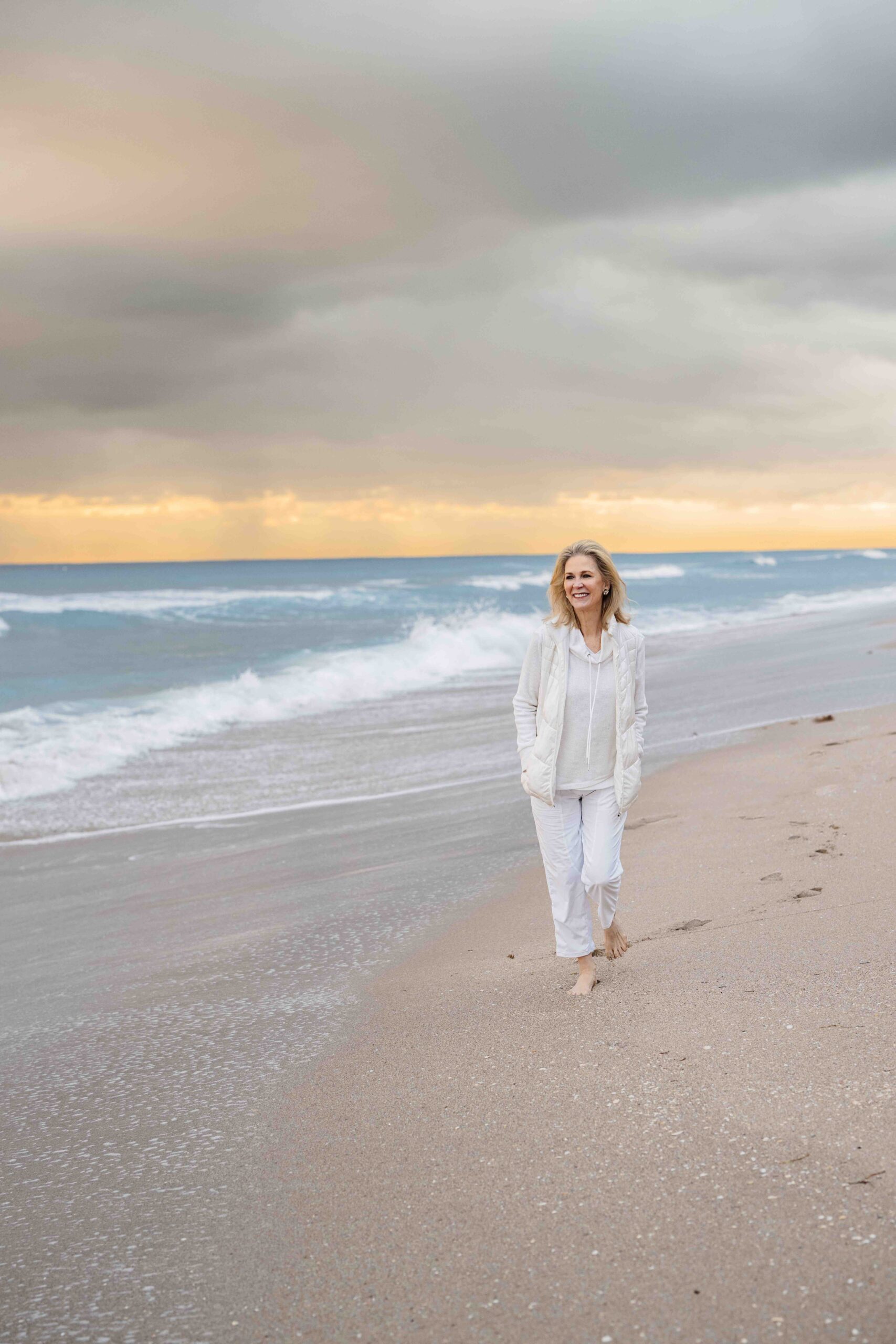
(Adhiraj Chakrabarti for American Essence)

From her childhood dreams, standing atop a sand dune looking across the ocean, to the hard but beautiful days of caring for a dying husband while listening to her grandsons laugh and play outside—from a violent attack transformed into a moment of renewed faith—Dunn said she feels blessed.

“Every day offers us an opportunity to do something positive.”

Dunn said that when her son was still young, she began to see America changing, and not for the better. “I never wanted my son to come to me and ask, ‘Mom, didn’t you see things changing? Why didn’t you do something?’”

Even her aspirations for improving society return to family. “I always wanted my son to know that whether I succeeded or failed, I did something. I have tried to save what I felt was important to the soul of America. I believe this is more important than any wealth I can pass on to him or my grandchildren.”

From May Issue, Volume VI
Categories
Lifestyle Hidden Gems

The Oldest City in the US Is Full of History and Beauty

Legend has it that Juan Ponce de León discovered Florida while searching for the Fountain of Youth. While that tale is probably untrue, the lovely southern state certainly feels effervescent with its ocean-scented air and its flourishing, year-round greenery. At least, it feels that way to a Wisconsinite visiting the state after a long winter, which I did this spring, hungry for the promise of warmth and life.

Whether or not he was motivated by the tantalizing tale of water that bestowed unending life, Ponce de León, governor of Puerto Rico and former companion of Columbus, waded ashore on the peninsula around 1513, somewhere near the present-day city of St. Augustine, Florida, the oldest continuously occupied settlement of European origin in the United States. He claimed the land for his king and faith, naming it “La Florida” because he came to it during the Easter season, known in Spain as “pascua florida”—“feast of flowers.”

I, too, arrived in Florida with my wife and daughter during the Easter season. This was our second visit to St. Augustine, after our first a few years ago, when the town’s antiquity, beauty, and vibrancy first won our admiration. The historic district of the city resembles a colonial period settlement, and when you walk the winding, Spanish moss-adorned streets—some of which are brick, and all of which reveal their age by their narrowness, built for foot traffic and horses and carts, not cars—the mind naturally roves back over the centuries to those first settlers.

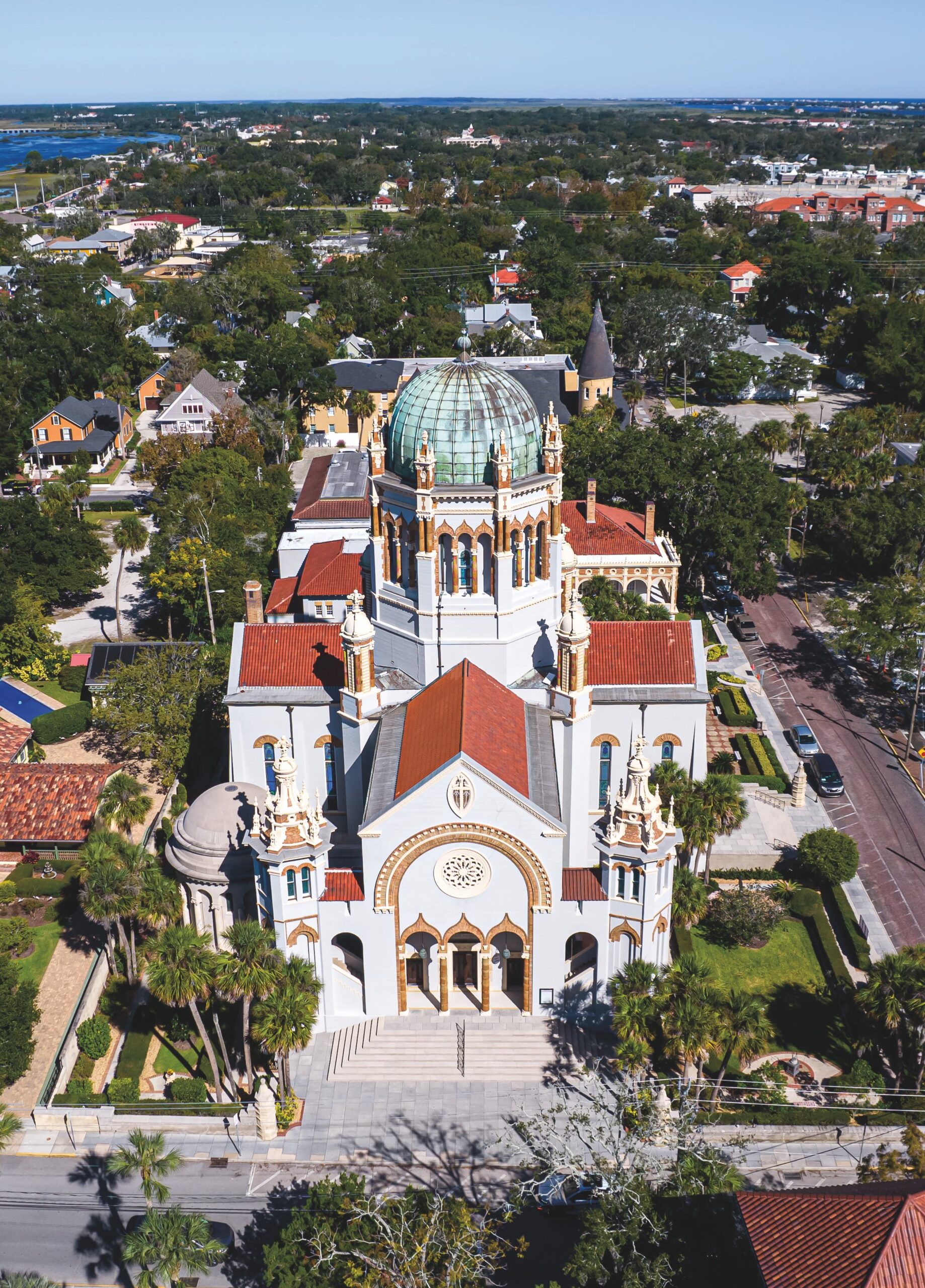
The Spanish Mission-style Cathedral Basilica is the oldest Catholic parish in the country. (GianfrancoVivi/GettyImages)

Centuries of History in St. Augustine

Ponce de León’s explorations helped identify Florida as a desirable place for settlement and missionary activity, which gave rise, in time, to the establishment of St. Augustine. That task fell, 50 years after Ponce de León’s activities, to Admiral Don Pedro Menéndez de Avilés, who was sent to secure Spanish holdings in the region and expel French settlers. On September 8, 1565, Menéndez and his water-weary companions landed in a small natural harbor and founded a fort and settlement, named for the saint on whose feast day they had first sighted land. One member of the expedition, Father Francisco López de Mendoza Grajales, recorded the triumphant moment in his diary:

On Saturday the eighth the General landed with many banners spread, to the sounds of trumpets and the salutes of artillery. As I had gone ashore the evening before, I took a cross and went to meet him, singing the hymn Te Deum Laudamus. The General, followed by all who accompanied him, marched up to the cross, knelt and kissed it. A large number of Indians watched these proceedings and imitated all that they saw done.

Then, under an open, wild sky, with ocean winds blowing through the encampment, the same winds that had borne the explorers so many miles from home, Father López celebrated the first parish Mass in what is now the United States. Today, this location is called the Shrine of Our Lady of La Leche, a peaceful patch of parklike greenery under gently rocking palms. Old, sun-blanched gravestones rest among the ferns, bearing names all but worn away by time and nearly lost to memory. In the middle of this place, nicknamed “the sacred acre,” nestles a small chapel, so covered in ivy that it has become a part of the landscape. Inside is a statue of Mary nursing Jesus. The visitor center at the shrine contains an informative and well-run little museum with authentic artifacts that tell of the desperate, early days of settlers and missionaries laboring under the blinding sun and weathering ocean-flung hurricanes, pirates, and British soldiers.

The historic district of the city retains much of the colonial period’s look and feel. (Yijun Wang)
In fact, conflict with the nearby British intensified to a degree that the Spanish determined to build a permanent stone fortress. They began construction in 1672 and completed it toward the end of the century. The Castillo de San Marcos stood ready none too soon—a British force from the Carolinas attacked the city in 1702. The Brits could not take the fort, and they eventually retreated after razing the town. Years later, the town and fort came under British control due to the Treaty of Paris at the end of the French and Indian War, but a second treaty after the American Revolution returned the city to the Spanish.

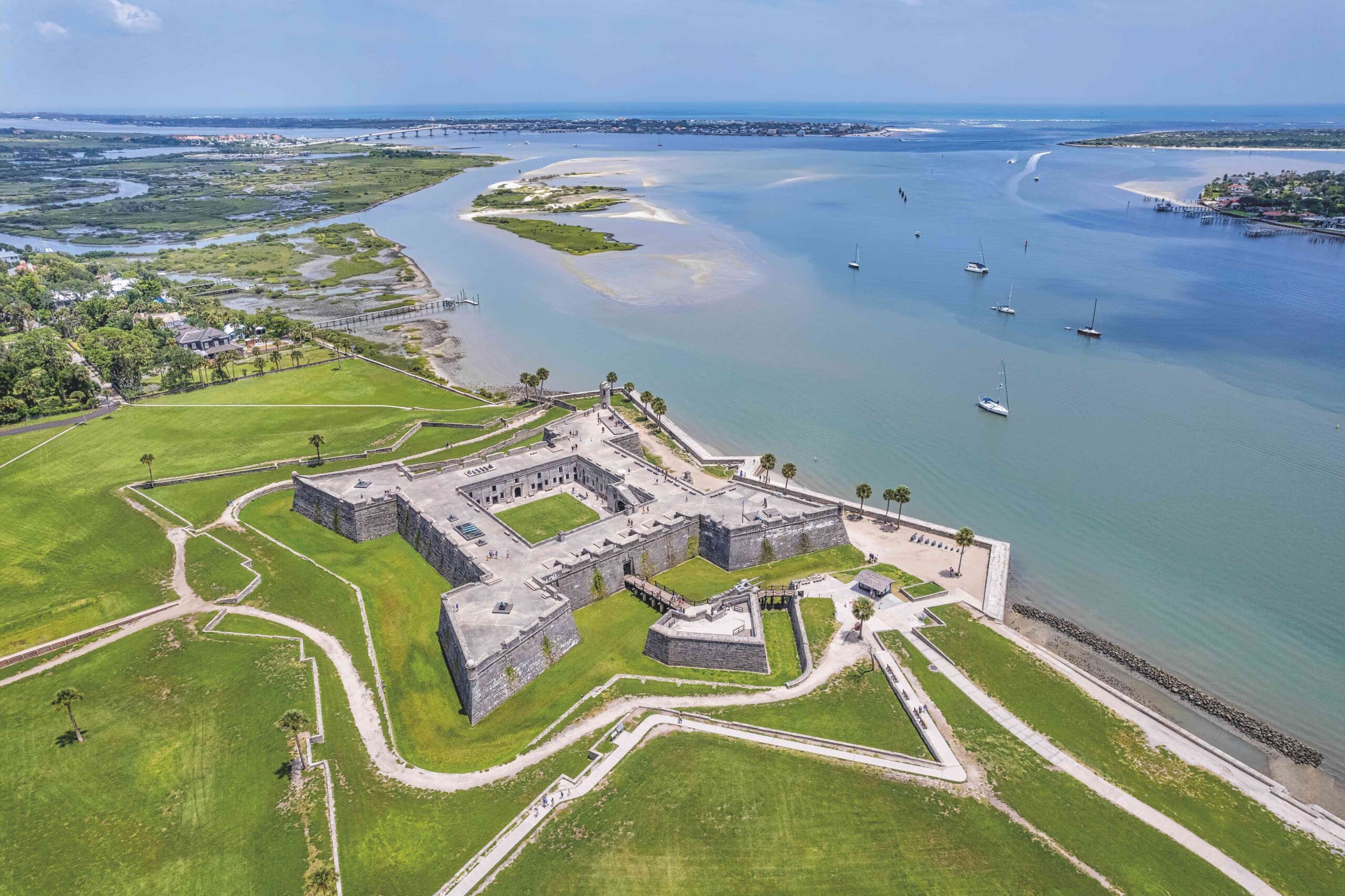
The fort still stands at the edge of town, defying the ocean, looking much as it has these many centuries, impenetrable and unyielding. An art exhibit at the Governor’s House Cultural Center and Museum in downtown St. Augustine revealed many paintings of the fort over the years—a testament to the castillo’s ability to capture the imagination of generations of resident artists. In each picture, even as the town itself grows more modern with time, the fort remains the same.

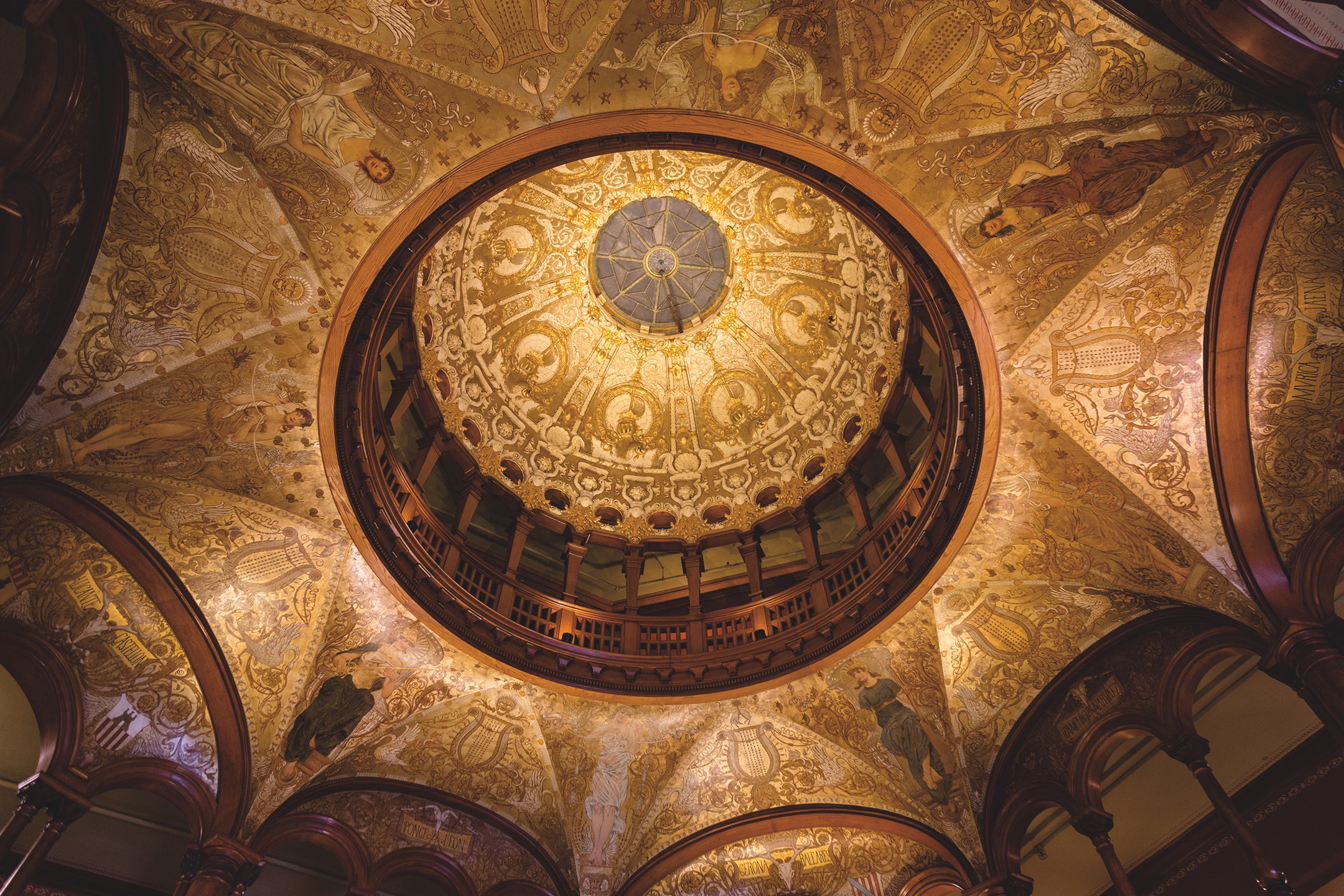
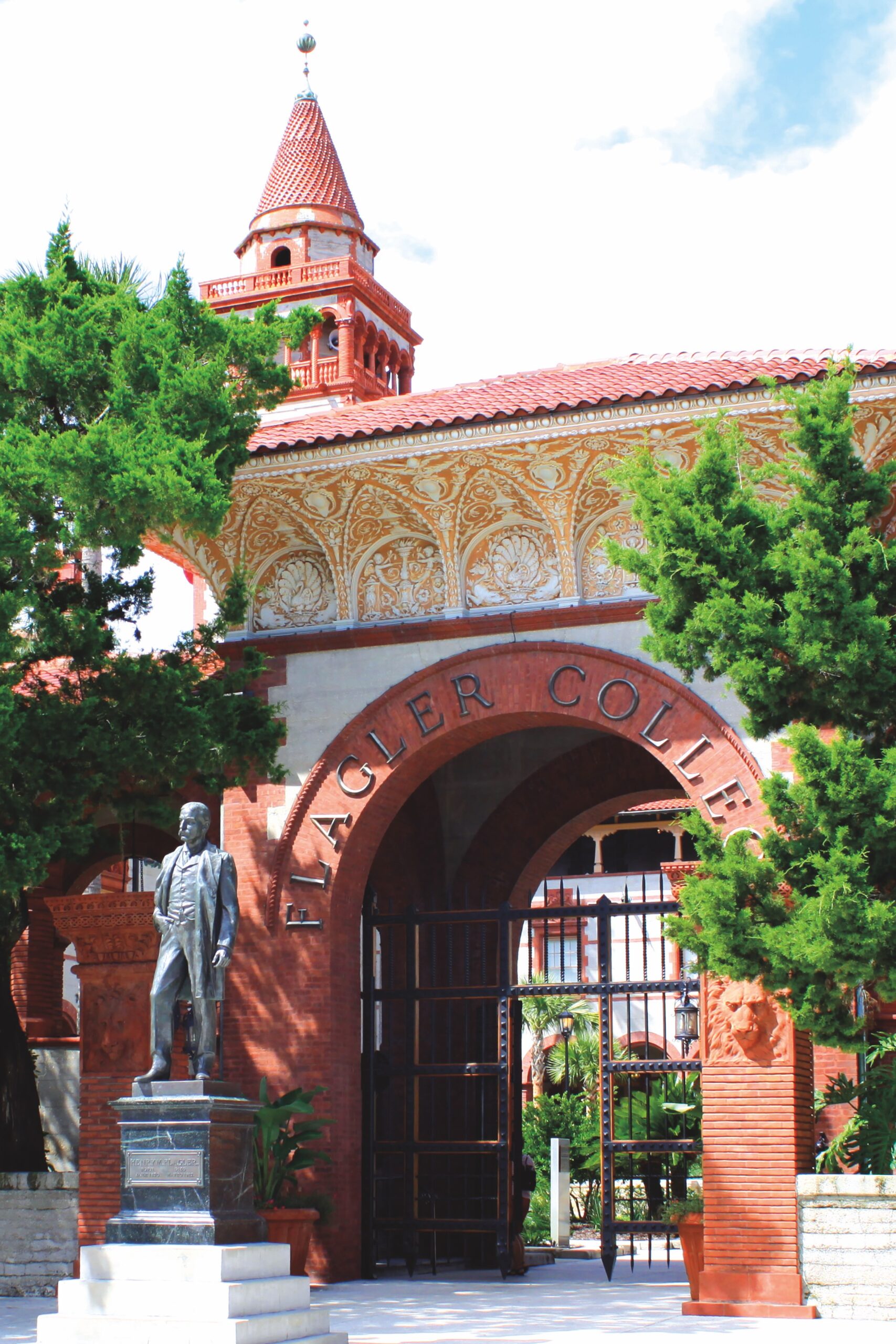
The intricate stylings of Spanish Renaissance architecture inside Flagler College. (Carlos Smith)
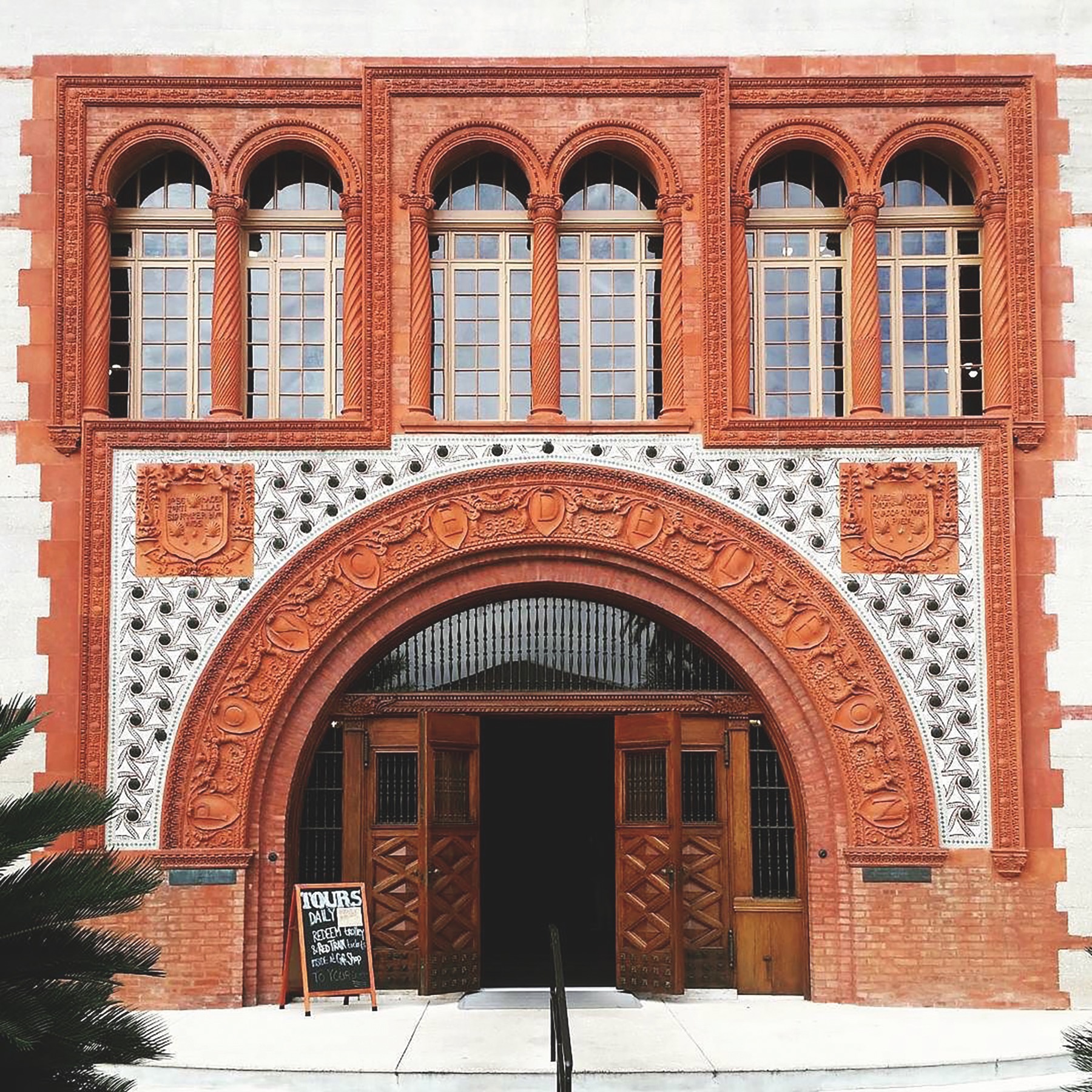
The exterior of Flagler College. (Joe Shlabotnik)

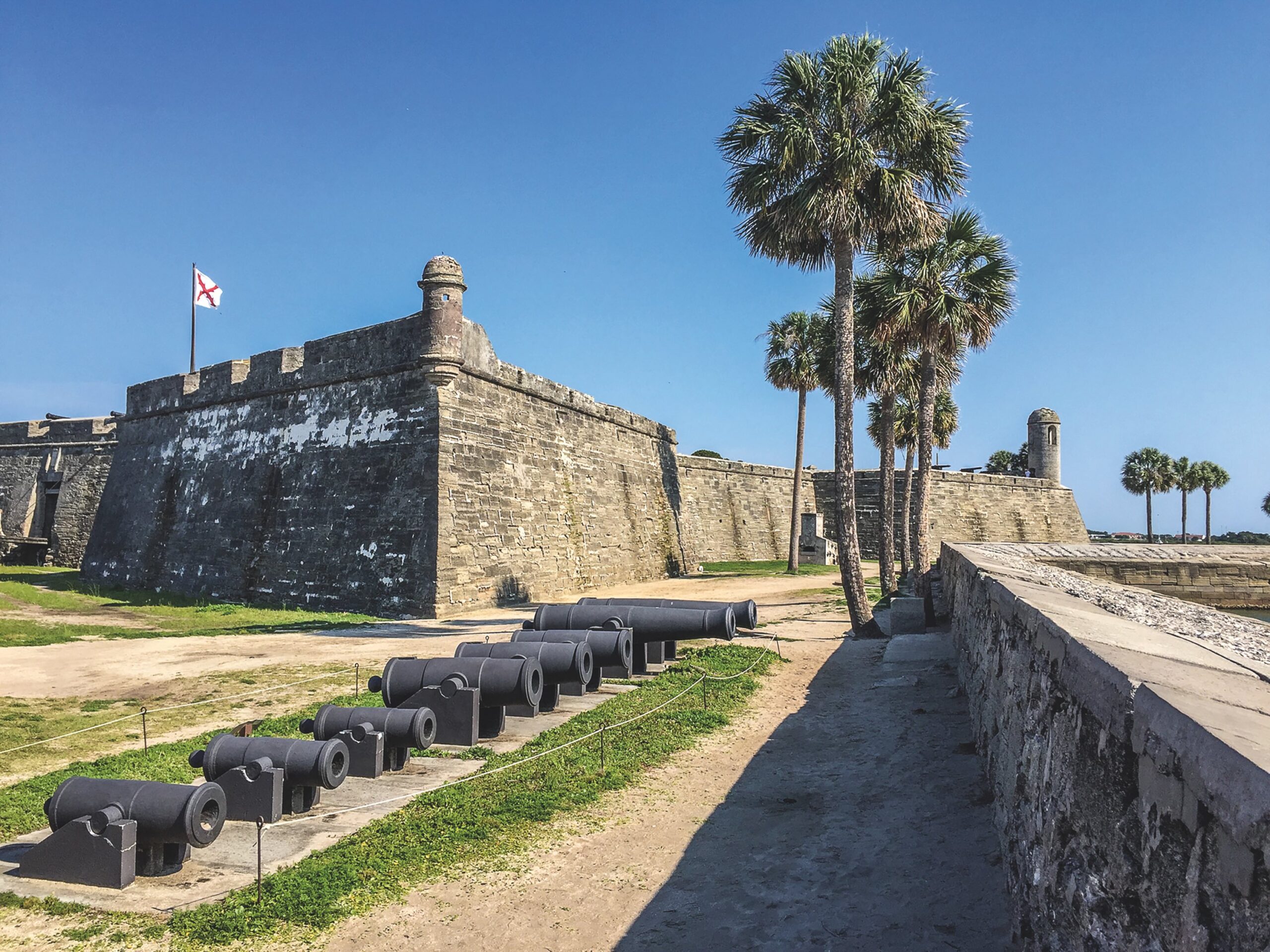
The fort is well worth a visit. It was built in a star shape, the “bastion system,” to help counter the (then) new technology of gunpowder. The shape could better withstand or deflect incoming cannon balls. Another advantage against cannon fire is that the biological history of the region is embedded in the fort’s walls in the form of “coquina”—a rare type of limestone made up of the shell pieces of ancient mollusks, trilobites, and other invertebrates. The rock’s porous nature better absorbed the shock of a projectile than a more solid material would have. The temporary docking of a full-size, seaworthy replica of one of explorer Ferdinand Magellan’s ships enhanced our experience of the waterfront. The view of the 17th-century fort and 16th-century vessel beside it easily transported us back through three centuries of history until we felt almost as though we had just come to port in a strange new land after treacherous weeks at sea.

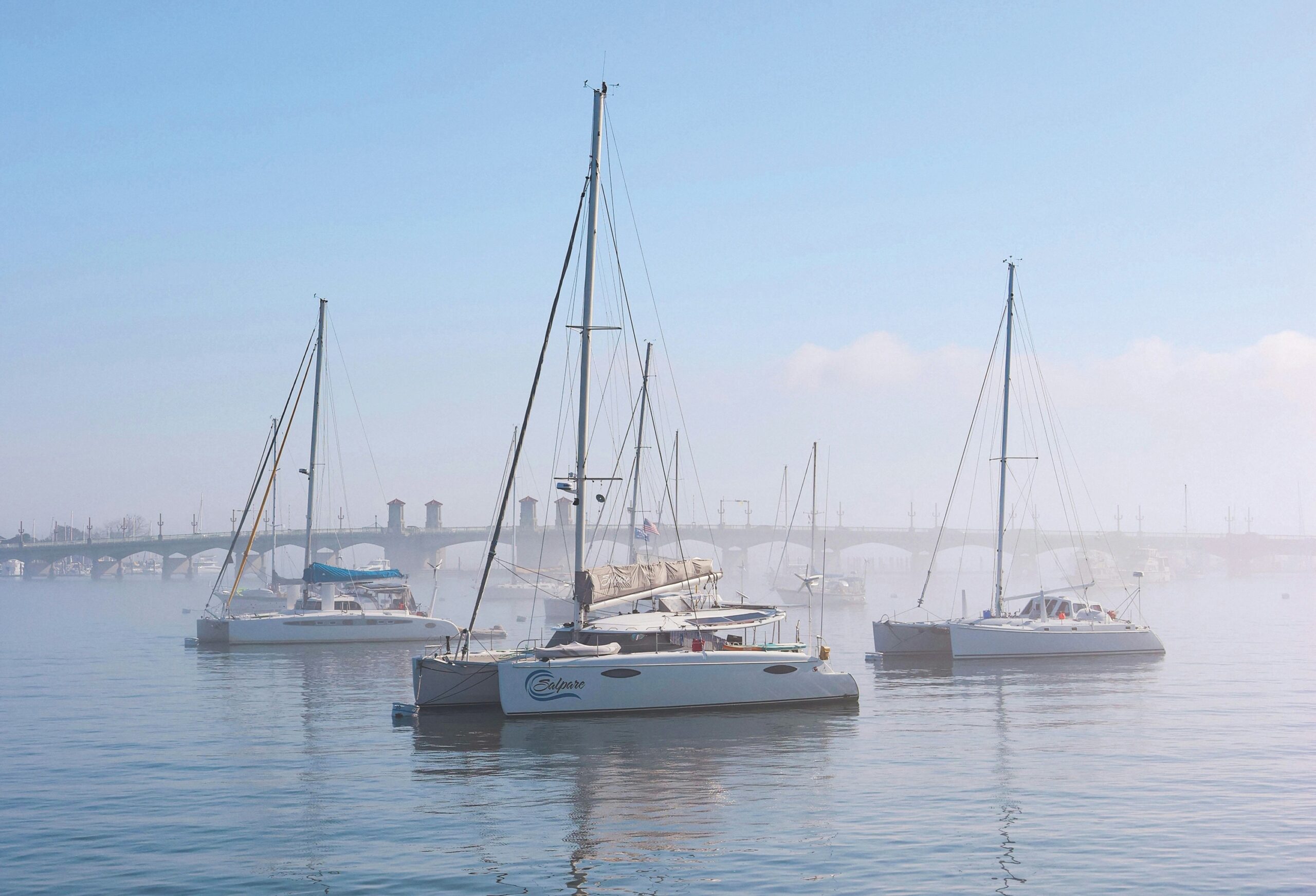
Boats on the Matanzas River, with the landmark Bridge of Lions in the background. (Vasilis Karkalas/Unsplash)

Old-World Charm

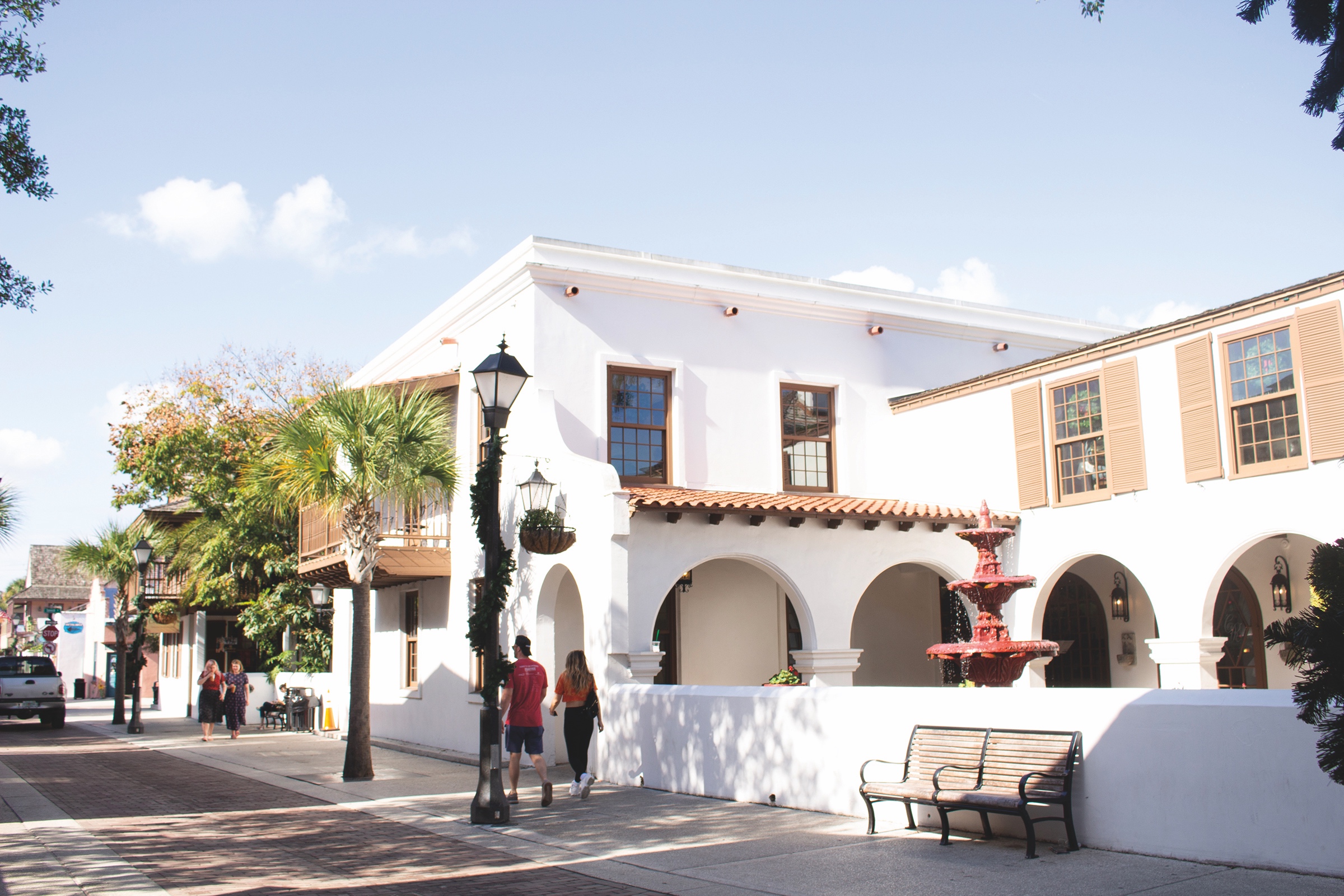
Today, St. Augustine offers a great deal of amenities that our forebears didn’t get to enjoy. Along the waterfront and in the historic district, you’ll find many restaurants, often situated inside old, restored buildings and with ocean views. Old-fashioned wooden signs protrude above the narrow streets, announcing gift shops, galleries, and coffee houses. Half-hidden from passersby, walled-off gardens overflow with lush vegetation while majestic fountains spray water like liquid diamonds into the air of courtyards and plazas beside ornate, 19th-century hotels. The city has the most European feel of any American town I’ve visited.

The Castillo de San Marcos is the oldest masonry fortification in the country. (CharlesLeRette/ GettyImages)
Built in the late 17th century to protect the Spanish territory from invaders, the fort looks out at Matanzas Bay and the Atlantic Ocean. (FloridasHistoricCoast.com)

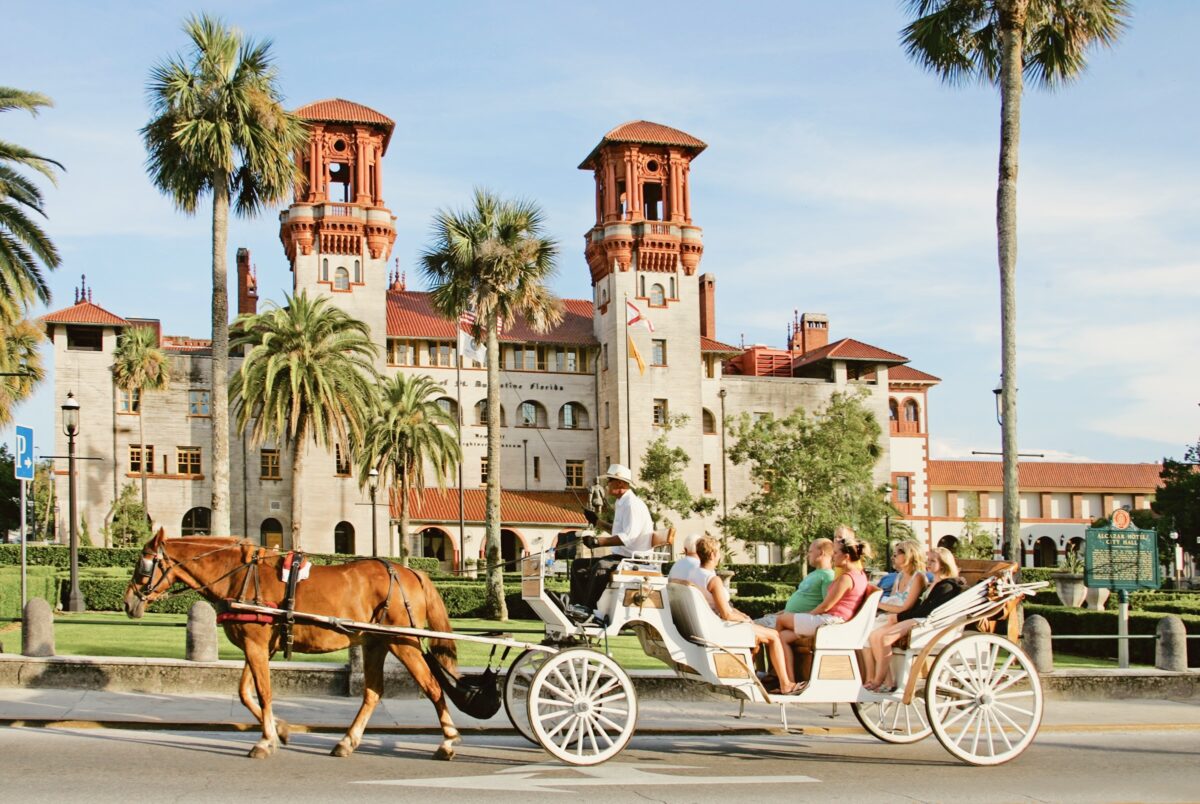
A walk through the Colonial Quarter will take you past the intricate, Spanish Renaissance architecture of Flagler College, the magnificent facade of the Spanish Mission-style Cathedral Basilica, and the twin, red-roofed towers of the Lightner Museum, formerly a Gilded Age resort. Unsurprisingly for the oldest city in the continental United States, there are at least a dozen museums, including the St. Augustine Lighthouse & Maritime Museum, which offers visitors a view of the town and the surrounding beaches at the end of a 219-step climb.

What draws us to St. Augustine? I suppose it is the history, and our old-world sympathies, the serene natural beauty, and the distant crash and stir of the ocean in the background, the waves kissing the shore again and again, running over the sand like the years passing over the city, that draw us to St. Augustine. To me, the city is a link to a deeper past and an older story than most locations in this country reveal. At only 250 years, we’re a young nation, but St. Augustine reminds us of our roots and the inheritance that we carry with us from more than one European nation.

Flagler College was founded by Henry Morrison Flagler, a 19th-century oil and railroad tycoon. He helped to develop much of Florida’s Atlantic coast. (Brent Moore)

While I stood under the great cross that has been erected where Menéndez first landed and kissed the symbol of his faith, I thought of the early adventurers, wayfarers, villains, and heroes who make up the early history of our country. They couldn’t find the magical Fountain of Youth, but something of their culture and their spirit lives on. Without their story and their struggle, a struggle written into the walls and bricks of St. Augustine, America would not be possible.

From July Issue, Volume IV

Categories
Lifestyle Hidden Gems

A Stretch of Beach All to Yourself in Florida? Visit This Hidden Gem

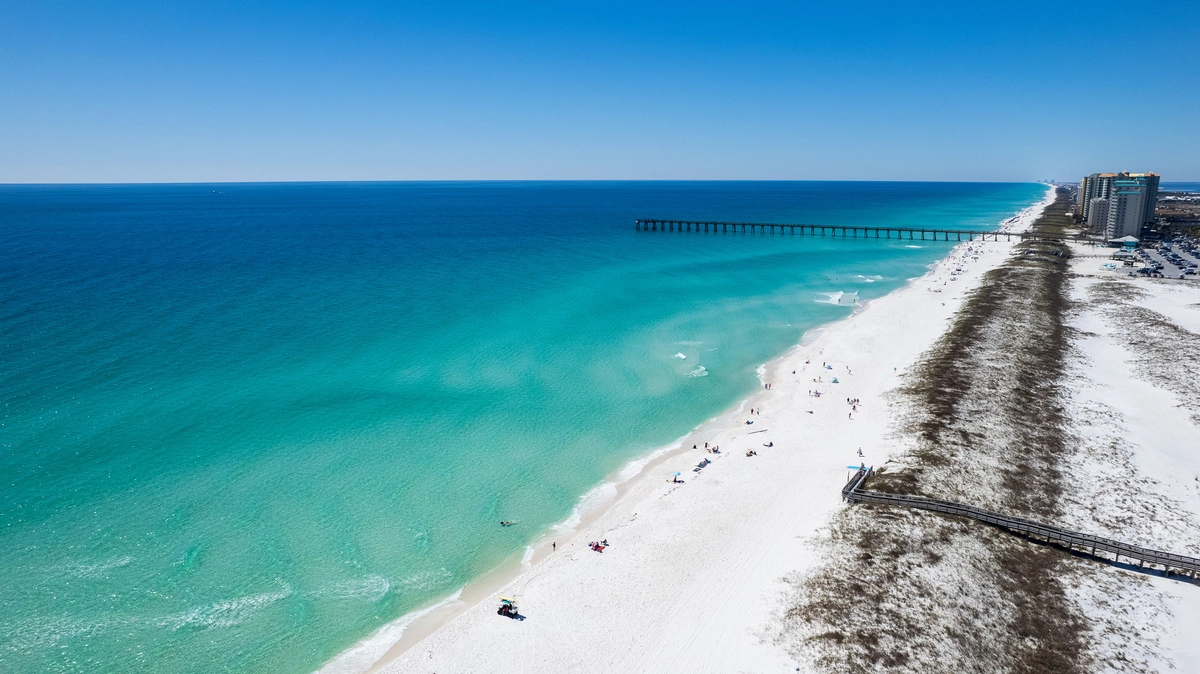
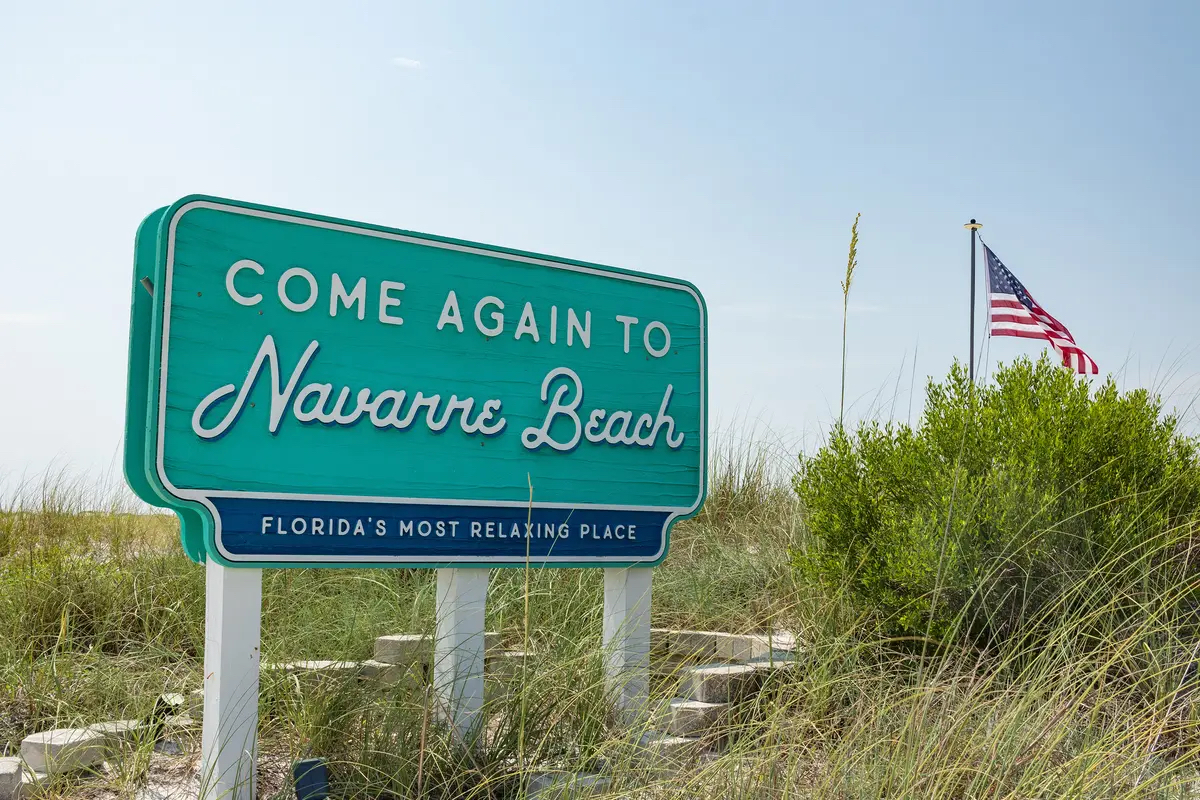
It’s known as “Florida’s most relaxing place”—where the Gulf of Mexico touches the sugar-white sands and turquoise waters of the Sunshine State’s gulf coast. It’s almost a trip back in time to the days when a vacation wasn’t filled with the stress of travel and dealing with crowds.

Navarre Beach, part of Santa Rosa County, Florida, isn’t a tourist trap and doesn’t intend to become one. If your dream vacation includes a long stretch of beach all to yourself, this is the place. Located between Pensacola and Destin on Florida’s Emerald Coast (named because of the water color), it’s a unique destination, offering a beach community without the usual overcrowding that often accompanies vacation destinations. Mom-and-pop restaurants offer unique dining and a break from the chains. And during the offseason, it’s about as quiet a beach as you can find in the state. It’s a family destination, with no rowdy bars that attract wild spring breakers.

(GotAnotherPhoto/Shutterstock)

Natural Wonders in Santa Rosa County

One of the absolute jewels in this county is the Gulf Islands National Seashore, 7 miles of federally protected beachfront property connecting Navarre Beach to Pensacola Beach on the Florida panhandle. Parking lots are scattered alongside the road, so pull over and take a walk. During the winter, you might find yourself the only person on this pristine beach. It’s also a bird sanctuary, and during nesting season, the speed limit decreases to 25 mph to keep our flying friends safe. But you’ll want to drive slowly anyway to enjoy the spectacular, unspoiled scenery and crystal clear waters, taking in the Gulf breeze as it blows between the sea oats.

Fishing from shore takes on a whole new meaning, as the Navarre Beach Fishing Pier stretches nearly a third of a mile into the Gulf of Mexico and is the longest fishing pier in the Gulf. Even if you’re not an angler, it’s a relaxing walk, an opportunity to breathe in the salt air. You can also fish from the beach, and don’t be surprised if a heron flies up to you, waiting for the too-small catch you intended to throw back.

(Carlos Carreno/Moment/Getty Images)

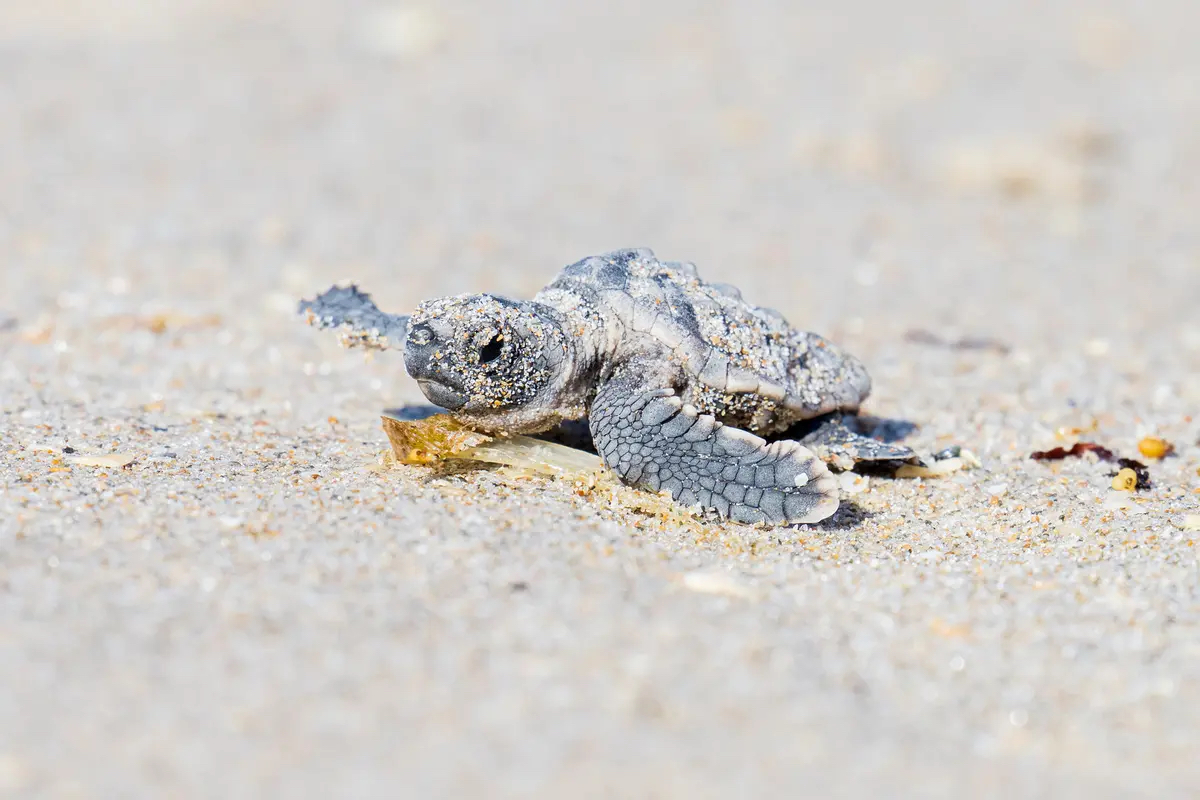
Take a short walk from the pier and get a unique look at nature at the Navarre Beach Sea Turtle Conservation Center. It features interactive exhibits and displays to educate visitors about sea turtles, their life cycle, and the challenges they face in the wild. Even more nature is just up the road about a half hour, as the Gulf Breeze Zoo offers a variety of animals on its 30-acre African preserve.

(This is a short preview of a story from the March Issue, Volume 4.)