Categories
Features

An Immigrant from Soviet-Era Ukraine ‘Comes Home’ to the USA

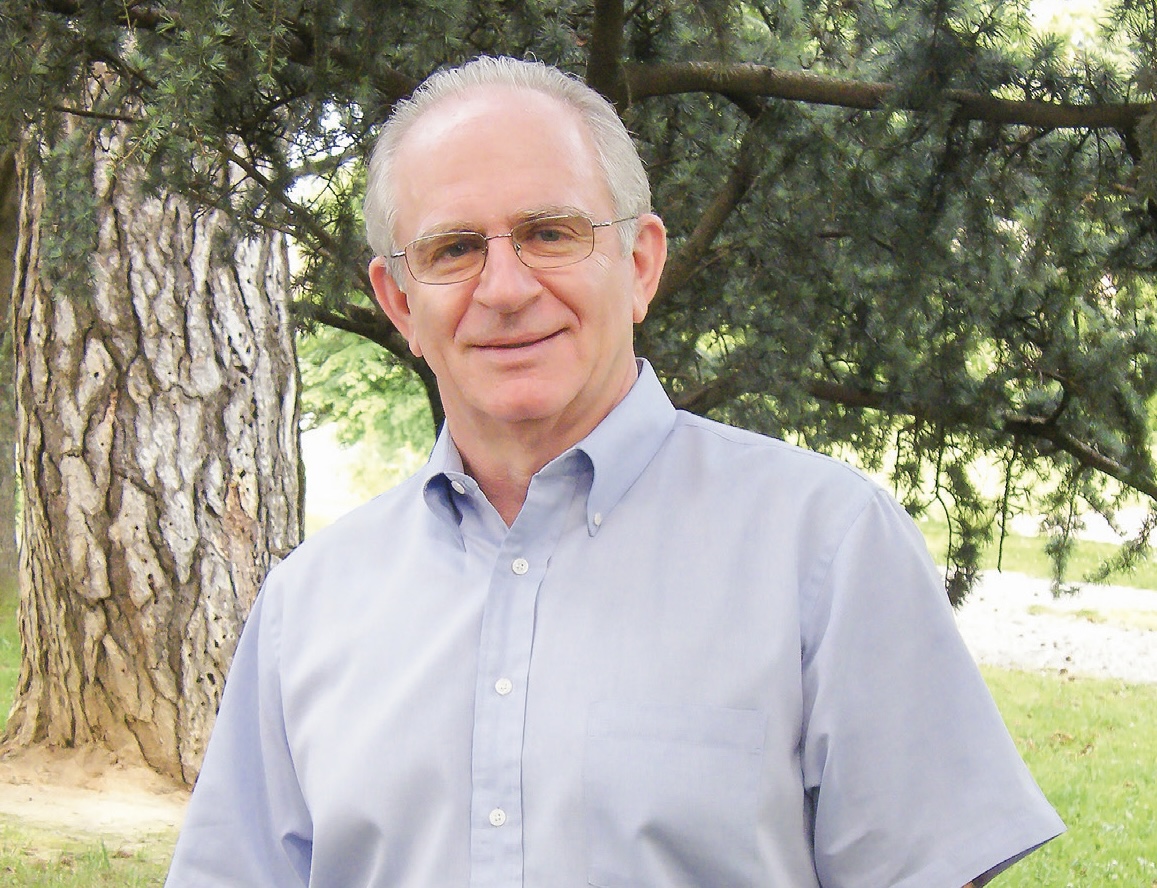
Books can tell you what it’s like to live in a socialist country. Mikhail Nudelman can tell you himself—he grew up in the Soviet Union.

Born in 1951 in Ukraine, Nudelman came to the United States nearly 50 years ago, and now calls Atlanta home. He discovered early that the “warmth of collectivism” can be awfully cold. As a Jewish child, he was considered a second-class citizen. He endured offensive name-calling. His family was forced to practice their faith in total secrecy and in fear. He saw his mother face long lines for food and basic necessities. “I did not even remember seeing a banana for the whole of my childhood,” he recalled.

In school, he learned not to question authority. Children were promised that communism would bring endless, free abundance and that citizens would never take more than they needed from the “free” grocery stores. Curious, Nudelman asked his teacher: “What about if somebody wants to take more than they need? What can happen then?” That “stupid question” landed him in trouble and triggered an official visit to his parents.

But the concept of freedom had already taken hold through his father, who risked everything to find the truth by listening to the Voice of America’s banned broadcasts. It was a midnight ritual Nudelman repeated alone at 13 years old, when he realized the USSR’s public reality was a lie. “The ideas of America had reached me before the country itself did,” Nudelman said. “Arriving [in the United States] was a homecoming, not the beginning of an immigration.” In 1978, when U.S. pressure forced the USSR to let Jewish citizens out, he escaped with his wife and young daughter on an exit visa, arriving in the United States in January 1979 and settling in Atlanta.

His initial feeling of America was a strange emotional relief. “Nobody was bothering me. … I was completely free and didn’t know what to do with it.”

But his newfound freedom was only the beginning. He needed to find a job and start paying the bills. Nudelman started working as a laborer just two weeks after arriving because he lacked English language skills.

From left to right Mr. Nudelman’s mother, father, and his mother’s friend, circa 1928, in Koziatyn, formerly in the Soviet Union. (Courtesy of Mikhail Nudelman)

In the fall of 1979, his 4-year-old daughter became seriously ill. At the time, he lacked health insurance and faced long hospital stays. But then he received unexpected financial help from his employer. He was filled with relief—and surprise. In the USSR, he was taught that America embodied “homo homini lupus”: man is wolf to man. For that reason, the hardest part wasn’t starting over; it was realizing everything he’d been taught about America was a lie.

Nudelman became an American citizen in 1986. Taking the oath of citizenship had a profound effect: “I was no longer a guest. … I was now responsible for the country that had received me,” he said. “From that day on, the Constitution was no longer something that protected me. It was something I had committed to protect.” He went on to build a career in commercial art and exposition services, helping to facilitate international trade, and has become an author and speaker.

Now, Nudelman sees the collectivist concepts he fled beginning to grow in America, particularly the psychological manipulation used to shape public opinion and suppress dissent. After his twin granddaughters were born, he became determined that they would never live under the system he escaped. Driven by independence, honesty, and loyalty, he felt compelled to act. He published “Freedom Manifesto: The Emotional Appeal and Destructive Reality of Collectivism,” using an AI assistant to overcome the language barrier.

Nudelman’s mission and his book were years in the making, well underway before his granddaughters’ birth and the 2026 New York mayoral election where a Democratic Socialist won; those events didn’t spark his urgency, but they certainly deepened it. He had chosen the word ‘collectivism’ for his book’s subtitle well before New York City’s new mayor, in his inaugural address, called for ‘the warmth of collectivism’ — a prominent official embracing, by name, the very thing Nudelman had spent years warning against.
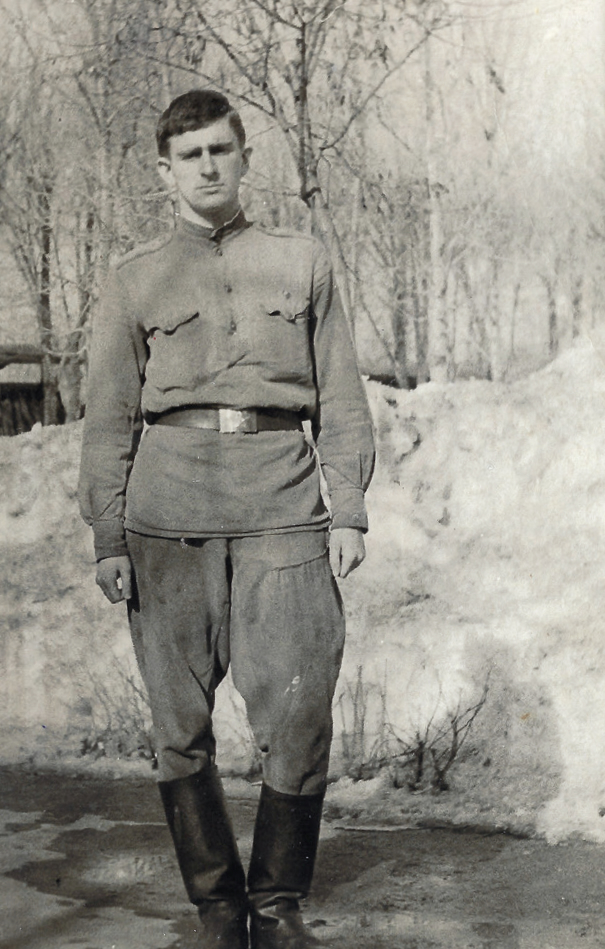
Mikhail Nudelman during Soviet Union military service, 1970. (Courtesy of Mikhail Nudelman)

His mission plays out daily. His routine centers on writing books, essays, and educational curricula with the urgency of a man making up for lost time. His book serves as a “toolbox” for parents and teachers to resist indoctrination and expose socialism’s unkept promises.

His audience is growing. On February 18, 2026, Nudelman testified in support of the Victims of Communism Day bill before the Georgia House Committee on Special Rules, alongside Jose Perez, who escaped Castro’s Cuba at age twelve. Although there was discussion and positive traction, the bill did not receive a floor vote and did not become law before the session ended. Its sponsor has said he intends to reintroduce it. Nudelman continues to advocate for restoring the requirement to teach the history of communism in American schools.

For Nudelman, the stakes are deeply personal. In the USSR, conformist pressure intruded into the most private parts of life—even trying to prevent his mother, at 41, from giving birth to him. America gave him a life that was finally his own. When his teenage daughter was diagnosed with leukemia in 1994, advanced American medicine and a community of supportive strangers saved her. The Soviet system left his dying father without basic dignity, but America allowed his daughter to live. One line in his book sums up his devotion to his adopted home: “America saved my life.”

From Sept. Issue, Volume VI
Categories
Book Recommender Arts & Letters Lifestyle

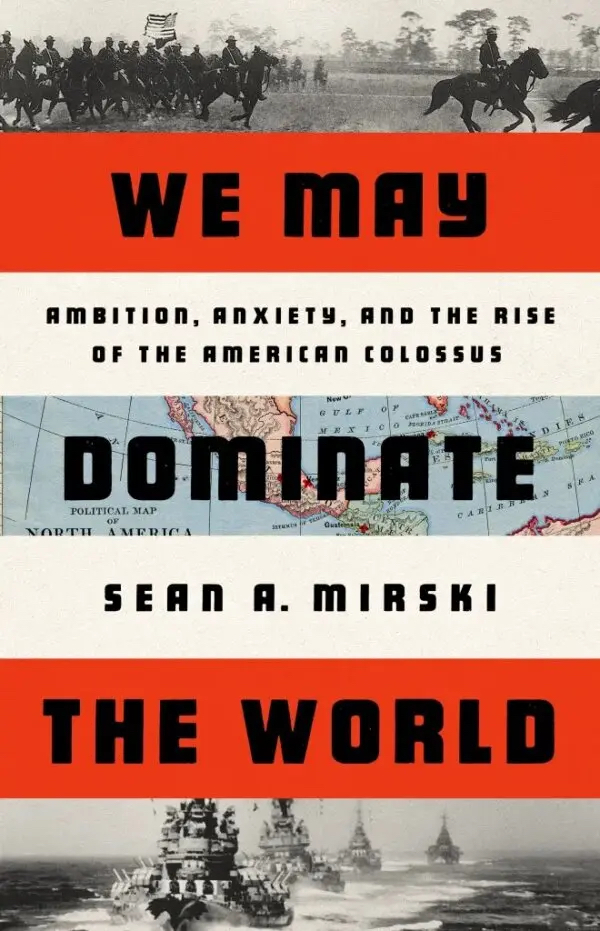
‘We May Dominate the World: Ambition, Anxiety, and the Rise of the American Colossus’

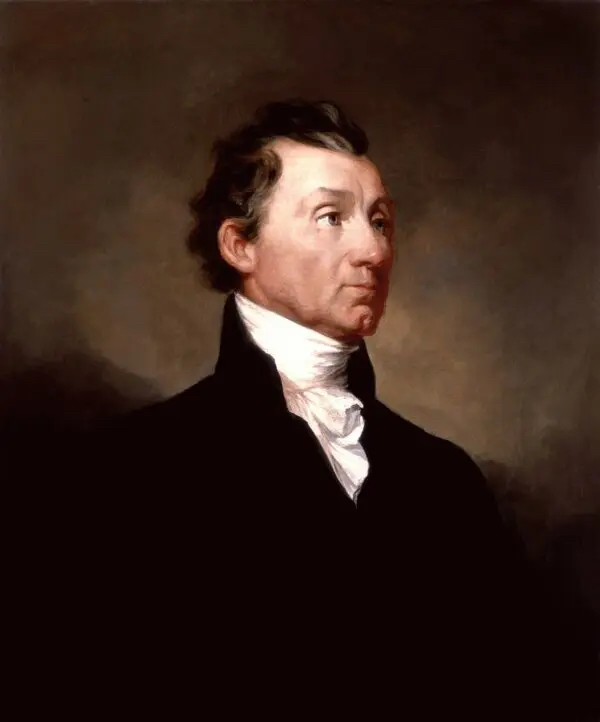
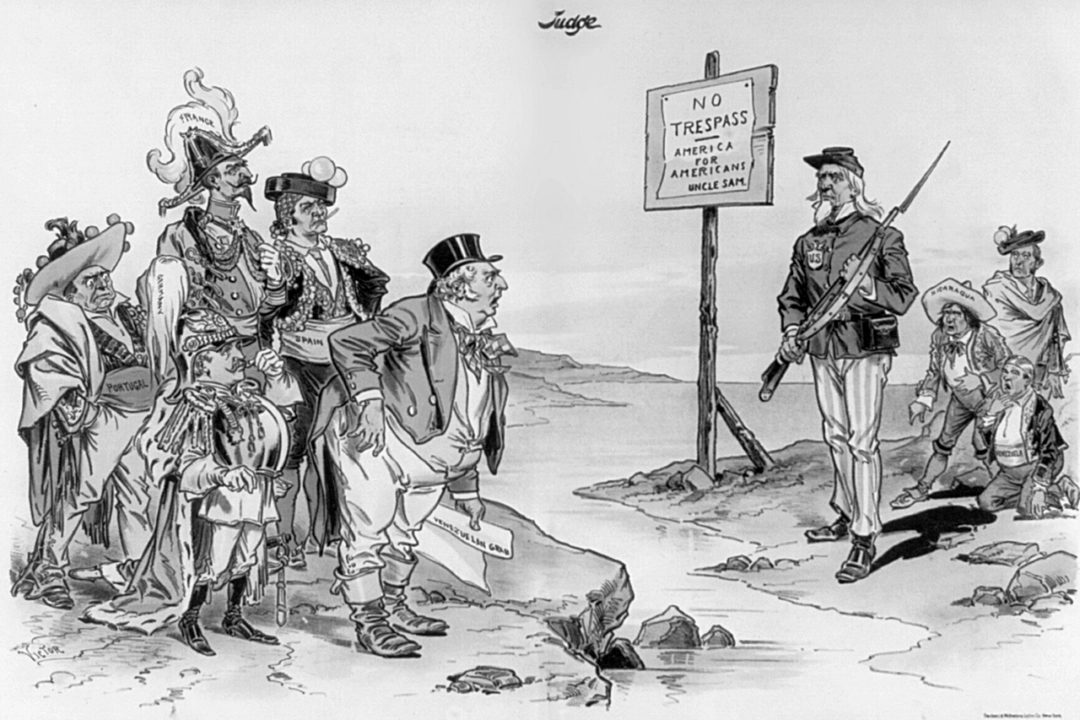
Though James Monroe is hardly the most memorable president, his foreign policy doctrine known as the Monroe Doctrine is without question the most lasting. Sean Mirski, in his new book “We May Dominate the World: Ambition, Anxiety, and the Rise of the American Colossus,” discusses just how the Monroe Doctrine was formulated, implemented, altered, and manipulated to transform the Western Hemisphere into a quasi-American protectorate.

The Monroe Doctrine may have been the foundation for America’s diplomatic and, at times, less than diplomatic foreign policy decisions, but as Mr. Mirski makes abundantly clear in his book, there were other foundational principles at play. The law of unintended consequences seems to be the bane of many of America’s diplomatic good intentions. These consequences were the result of America’s limited options, most of which were less than favorable. The author demonstrates how policies throughout various administrations, especially during the post-Civil War and early 20th century era, came to fruition out of sheer necessity. Those necessities arose out of fear and anxiety during a time of growing and fading empires, like the British, French, German, Spanish, and Japanese. Along with those Eastern Hemispheric empires, America found herself establishing her own in the Western Hemisphere by either conquest, happenstance, or the aforementioned necessity.

President James Monroe. (Public Domain)

The Doctrine Tested

At the tail end of 1823, when Monroe addressed Congress in what would be coined the Monroe Doctrine, he advocated for remaining unentangled in European affairs (a reflection of George Washington’s 1796 farewell address), refraining from colonizing, and resisting the temptation to intervene in the affairs of other countries, unless of course the affair was an attempt by a European power to establish a foothold, by either governmental or corporate means, in the Western Hemisphere. These noble aspirations, as with all noble aspirations, are much easier to conceive than uphold.

As colonies throughout Latin America erupted with independence movements, revolving revolutions, and intrastate wars during the 19th and 20th centuries, this doctrine would be tested to the extremes, often resulting in unforeseen, or more appropriately, unintended consequences. In the book we are introduced to great and not-so-great diplomatic thinkers, like William Seward, James Blaine, Richard Olney, Elihu Root, Philander Knox, Robert Lansing, and Sumner Welles; varied foreign policies, like “masterly inactivity,” “reciprocity,” “Dollar Diplomacy,” “moral diplomacy,” and the “Good Neighbor Policy;” and geopolitical altering events like the annexation of Hawaii, the Spanish–American War, the Panama Canal, and World War I.

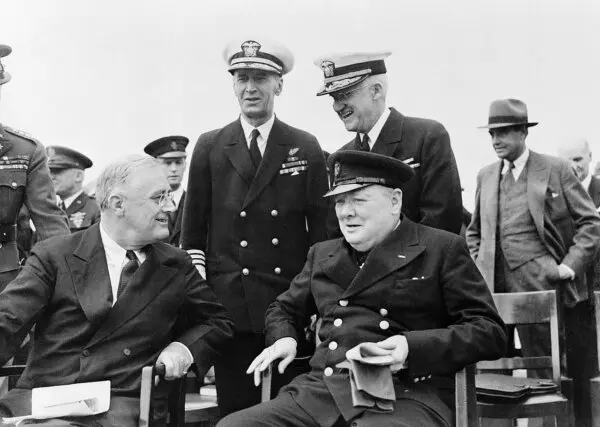
President Roosevelt and Winston Churchill seated on the quarterdeck of HMS Prubce of Wales during the Atlantic Conference, 10 August 1941. (Public Domain)

One of Mr. Mirski’s successes (among the many in his book) is his argument that America typically made its decisions based on national security interests, and not based on the notion of conquest and empire, or even economics. Indeed, it often came down to the aforementioned fear and anxiety that if America did not annex or intervene, one of the swarming imperial powers would.

A Problem at Every Turn

Readers of this review should not take this as Mr. Mirski writing an apologetic. “We May Dominate the World” is not revisionist history. Rather, it is a correction on much of the propagandistic history that has been issued over the decades by talking-heads rather than researching-brains. Mr. Mirski has, instead, taken the difficult route of demonstrating that foreign policy is a difficult science―far more difficult than we credit it.

While many historians and political scientists choose a singular politician and his or her foreign policy, say a Theodore Roosevelt or a Woodrow Wilson, or a particular motivation, like racism, colonialism, culture, or economics, Mr. Mirski shows that American foreign policy has always been a multi-faceted arrangement of motivating factors, decisions, actions, regrets, and the continued cycle of such an arrangement. The author’s work proves that no matter how powerful a nation is, it cannot control the world; it can only try and fail.

Those failures ironically stemmed from attempts to stabilize newly independent countries or nations laden with incessant and violent revolutions. Unfortunately, these attempts often “created perverse incentives” for further revolutions in order to initiate American military intervention (such as the Platt Amendment with Cuba).

The Logical Result

The failure of American diplomacy in the region seemed to hit a fever pitch deep into the Wilson administration. As Mr. Mirski notes, “By the end of the Wilson administration, the United States had boxed itself into the ultimate catch-22: any leader who cooperated with the United States, lost the domestic legitimacy needed to govern, but without the United States’ support, no leader could hold onto power. In the most extreme cases, the logical result was direct American rule.”

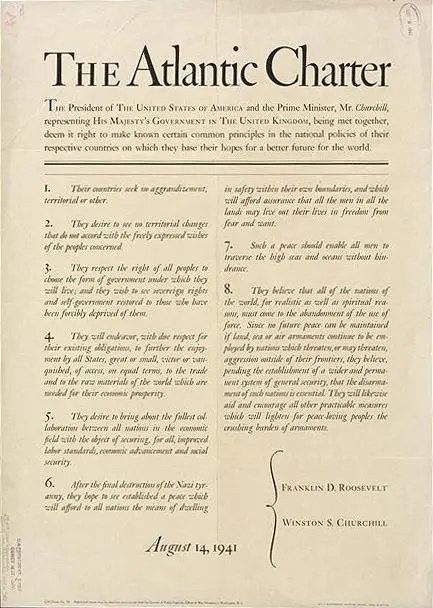
The Atlantic Charter. National Archives and Records Administration. (Public Domain)

The logic behind America’s growing power seemed evident to Roosevelt well before Wilson’s term in office, when he stated during his 1904 State of the Union address that the Monroe Doctrine, if strictly adhered to, would force America into an “international police power.” By the middle of the 20th century, America had taken all of its experience―successful and otherwise―and expanded the regional doctrine internationally.

“After the war the United States scaled up its regional policies and institutions to create the new international order,” Mr. Mirski writes. “It is no coincidence that the Atlantic Charter―FDR and Winston Churchill’s celebrated blueprint for the postwar world―was drafted in large part by Welles, the State Department’s preeminent Latin American expert. Welles also drafted the United Nations Charter, a document that reflects Welles’s Latin American experience through and through.”

Mind Your Own Business

This book proves the difficulty of minding your own business, especially when it appears that doing so will only make matters worse. But as the author points out, more often than not, America did try to mind its own business.

“Officials in Washington had no premeditated plan to reduce the whole region to vassal status,” Mr. Mirski states. “As impressive as the number of American interventions is, the more revealing figure is the far greater number of times that Washington declined its neighbors’ invitations to send troops, annex territory, or establish protectorates. For all its interventionism, Washington proved remarkably reluctant to take advantage of opportunities to extend its regional control.”

This statement will no doubt be the ire of some who believe that there was always a plan for domination and to keep the weaker Latin nations under America’s thumb. Cynicism has long been the order of the day, and any statement, much less a book, contrary to that belief cannot possibly be true. But if truth is actually the pursuit, then Mr. Mirski’s work should be at the very top of the reading list for foreign policy hawks, history buffs, and young people going to college. No doubt the latter will encounter the onslaught of academics who profess to have the market cornered on American foreign policy—but are typically mere subscribers to the aforementioned propagandistic history.

“We May Dominate the World: Ambition, Anxiety, and the Rise of the American Colossus” by Sean A. Mirski. (Public Affairs)

Don’t Oversimplify

Mr. Mirski speaks to this issue of oversimplifying the history of foreign policy. “Observers often see international politics as a clash between good and evil. Sometimes it is,” he writes. “But more often than not, international politics takes place in a gray world under gray skies, where every decision requires trade-offs and difficult choices, where legitimate ends pursued rationally still lead to unsavory destinations, and where tragedy is all but inescapable. Tales pitting good against evil appeal to the human desire for moral certainty, but they are often poor vehicles for understanding the choices nations face.”

“We May Dominate the World” thoroughly demonstrates just how gray that world is and just how inescapable the consequences of good intentions are. As the author notes, this is “the tragedy of great-power politics.”

Mr. Mirski has proven himself to be a researcher and a writer of exceptional talent. My expectations for his future works are now practically limitless. “We May Dominate the World” is an absorbing read and is quite possibly my favorite selection of 2023.

Sean Mirsci, author of “We May Dominate the World: Ambition, Anxiety, and the Rise of the American Colossus.” (Public Affairs)

‘We May Dominate the World: Ambition, Anxiety, and the Rise of the American Colossus’
By Sean A. Mirski
PublicAffairs, June 27, 2023
Hardcover: 512 pages

Sean A. Mirski is a lawyer and U.S. foreign policy scholar who has written extensively on American history, international relations, law, and politics. He graduated from Harvard Law School and holds a master’s degree in international relations from the University of Chicago.

From March Issue, Volume IV