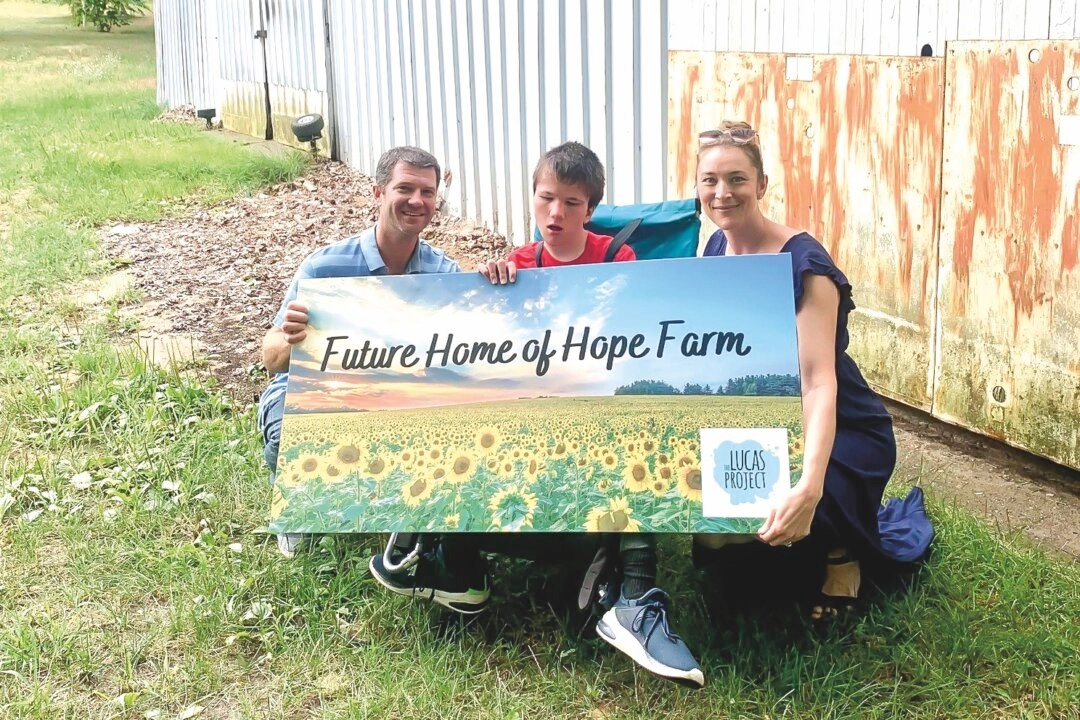
When Jessica was pregnant, she got tough news from her doctor: Her unborn child would either not survive, or have severe special needs. Fortunately her son Lucas did survive, though he faced many physical challenges: level 3 autism, intellectual disability, Chiari malformation, hydrocephalus, scoliosis, low muscle tone, and low vision. He would require round-the-clock care for the rest of his life.
Five years later, Jessica was slammed with another challenge: Her husband Jason, age 30, passed away. The Michigan-based widow accepted life as a single mom of four children. At least, until a prayer at her husband’s funeral: “My mother-in-law, Jason’s mom, actually pulled me aside at the funeral and said, ‘Jess, I just want you to know I’m praying for your next husband.’ I thought, I don’t think I’m anywhere near even thinking about that, but you know, that would be great someday.”
Apparently, some prayers go to the top of the stack.
Shortly after the funeral, Jessica started posting about her experiences on her blog. A reader reached out, telling her about an Oklahoma man named Ryan Ronne with three children, who had recently become a widower. The reader suggested they get in touch to share experiences. They started swapping emails, then met.
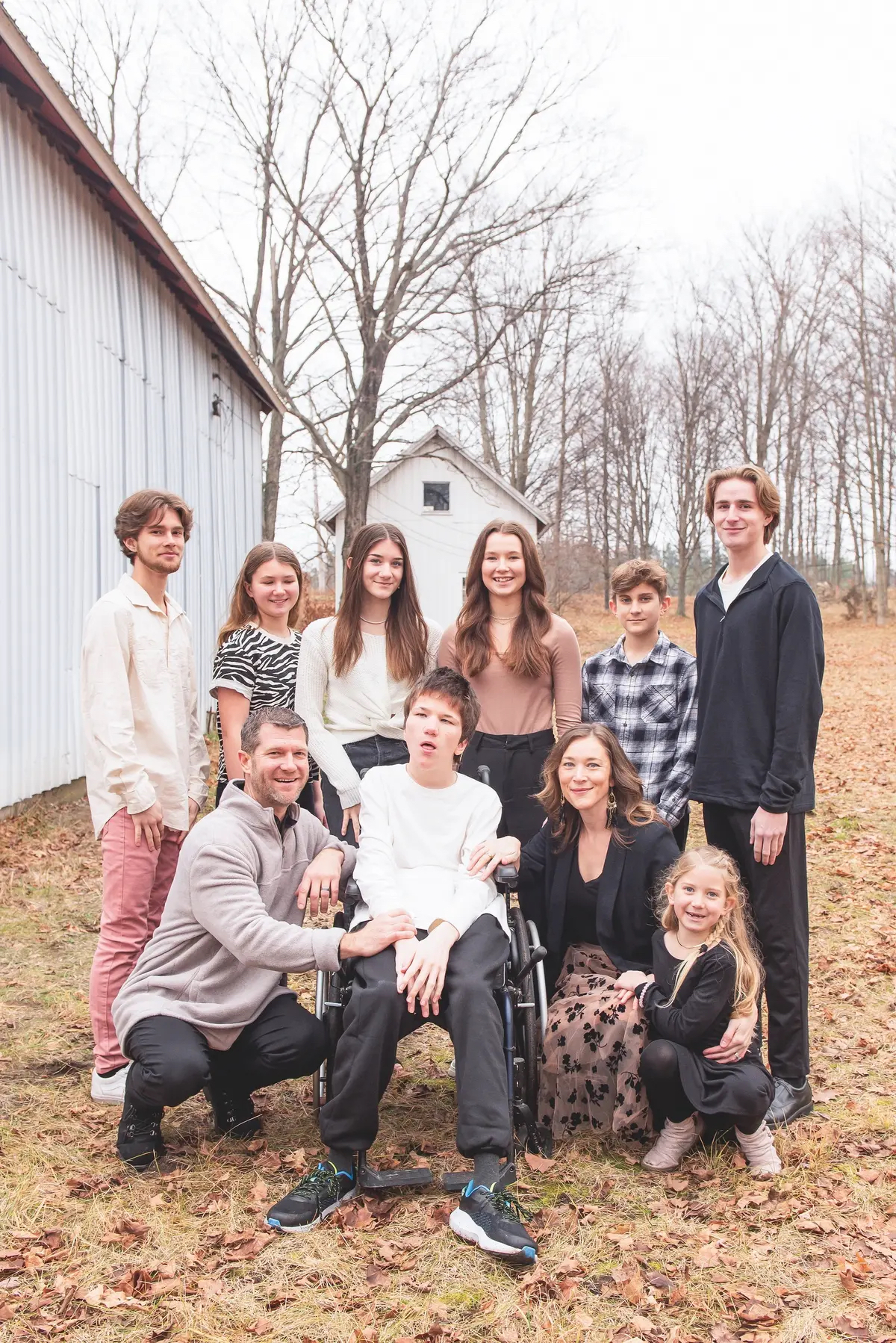
Though Lucas has severe physical and mental challenges, he has impeccable timing in matters of the heart. He only has about 30 words in his vocabulary, but he used the perfect one when he met Ryan for the first time: “Dada.” The kid was a matchmaker! Jessica and Ryan were engaged a few months later and now share a life together as husband and wife. They later welcomed a child of their own.
Caregiving 24/7
As Lucas got older, the Ronnes started experiencing the physical and emotional toll of taking care of him 24/7. “We weren’t made to live in survival mode year after year,” Jessica said. Their other children would take over and give them an occasional date night so they could recharge.
Looking back on her journey as a caregiver, Jessica recalls her original discussion with her first husband Jason before Lucas was born. “My husband and I went out for dinner, and I saw a 20-year-old, profoundly disabled young woman in a wheelchair with her parents, and she was drinking from a sippy cup. I said to Jason, ‘I don’t want that. I can’t handle that. I even went home and wrote that in my journal. ‘God, if that’s your plan, that’s not the right plan. I can’t do that.’ That’s exactly what I got.”
It turned out she could do that. What she “got” was a child who simply needed some extra care as he fit right into the family. “I just accepted Luke as Luke and thought, we’ll fight for him to have the best life he can have.” She has relied on her faith over the years. “The Lord did sustain me for 20 years and continues to change me through the blessing of being able to raise Lucas.”
Along the way, Jessica launched a website called The Lucas Project that offers resources for caregivers. Her book, “Caregiving with Grit and Grace,” offers caregivers support and understanding. She also made an eye-opening documentary about raising a special needs child titled “Unseen: How We’re Failing Parent Caregivers and Why It Matters.”
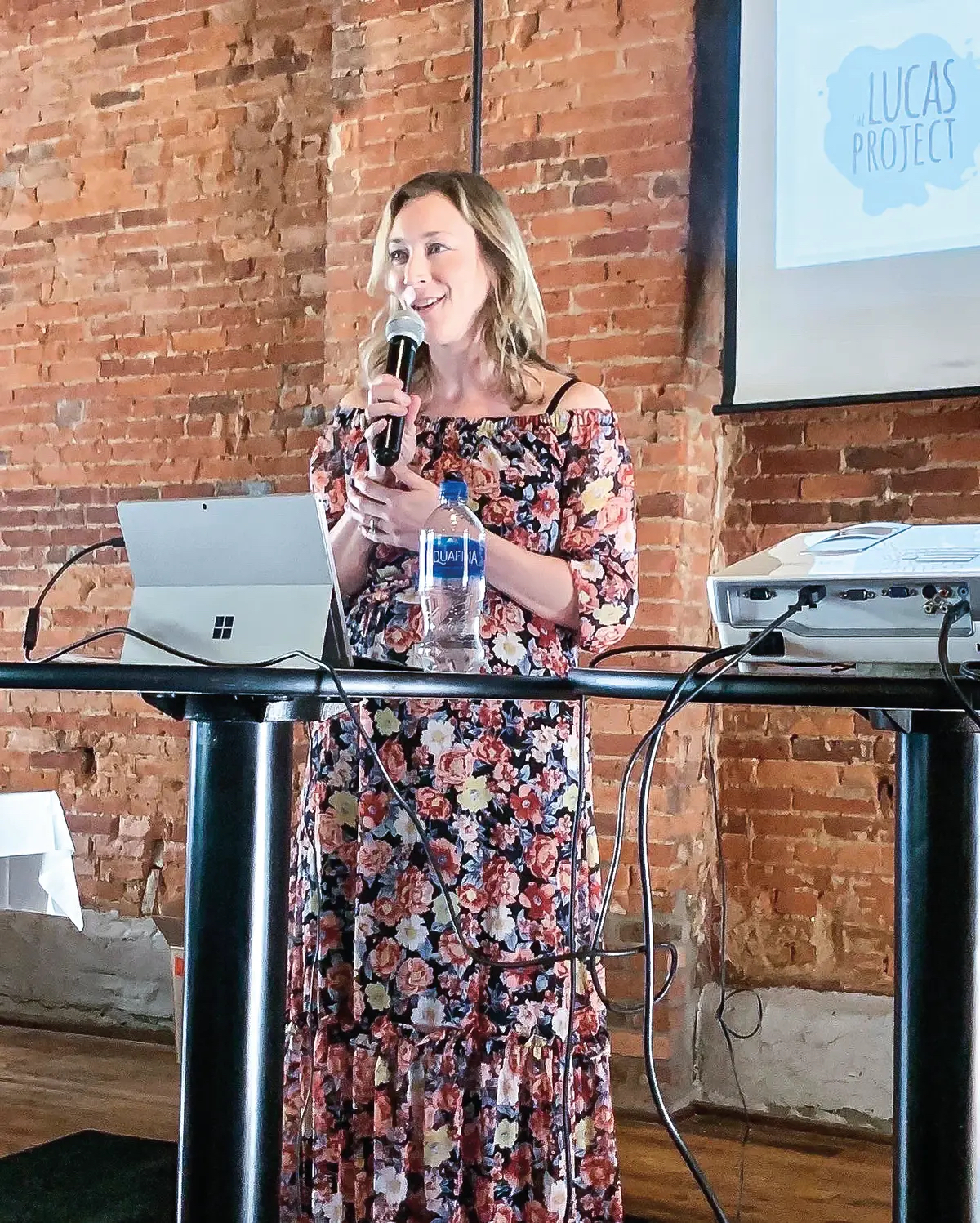
She hopes to address the shortage of caregivers, both paid and volunteer, who are willing to help parents of children with special needs. “It would be wonderful if people became aware of the problem and wanted to help by volunteering, but the issue with the caregiver shortage is really a problem with the wages the caregivers are paid.” It’s a hard, high-responsibility profession, with poor retention and high turnover, that earns little respect and pays a low wage—about $14 an hour.
The Way Forward
Deep concern still plagued Jessica and kept her awake a night: “The question that haunts parents like me is, what happens to my child when I die?”
So the Ronnes worked on a solution. Recently, they opened a group home for those with special needs. Lucas, now 20, shares it with three others, while two of their older children live close enough to monitor the situation. A home health care agency provides care 24/7, while church volunteers organize activities for the residents. Jessica said Lucas enjoys going on outings with the others. While she and Ryan visit often, they now have time for themselves and their other children.
The experience raising Lucas left Jessica with something she never expected—her son with a 30-word vocabulary turned out to be a teacher. “I often say he has taught me more than any man or woman behind the pulpit ever has,” she said. It has dramatically transformed her perspective about caregiving. “I thought for years that it was the lowest work you could do, very monotonous, very mundane, and I now view it as the holiest work I can do. This side of eternity is caring for somebody who cannot care for themselves.”