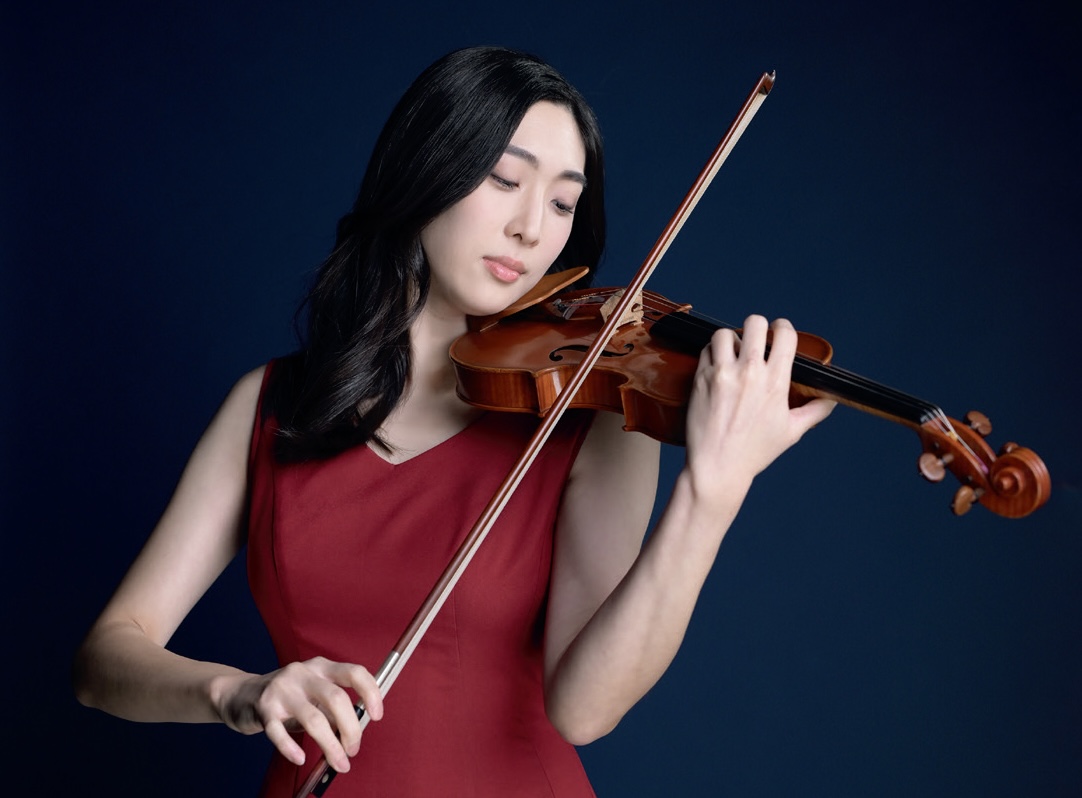
When violinist Nika Zhang was named concertmaster for Shen Yun in 2012, at the age of 18, she wasn’t sure she was ready for such a monumental task.
“For every rehearsal, I was so nervous, my bow would be shaking over the strings,” Zhang recalled. “My whole body was trembling.”
The role of concertmaster is both crucial and demanding, second only in importance to the conductor of the orchestra. The concertmaster must not only have mastery over her instrument, as she is the lead violinist who plays solos, but she must also be a strong and empathetic leader, a liaison between the conductor and the rest of the orchestra. She must have expansive knowledge and the orchestral skill needed to interpret the conductor’s requirements, yet also possess the presence to lead her fellow musicians in meeting those requirements.
Having been pushed to greater heights of performance, Zhang has flourished in her role.
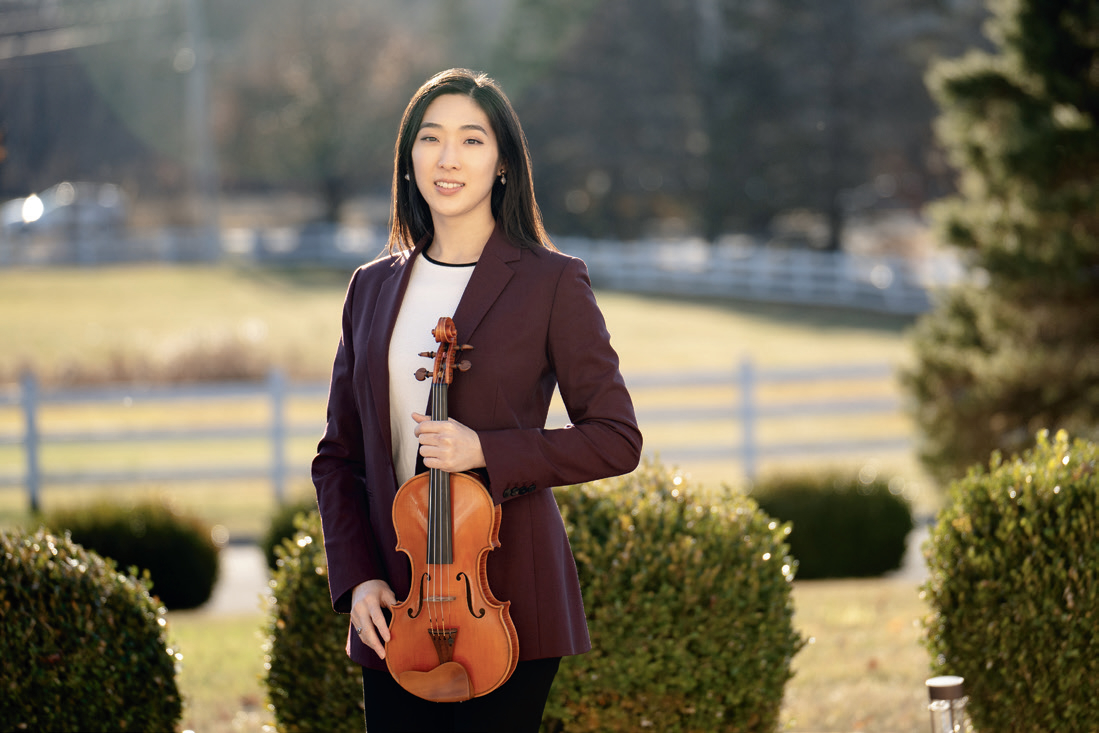
This courageous young woman from Pittsburgh now travels the world, performing to packed theaters with Shen Yun Performing Arts, the world’s premier classical Chinese dance company. The orchestra that Zhang helps to lead is part of Shen Yun’s eight touring companies, each of which performs original music that blends Chinese and Western musical traditions to support Shen Yun’s world-class dance troupe on stage.
For Zhang, it has been a rigorous journey full of challenges, both mental and physical. There was even a scare at one moment that her career might be cut short. However, she said her experiences have served to make her all the more positive and resilient.
In an interview, Zhang offered four hard-earned lessons to share with others who are finding their way in life:
Ignore the ‘What-Ifs’ of Fear and Make Room for New Possibilities
Shen Yun Performing Arts chose Zhang to be a concertmaster because she was technically skillful, responsible, organized, and also willing to put in the work to help others. However, Zhang had struggled with a lack of self-confidence since she began playing the violin. As a self-driven perfectionist, she was highly critical of herself and often battled against her own negative thoughts and anxiety: “What do I sound like? What if I mess up this part? Are they going to judge me?” she said. Sometimes she felt overwhelmed by the pressure.
But performing with Shen Yun for a few seasons gave Zhang much-needed experience. She has learned to solve problems and make adjustments on the fly, as the demands of live performance leave no time to harbor negative thoughts. “You have to face it head-on,” she said. Over time, she gained faith in herself.
One breakthrough moment occurred as she prepared to perform the solo for Johannes Brahms’s Violin Concerto in D Major, Op. 77. The performance has been featured on Shen Yun Creations, the performing group’s online streaming platform. During rehearsal, Zhang’s mentor, who had been observing her playing, told her quite bluntly: “You’re always afraid of what people think of you. You’re always trying to protect yourself. What is there to gain from this?” This unusually direct remark made Zhang reflect on her insecurities. “Why do I care so much about these things, all these what-ifs?” she thought. “Why don’t I just try and see how well I can do instead of worrying about everything?”
Zhang took a moment to pause and self-reflect. Gaining new clarity about the challenges and responsibilities of her role, she had an epiphany that has since stuck with her. “After that, I was able to look the problem in the eye and say, ‘I’m not afraid of you.’” She felt lighter and began to freely enjoy the experience of playing one of her favorite pieces for violin, connecting with every part of the music. “The turbulent parts are like a reflection of the difficulties you go through in life, physically and mentally. And then at the end, you have that perfect scene of heaven. You have the intensity, you have the sorrow, you have the beauty. Every single moment is so beautiful.”
She has begun to understand how to be more emotionally open when she plays. “It’s about … not having notions that block what I’m trying to express, and just showing the audience who I am and what I’m trying to show with my music without any worries.”
No longer burdened by fears and doubts, Zhang often experiences moments of inspiration to try something new. While performing, “all of a sudden, I’ll get this thought—‘What if I try to do this?’ Or, ‘I feel like doing this today,’” she said. When she has had the courage to cast away fear and “just go with it,” the results have often been pleasantly surprising.
Surround Yourself With a Rock-Solid Support System
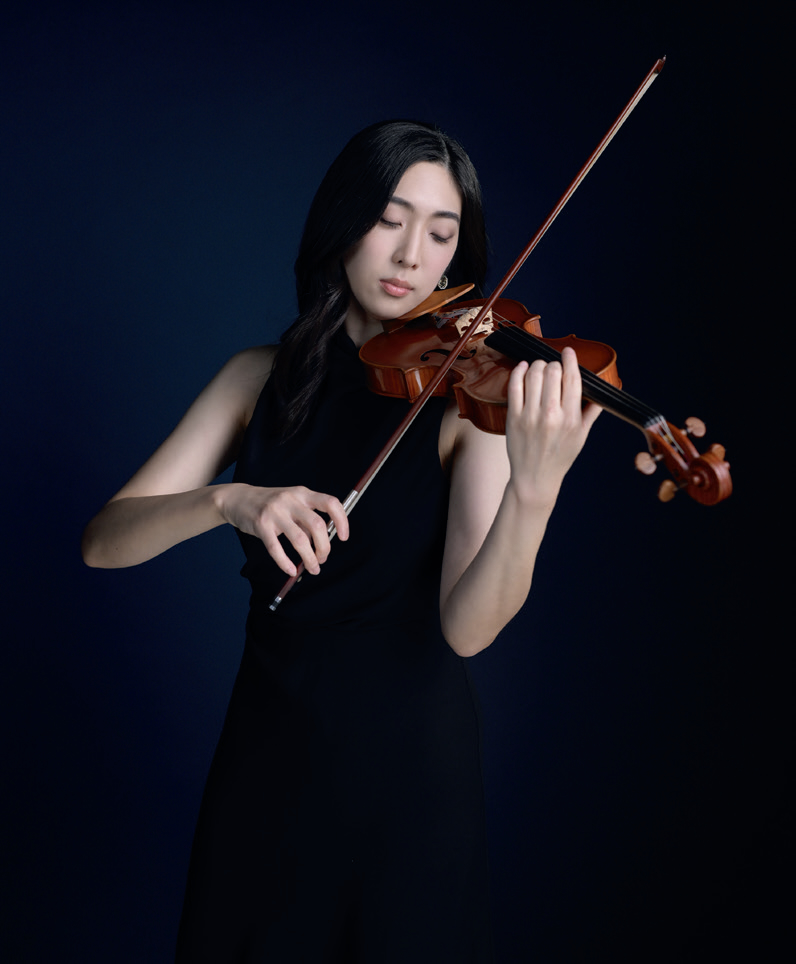
In 2023, Zhang experienced a tribulation that would test her to the core. She started feeling tension in her left shoulder that soon grew to become unbearable pain. In the fall of that year, she was unable to perform. She soon faced the possibility that she might not be able to play the violin much longer.
However, Zhang’s family and colleagues rallied around her to offer their support. Fellow violinists and other orchestra members helped her learn new stretches and try alternative playing positions, even offering advice on understanding the body’s mechanisms in an effort to resolve the pain. One of her fellow musician’s parents called her to suggest she try acupuncture.
“No one ever grew tired of my crying or talking about these things with me,” Zhang said. “This is the kind of community that we have here at Shen Yun. Everyone is there for you.” Well aware of how cutthroat the world of classical music often is, she doesn’t take Shen Yun’s supportive environment for granted. “No one’s trying to throw you off of your throne, or trying to undermine you. It was a huge part of why I was able to recover quickly and keep my spirits up.”
Never Underestimate the Power of Positive Thinking
Zhang’s tribulations have changed her perspective on those times when she used to beat herself up for not playing up to the highest standards. When she was experiencing biting pain in her shoulder, all she wanted was to be able to pick up her violin again. She has since deepened her appreciation for the gifts and opportunities she has been given.
“I was always pursuing more and more. As a musician, of course, you need to have some measure of ambition, but I used to take every challenge and make it very negative,” Zhang said. She realized that she should take setbacks more lightly and just let go of negative thoughts. When facing a challenge, there’s no need to dwell on it. “Let’s find something to do about it, and let’s just do it and move on,” she said.
Zhang changed her mindset and changed her violin setup to relieve the pressure on her shoulder. After six months, the pain dissipated. She emerged from the experience more resilient, optimistic, and grateful. “No matter how great a hardship you’re facing, if you make it a good thing, it can be a good thing for you,” she shared.
Find Purpose in Something Bigger Than Yourself
When Zhang began taking violin lessons at the age of 5, “it was like an immediate love,” she shared. Her family moved to Michigan when she was 9, and in her teenage years, she played with a high school string club and the Michigan Youth Symphony Orchestra, an ensemble connected with the University of Michigan. Playing music with other people felt like “healing to my soul,” she said.
As she grew older, her interests branched off into areas beyond music, including the possibility of becoming a neurologist. So when her mother told her about an opportunity to attend Fei Tian Academy of the Arts, a prestigious school for the arts in New York where many eventual Shen Yun artists have trained, she felt hesitant. She agreed to give it a shot, however, thinking it could be a unique high school experience to try in the short term. She figured she could always apply to college elsewhere. At the age of 16, she auditioned for Fei Tian Academy, was accepted, and made the move to New York. From then on, everything changed for her.
Upon attending Fei Tian, Zhang soon came to realize the seriousness and profundity of Shen Yun Performing Arts and its mission. By becoming a part of Shen Yun, Zhang felt she could make a real difference and connect to the culture of her heritage—her parents having immigrated from China in 1989 and 1990. She decided she wanted to help Shen Yun “spread a more profound message, beyond just simply making beautiful music.”
Shen Yun’s mission is to revive traditional Chinese culture. Each Shen Yun performance depicts ancient Chinese folktales and legends, as well as modern-day stories inspired by real-life events. The performances contain moral lessons rooted in Buddhism, Taoism, and Confucianism. “One of the most important messages we pass on is that no matter what happens in the end, good people are rewarded [by the divine]. So it’s important to maintain goodness and kindness in your heart and keep upright values,” Zhang explained.
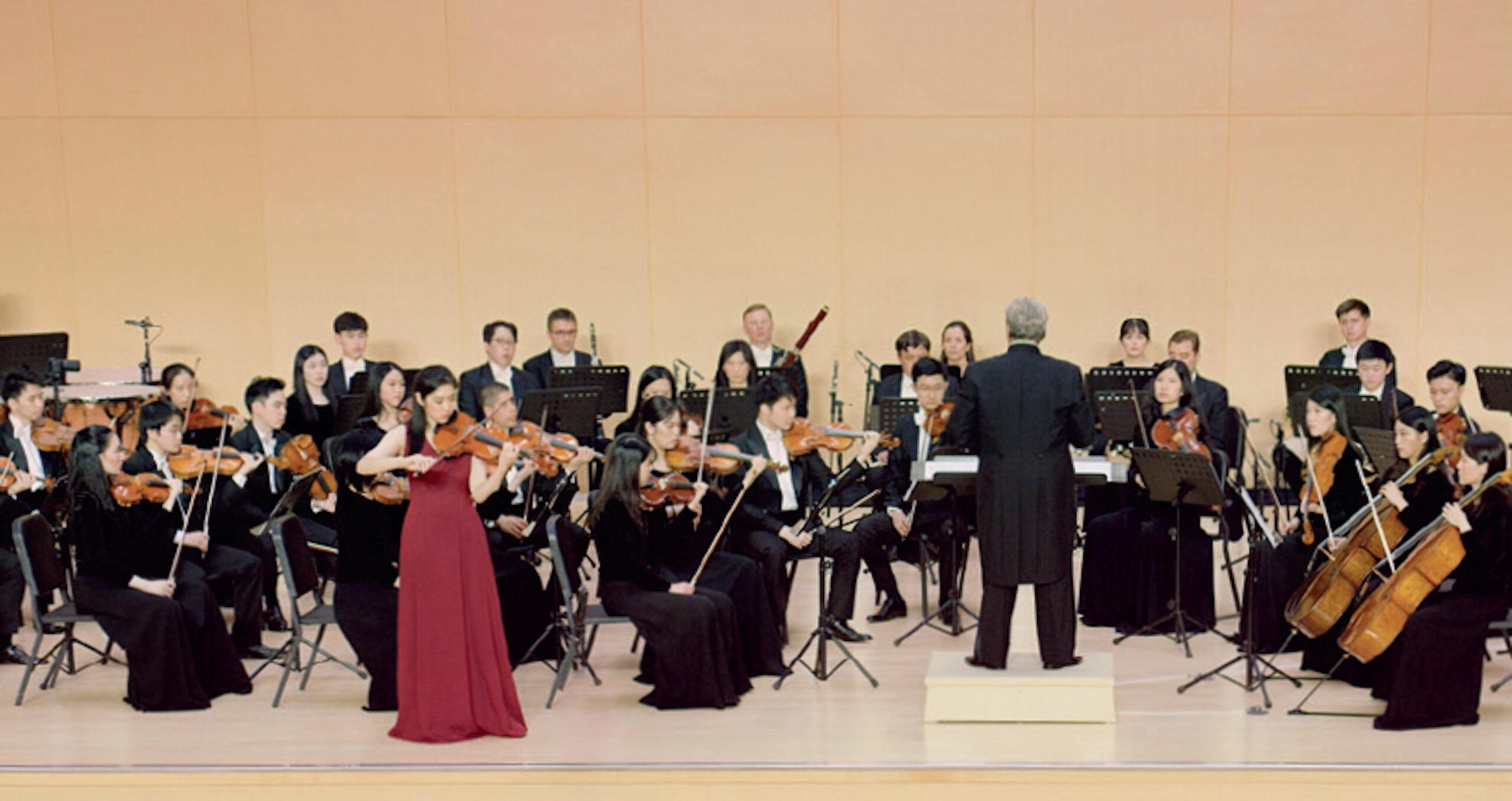
In performing the music that accompanies Shen Yun’s dances, the orchestra helps tell the stories and intensify the feelings that the dancers express on stage. “Music is a universal language,” Zhang said. “You don’t need to spell anything out for people to understand it, as long as they hear the emotion that’s portrayed through the music.”
Though Zhang was young at the time, she knew she had found her calling in life. “It just hit me all of a sudden,” she said. It was a feeling that “I never have to wake up and feel as though I don’t have a purpose in life. There will always be something that is worth waking up for and worth working toward. [The feeling] has been so strong that I never lost it, even when there have been difficulties,” she said.
Zhang believes that the ultimate purpose of music is to “make someone feel uplifted through the beauty of your playing,” she said. Audiences at Shen Yun’s often sold-out shows commonly express being deeply moved by Shen Yun’s hopeful messages and spiritual themes in its storytelling. Audience members often approach the musicians in the orchestra pit to express their appreciation. Their comments are “very much from the heart, something very sincere,” Zhang said. Once, while performing in Mexico City, a young man told the orchestra, “You guys are such inspiring superhumans!”
Zhang feels there’s no better reward for an artist. “I’ve personally seen the effect that we have on audience members—how uplifted they are, how inspired they are, how happy they are,” she shared. “How many musicians in the world get to have that kind of opportunity?”
From Sept. Issue, Volume VI