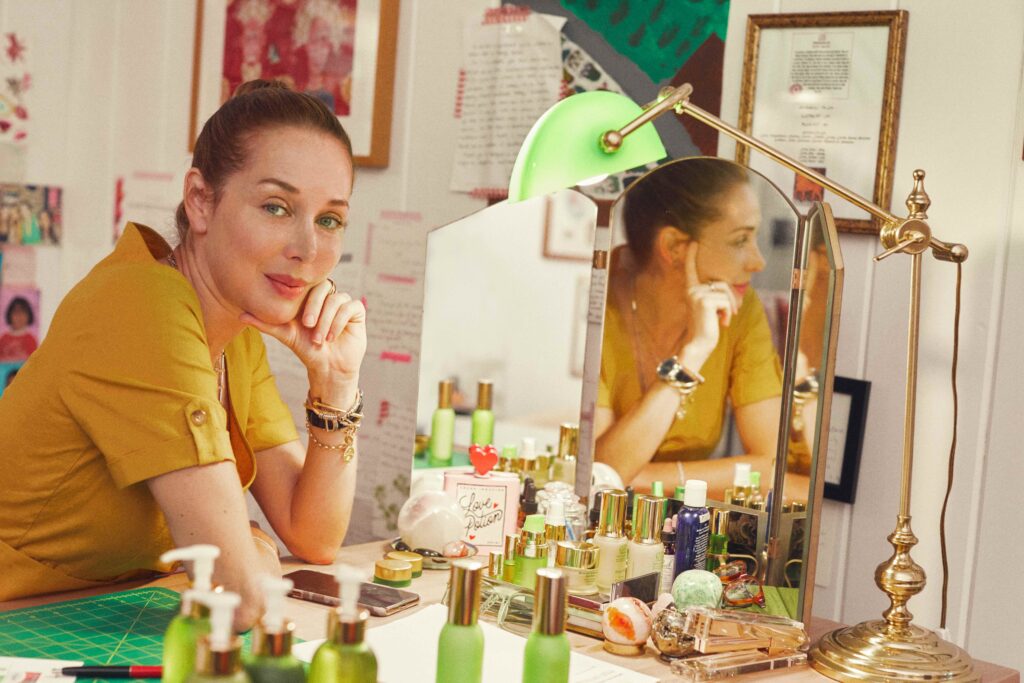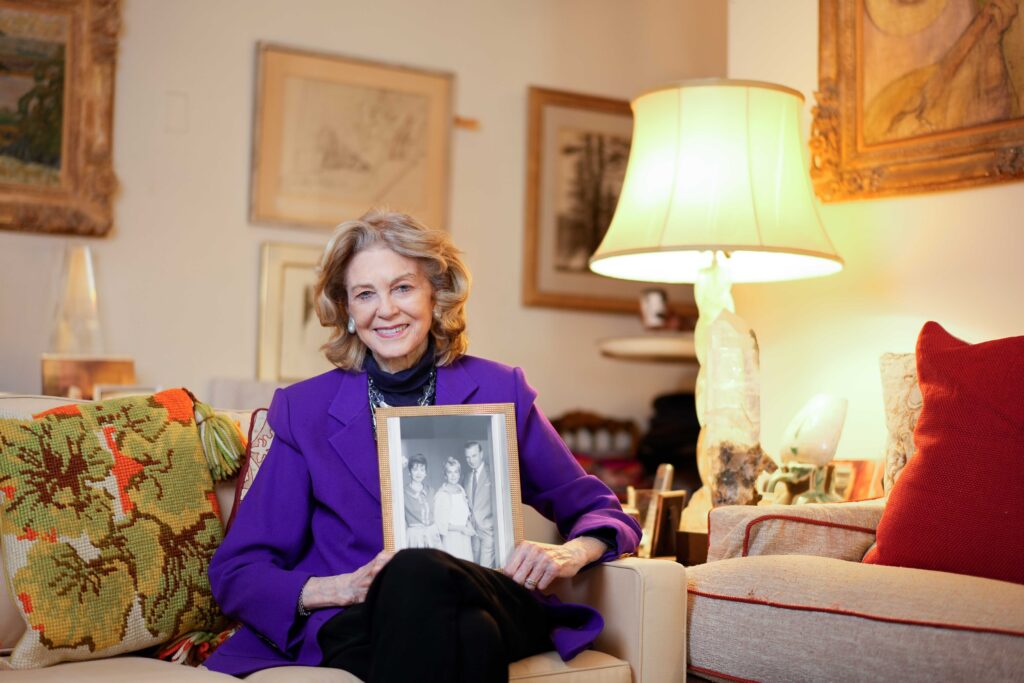
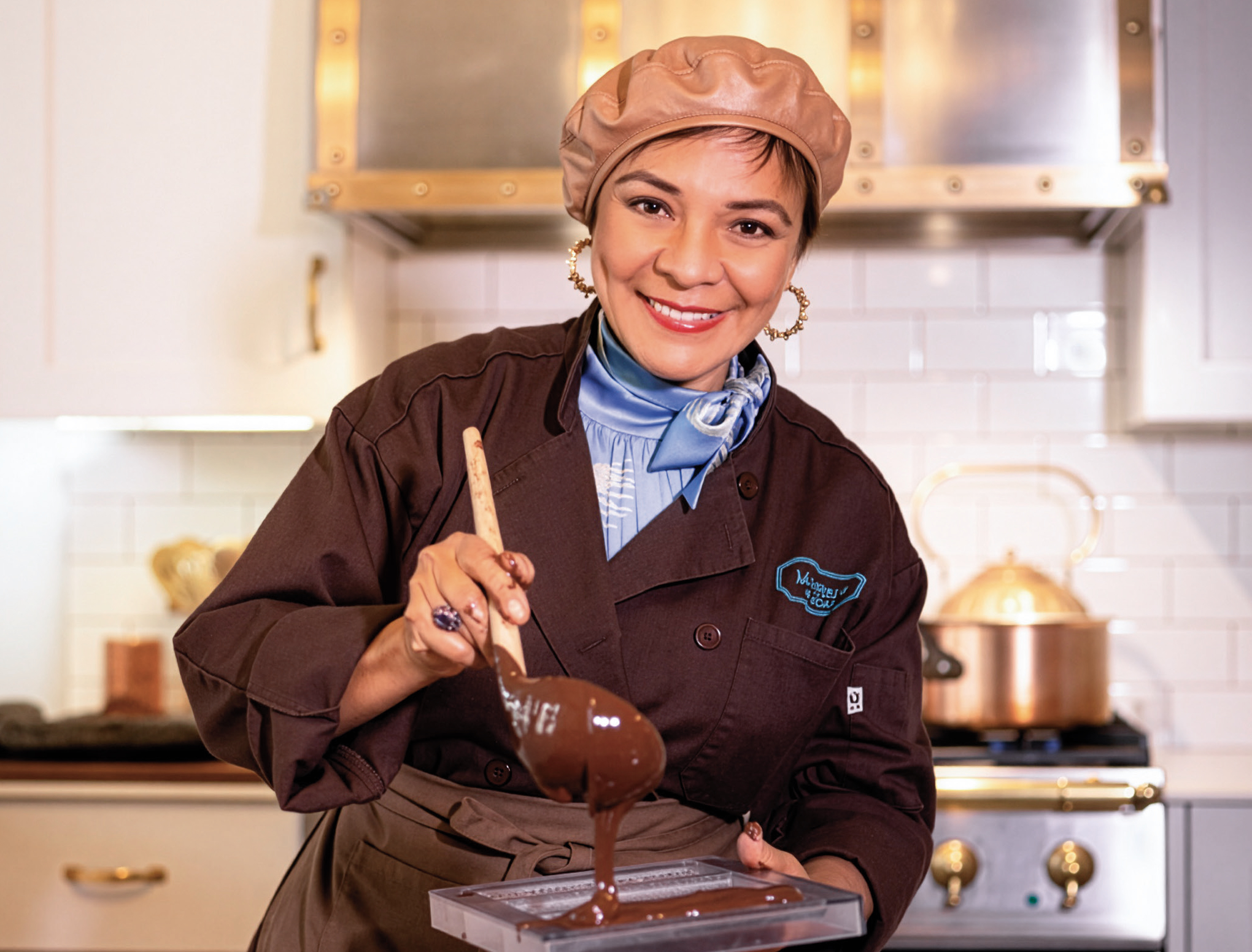
A young girl in a rural village in Honduras had an idea: She could make caramels in her mother’s kitchen and sell them to her fellow grammar school students. This modest but clever idea began a lifelong journey of entrepreneurialism. That little girl couldn’t have imagined she’d end up in the Big Apple as a gourmet chocolatier with an international presence. But such is the story of Maribel Lieberman, the founder of MarieBelle New York, whose knack for finding opportunities and taking chances laid the foundation of her success.
Lieberman was the youngest of eight children. “My family was not a rich family. It was not really poor either, but we were eight kids.” When she was 11, her elder siblings began reaching college age, and the family moved to the capital, Tegucigalpa, for better educational opportunities.
“My personality has always been like I want to do things today, not tomorrow,” she said. When it came time for university, she had an interest in architecture, but the program didn’t exist. “Actually, my mother was concerned that I wouldn’t be patient enough to finish!” Her mother pushed her to study additional trade courses to become a bilingual secretary, so she’d have something to fall back on. “I was really, really bad at typing and also shorthand, which I failed,” she recalled. “This is when my mother said, ‘Listen, you’re on your own.’ And then I said, ‘What am I going to do?’”

From Cosmetics to Chocolate
Opportunity knocked: A friend in Virginia had school-age kids and needed somebody to be home after school. So Lieberman agreed to look after them during the day while she finished high school and learned English at night. After a year and a half, she returned to Honduras, but it became clear that she needed to be in the United States. “I saw so much opportunity, even if I didn’t have a college degree yet.”
She got a student visa and returned in the late 1980s, settling in New York. At night, she studied fashion, and during the day, she eventually found work in a department store working in cosmetics—both things she’d always been interested in. She had the choice to work for either Lancôme or Shiseido, a then-lesser known company in America, though it was already a big brand in Japan. “They told me, ‘At the Lancôme counter, there’s going to be 10 people. You’re going to learn a lot. You’re going to make commission. At the Shiseido counter, it’s only going to be you.’” She opted for the challenge of the Shiseido counter. She saw more learning potential and the opportunity to “grow up” with the company. “For me, that was one of the best decisions of my life.”
She worked there for several years, but when she got married, her interests gradually turned from cosmetics to food. Her husband, the late Jacques Lieberman, was a notable artist, and so she frequently entertained guests at their home. “What I love about New York is all these cultures that you find here and all different flavors. I would buy cookbooks from these different cultures and then do fusion cuisine. We’re talking 35 years ago, you know. At that time, [fusion] was not as prominent as it is today,” she said.
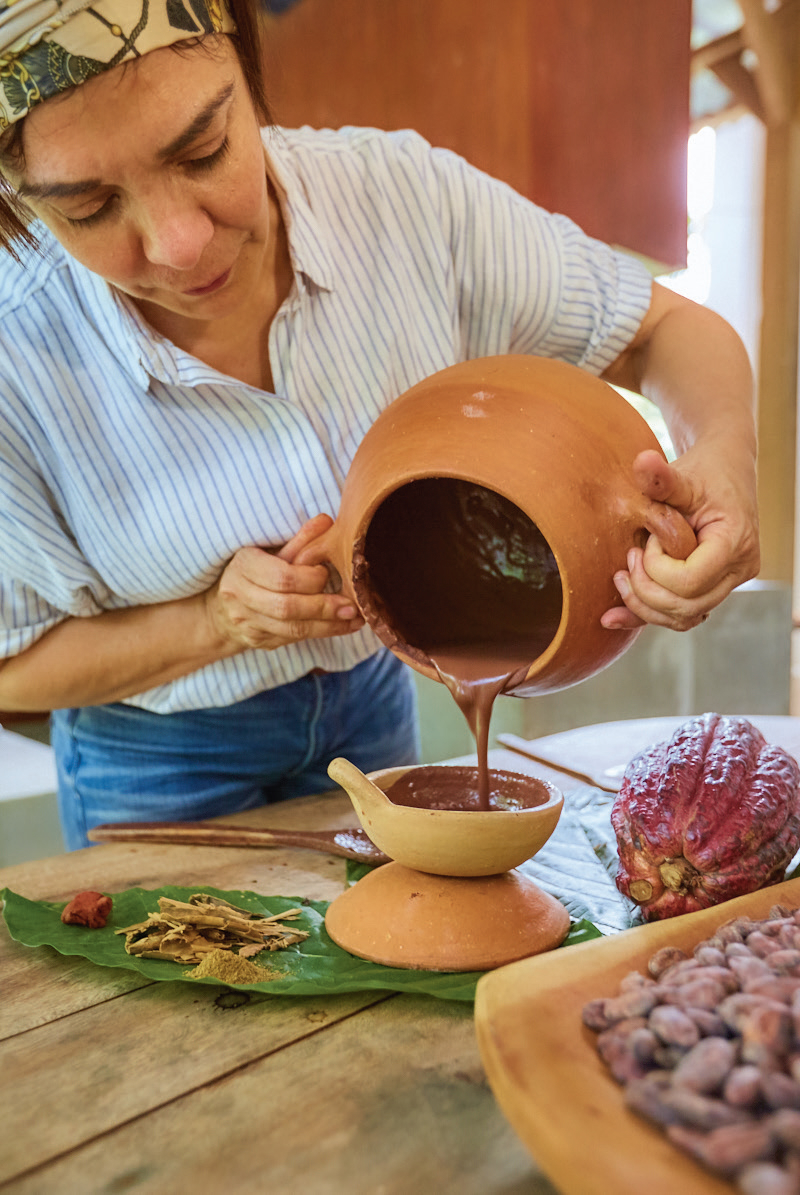
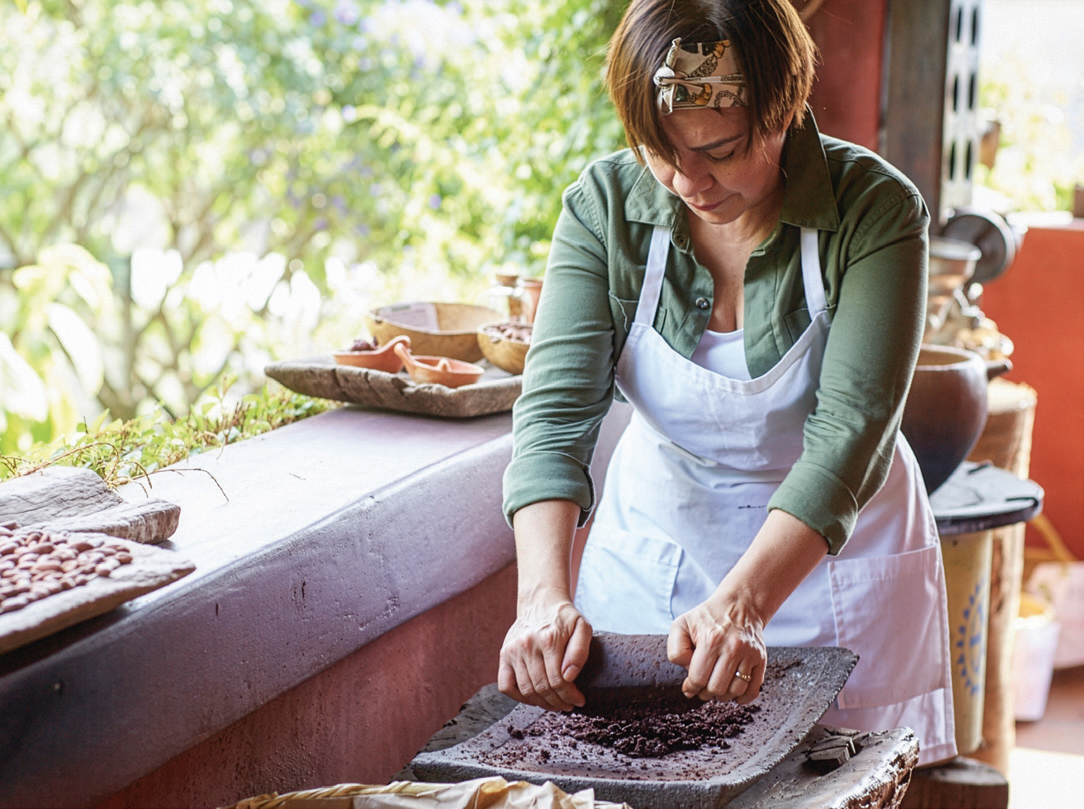
In 1995, she left the cosmetics world in pursuit of her love of cooking, and she started Maribel’s Gourmet Cuisine, a catering company. Shiseido became her first client and recommended her to other companies. This lasted five years, but what Lieberman really wanted to do was open a gourmet store with international appeal, representing each country with something it’s known for and telling the stories of the ingredients. But the cost for such a plan exceeded her resources. So she decided to start with one ingredient: cacao. While European nations such as France, Belgium, and Switzerland have a reputation for producing good chocolate, cacao originates in South and Central America. It was part of the land she grew up in.
Favorite Things
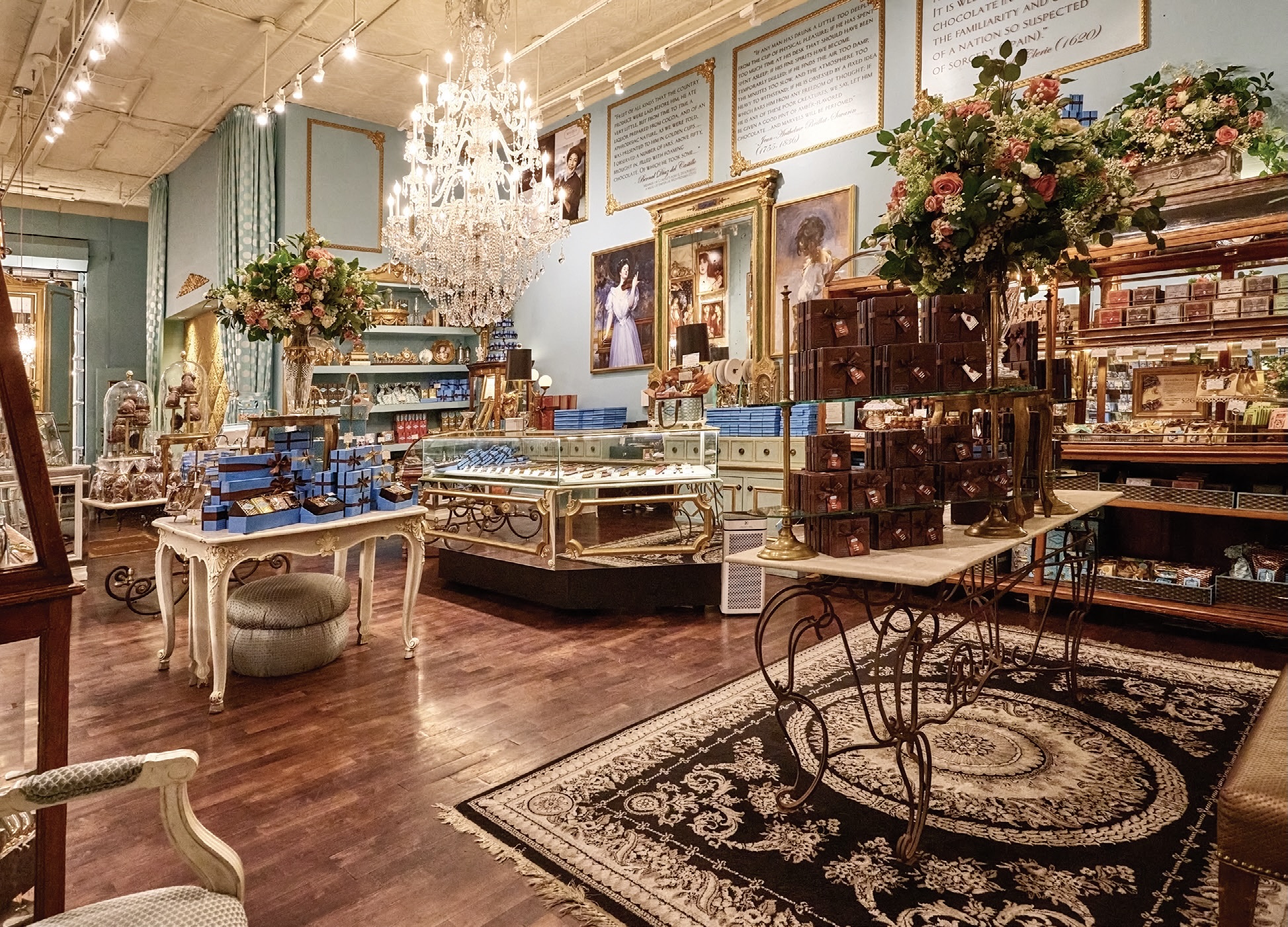
In 2000, she partnered with Selima Salaun, a successful designer of eyeglasses, and opened Lunettes et Chocolat—“glasses and chocolate”—in a tiny, 600-square-foot space in Lower Manhattan. She produced ganache chocolates and placed them into elegantly designed boxes with brilliant blue packaging that was as artistic as the chocolates themselves. In 2001, she moved into a vacant art gallery on Broome Street in SoHo and filled it with antiques from a friend’s shop, thus creating a unique space to showcase her culinary art. This would become the site of her brand’s flagship store.
But Lieberman wanted to sell something wholesale. She thus developed her Aztec Hot Chocolate mix, with premium single-origin dark chocolate flakes rather than powder—so that it had a richer flavor and luxurious texture. Her first customer was Neiman Marcus.
Soon after, O, The Oprah Magazine featured the hot chocolate, and Oprah loved it enough to include it on her show’s annual holiday guide segment, “Oprah’s Favorite Things.” Neiman Marcus was selling out, and other retailers soon came running. Later, she developed a more whimsical sister brand, Cacao Market, featuring chocolates decorated with geometric designs based on her husband’s artwork. When she introduced the new line in Kyoto, Japan, in 2012, Shiseido did a collaboration with her. “And that was because of that decision that I made many, many years ago.”
Into the Future
Looking back on her career, she acknowledges that she would have done some things differently. “I was doing everything [myself], and I made many errors because of that,” Lieberman said. It’s important to know what you are good at, she advises, and find partners to “just get the balance.”
But Lieberman doesn’t rest. While some flavor ideas come from her chefs, Lieberman develops all her own recipes. If she were forced to choose a favorite, she would pick passion fruit, a popular fruit back in Honduras. But the flavor she may be most proud of is lavender. A popular flavor with a very strong aroma, lavender can easily be overdone. As a general rule, Lieberman doesn’t use flavor extracts. She developed a recipe to “make you feel like you’re in a field of lavender.” Rather than an extract, she uses fresh flowers to infuse the chocolate overnight. “I don’t know how many people are doing fresh flowers, but I am.”
MarieBelle New York has shops in the lobbies of The Prince Kitano and The Pierre, two upscale hotels in Manhattan, and Lieberman is now looking to expand the Cacao Market by MarieBelle brand into club stores. The first in line? Costco. She’ll be starting with a 20-store test run. On top of that, she’s opening her fourth shop in Japan this fall.
Despite having expanded globally, Lieberman insists on delivering the best possible product. “It doesn’t matter how beautiful the packaging is, if it’s not good,” she said. But stop in at her magical little shop on Broome Street and make a reservation for afternoon tea at The Cacao Bar in the back, and you have to admit, the beautiful packaging is also quite nice.
On Entertaining
In 2024, Lieberman published her first book, “MarieBelle Entertains: Savory and Sweet Recipes for Every Occasion from the Master Chocolatier,” a collection of tips and recipes for hosting parties. We asked her to share a few good tips.
Atmosphere: Use dimmed lighting, candlelight, and flowers—“not necessarily expensive flowers, but more like branches or wild flowers.” A server presenting champagne (or hot chocolate!) when guests arrive sets the tone.
Hors d’oeuvres: They need to be small, beautiful, and eaten in one bite. Serve them on an aesthetically pleasing, small tray. Avoid onions or garlic; people are conversing!
Linens: Use 100% linen or Egyptian cotton, and either embroidered table mats or a tablecloth. Instead of matching the tablecloth with the napkins exactly, try to mix up the colors or patterns.
Decor: “Decorating with things you have collected over the years brings a nice nostalgic scene to the table.”
Seating: Couples don’t need to sit together. “I like to separate them so they can get to know others.” Seat a person beside someone he or she has something in common with.
RECIPE: TAPADO OLANCHANO (HONDURAS BEEF STEW)
From Sept. Issue, Volume VI